 Heath Haussamen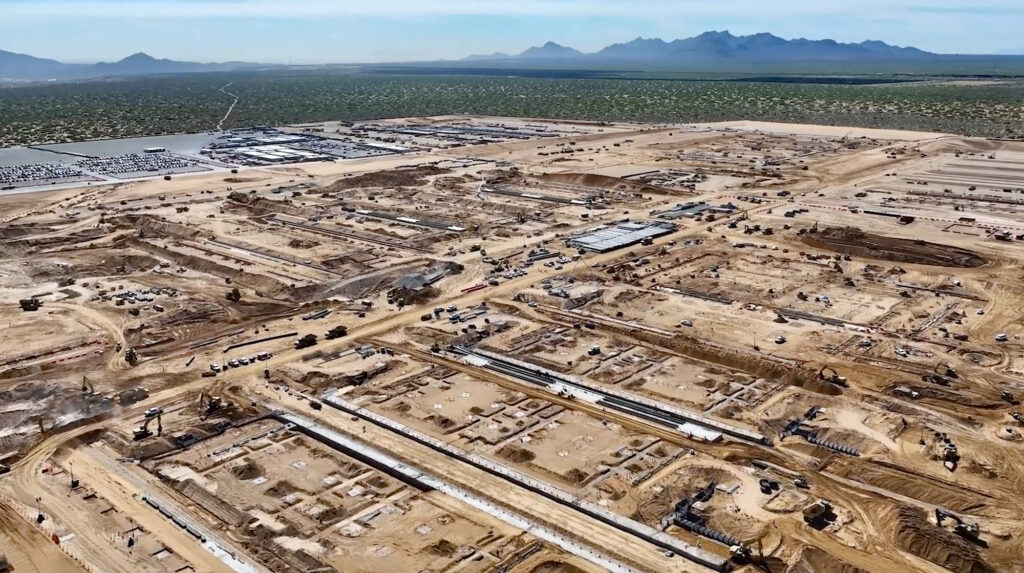
There’s a famous scene in The Empire Strikes Back in which Darth Vader, who is hunting Luke Skywalker across the galaxy, adds a new condition to an agreement he forced on Lando Calrissian, the administrator of a city where Vader is setting a trap.
Princess Leia and Chewbacca must never again leave Cloud City. In other words, Calrissian must hold them hostage. And Han Solo will be turned over to a bounty hunter.
When Calrissian protests, Vader says, curtly, “Perhaps you think you’re being treated unfairly?” A visibly angry Calrissian responds, “No.”
Vader storms off after threatening to leave a garrison behind to keep an eye on Calrissian. “This deal is getting worse all the time,” Calrissian says under his breath.
I thought of that scene last week when Project Jupiter officials revealed new details to Doña Ana County commissioners and the public that may make our agreement with the data center developers less beneficial for our community.
The tech giant Oracle, which is set to operate the massive campus of artificial intelligence data centers in Santa Teresa for Open AI, plans to stick around for “about 17.9 years.” That’s what Mahesh Thiagarajan, Oracle’s executive vice president for cloud infrastructure, told county commissioners.
Meanwhile, Stack Infrastructure, which is building Project Jupiter, is “going to be at least here for 25-30 years,” he said.
“That is long-term,” Thiagarajan asserted.
There’s a complex web of corporations involved in Project Jupiter. They’re required to make annual $12 million payments to the county, with the last due in 2055. The data center’s developers had set the expectation that they were invested in this community for three decades.
I’m grateful Commissioner Susie Kimble asked the question last week that revealed Oracle’s true intent. Unfortunately, no commissioners asked the needed follow-up questions.
Stack is the builder of Project Jupiter, not the operator. Who will occupy the data centers for the final 40 percent of the 30-year term of the agreements with the county? What does this news mean for job promises and money for government?
Shifting water plans
Our commissioners’ failure to ask such questions for nearly a year is part of the reason we are in this predicament.
You might recall that the developers verbally promised for months to use no more than an average of 20,000 gallons of water per day once operations began. They were going to use water from a nearby sod farm’s well during construction that would exceed that limit, and then stop.
Then in secret negotiations, the legal agreements with the county changed. Final versions limit potable water use to an average of 20,000 gallons per day, but place no limit on overall water use.
We now know Project Jupiter’s developers had decided to use more water to cool two gas-fired power plants than they had publicly pledged.
County commissioners were caught flat-footed. The two most vocal supporters among commissioners — Manuel Sanchez and Christopher Schaljo-Hernandez — expressed certainty that Project Jupiter’s water use was capped at an average of 20,000 gallons per day. They were wrong.
Fortunately, sharp backlash forced the developers to come up with a new power plan that will use relatively little water.
Lies about water use
But even in doing the right thing, the developers can’t tell the truth. Their rhetoric has shifted in recent weeks to claim that Project Jupiter will run on “no drinking water.”
“None at all,” one of several recent ads states. That’s right, another states — “ZERO drinking water.”
“YOU spoke WE listened,” states a flyer paid canvassers left at my front door last week promoting Oracle’s commitment to water conservation.
That’s some nice spin, but they didn’t listen to our community. Rather, they were caught lying. They were hammered by elected officials — opponents and supporters alike — for trying to use our precious water without our knowledge.
Water is water. Whether it comes out of a potable well that makes it safe for drinking or a non-potable well intended for agriculture and industrial use, it’s coming from the same, finite source.
And Project Jupiter still plans to use an average of 20,000 gallons of potable water per day for employees at the data centers. Saying it will run on zero drinking water is simply a lie.
Do they have to create any jobs?
The developers don’t appear to be telling the truth about job creation either. Publicly, they promise 1,500 permanent jobs once construction is complete. Legal agreements require them to create half as many: 750 permanent, full-time jobs.
But I re-read those complex legal documents last week after hearing Thiagarajan speak and spotted something new.
An agreement that grants a partial exemption from paying gross receipts tax on things like construction materials and equipment binds the developers to create 750 full-time jobs with benefits by Dec. 31, 2031. But the companies don’t have to employ those people for long.
“Although the parties intend to have a long-term presence in the County, for purpose of the contractual obligations of the Agreement, the companies covenant to continue to operate the Project until the earlier of Oct. 23, 2035 or the expenditure of $350,000,000 in construction expenses that are subject to GRT,” the agreement states.
Project Jupiter won’t hire the 750 employees until the data centers go live. But a loophole in the tax agreement gets them out of their “contractual obligations” once they’ve spent $350 million on construction.
In a news release, Oracle announced last week that the developers had already “delivered nearly $80 million in tax revenue” to the county and state. They will likely spend $350 million on construction before Project Jupiter is operational and any full-time employees are hired. They may have already done that.
So I’m not certain they are bound by that agreement to hire any full-time employees.
Similarly, the developers’ lease agreements with the county require them to create “a minimum of 750 new full-time equivalent jobs and 50 part-time jobs within three years of commencing operation.” But I don’t see where the leases require the developers to sustain those jobs for any amount of time.
Unanswered questions
So the jobs Project Jupiter promises are in question and they continue to lie about their water use. In other words, this deal is getting worse all the time.
What about the payments the developers are required make to the county? That money goes to schools, roads and so much more.
Those annual payments through 2055 are legally binding, I think. But I’m not certain. These agreements are complicated. They weren’t properly vetted by the county commission before approval and we learn new things about them all the time.
The duration of the arrangement is defined in the leases as ending on Nov. 1, 2055, when the companies pay off the $165 billion bonds they owe banks, or when they default on those bonds — whichever happens first. They can cancel the agreements sooner than 2055, but the leases state that they’ll be legally bound to pay property taxes from that point forward.
I have questions. Who is going to make the annual payments after Oracle leaves? What if Stack leaves after 25 years instead of 30? We need commissioners to question Oracle officials in front of the public again.
Oracle threatens to alter deal
I want answers to these questions, but I wouldn’t trust them. Thiagarajan made clear last week that the developers may not keep their promises — even those the legal agreements mandate.
The leases with the county require the developers to power Project Jupiter “with an onsite microgrid system” instead of connecting to the El Paso Electric grid. That’s intended to ensure that Project Jupiter “will not impact existing customers’ power reliability or costs,” according to the documents.
The developers withdrew their first microgrid application to the N.M. Environment Department, which sought permission to build and operate two gas-fired power plants. They submitted a new application that proposes to use fuel cells instead. That will reduce emissions by more than 30 percent but still pump more than 10 million tons of carbon dioxide into the air each year.
The new application is pending — and still highly controversial because of the lack of a renewable energy component that would reduce emissions further.
Asked during last week’s commission meeting what happens if the state denies the application, Thiagarajan said Project Jupiter would seek to connect to the El Paso Electric grid. He threatened to take the project elsewhere if that wasn’t acceptable.
“If the permit’s not available, it’s the grid. If the grid’s not available, I don’t know how I would power the data center. It’s impossible,” he said. “…So I just want to be very clear. That’s the only option on the table.”
That isn’t the first time Oracle has promoted a grid connection. In a column published by The Santa Fe New Mexican in June, an Oracle official promised that Project Jupiter will generate excess power, and said New Mexicans should be able to benefit from it.
“We’d love to have this resource connected to the grid,” the Oracle official, Julia Robin, wrote. “We’d love to send those excess electrons back to consumers in the region. We’d love to be part of the solution that upgrades electricity generation and transmission in the region and in this country.”
Don’t trust the marketing spin. Oracle wants something more from us. Look for Project Jupiter’s shady lobbyists to push legislation in the session of the N.M. Legislature that begins in January.
Oracle can’t be trusted
Oracle is still rolling out new promises. In last week’s news release, the company made another: “100% carbon-free energy matching by 2031.” That means supporting renewable energy projects in the region to offset its own emissions.
Asked to elaborate at the county commission meeting, Thiagarajan provided no additional details.
The new commitment is not in any legally binding agreements.
But I’m not sure that matters to Oracle. Its news release comes with all sorts of qualifiers. The company’s economic impact claims, it states, “should not be construed to represent a precise measure of those outcomes.”
Similarly, their promises related to job creation and tax revenue “assume the air permit and pipeline are approved, as originally planned,” the release states.
State Commissioner of Public Lands Stephanie Garcia Richard has already denied an application to run the natural gas pipeline through state land — twice. The developers are still leaning on her. My guess is that’s why they’ve added the carbon-free promise.
I hope Garcia Richard stands her ground.
I’ve learned a lot while reporting on Project Jupiter over the past year. One of my main takeaways: The developers’ promises don’t mean anything. The news release Oracle sent last week ends with this zinger: “Statements in this article relating to Oracle’s future plans, expectations, beliefs, and intentions are ‘forward-looking statements’ and are subject to material risks and uncertainties. Many factors could affect Oracle’s current expectations and actual results, and could cause actual results to differ materially.”
Manhandling a state agency
We’re in this situation because a bunch of tech oligarchs are racing each other and China to build artificial intelligence capacity. They are operating without regard for the impact on the local communities where they’re building.
We’ve seen in Doña Ana County how easily they can break local democratic systems designed to ensure public participation, thorough dialogue and legal agreements that have integrity.
They’ve forced government officials to sign non-disclosure agreements and convinced them to exclude the public from meaningful involvement. Then they’ve strong-armed officials into giving them what they want.
Meanwhile, they’ve tried to buy goodwill by giving money to needy organizations like the Boys & Girls Club and a food pantry. They bought school supplies for kids in Sunland Park.
Their newest efforts are centered on manhandling the state Environment Department. A hearing officer initially refused the developers’ request to move up an October public hearing on the air quality permit application because the request was unreasonable.
One of the developers’ lobbyists, attorney Jennifer Bradfute, told the hearing officer that the developers would lose $325 million per month beginning in November if he didn’t speed things up.
“The state is at jeopardy to lose the project entirely, and I’m not blowing smoke as I state that,” Source New Mexico quoted Bradfute as saying.
Days later, the officer moved the hearing up several weeks, without explanation.
Opponents of Project Jupiter say there’s no way to adequately scrutinize the power plans in that timeframe. Once again, the developers got what they demanded at the expense of the public.
Democracy breaks down
All of this is unfair to new Mexicans. But given the imbalance of power and the developers’ dishonesty, it’s no surprise. Similarly, Vader changes the deal again later in Empire, directing that Leia and Chewbacca be taken to his ship. He, not Calrissian, will hold them.
“You said they’d be left in the city under my supervision,” Calrissian protests.
“I am altering the deal. Pray I don’t alter it any further,” Vader replies.
Project Jupiter’s tactics have frustrated and divided our community. During public input at last week’s county commission meeting, union workers who are building Project Jupiter and county residents who oppose it heckled each other. County officials cracked down on months of rowdiness at meetings by limiting public input.
Not surprisingly, a confrontation broke out and a security guard shoved a woman to the ground. Cops arrested protesters.
Local democracy broke down that day. At the center of it all, Thiagarajan had a grin on his face and a private security detail watching over him while he delivered the news — and Oracle’s warning.
Let Project Jupiter leave
The developers have often threatened to leave if they don’t get their way. From the start, I haven’t believed them. I still don’t. These folks have already invested hundreds of millions of dollars.
Project Jupiter’s proposed emissions are too high. The state should reject its air quality permit application.
The county should hold the developers to their commitment to generate their own power and leave our grid alone. Meta, which is connecting a data center to the El Paso Electric grid just across the state line in Texas, has already backed off a promise to not impact our utility rates. There’s a good chance we’re all going to pay for that data center’s power.
We can’t let the same happen with Project Jupiter.
If this is really the developers’ final offer on power generation, they can walk away from Project Jupiter and leave Doña Ana County for good.
And they should.
Saying they’ll support projects that offset their emissions is nothing more than a marketing tool. I want the developers to directly reduce Project Jupiter’s emissions.
I want solar panels on the ground the day Project Jupiter is operational. There’s no reason they can’t do that, no matter what Thiagarajan says.
Set rules for future data centers
I also support the group of legislators who propose a temporary moratorium on new data centers in New Mexico until we can create regulations to govern them. I’d like to see such rules debated and approved in the upcoming 60-day session, rather than waiting another two years for the next long session of the Legislature.
We’ve learned so much from our experience with Project Jupiter. Here are some things I believe we should mandate:
• Force data centers to use closed-loop, non-evaporative cooling systems and require that water use be comparable to other commercial ventures.
• Require that every new data center build its own microgrid and draw some power from renewable sources from day one. Make microgrids subject to the same renewable requirements as the big power companies.
• Force data centers to pay their fair share to state and local governments for the privilege of using our water, land and air. Require them to pay property taxes — or, if they utilize industrial revenue bonds like Project Jupiter, set a standard statewide rate that’s higher than this project paid. That will reduce the chance that overwhelmed local officials give away too much.
• Don’t allow developers to bypass county commissions and city councils by building on state land, as one group is proposing to do at Spaceport America. No replacing grazing leases with massive data centers in the middle of nowhere unless folks who are accountable to voters in those communities approve them.
• Future data centers must create and sustain jobs, or compensate us in an equivalent way.
• Require long-term leases. I like 30 years. We can’t allow the destruction of 1,200 acres of wildlife habitat that’s storing carbon in the ground to build warehouse-sized buildings and power plants that could be decommissioned in a matter of years.
• There need to be consequences for breaking legal commitments — including severe financial penalties and the ability to turn off water valves and revoke air quality permits.
No more
Finally, don’t give the developers of Project Jupiter anything else. No more legislation. No more water. They haven’t earned it. Quite the opposite.
(As an aside, we should enact the lobbyist transparency legislation proposed by Rep. Sarah Silva (who is my spouse) and Sen. Jeff Steinborn. It would reveal what legislation companies like Project Jupiter are promoting in future sessions.)
Project Jupiter’s ads market it as “a data center done right.” In a year of reporting on this mess, I’ve learned that there is a right way to do data centers.
But this isn’t it.
And in all my years of reporting on New Mexico, I’ve learned that we sometimes sell ourselves short and take any deal that comes along, no matter how bad.
I’m not ideologically opposed to data centers. Most of us are using the computing capacity they create. I certainly am. And our state needs jobs and economic growth.
But New Mexico is a unique place made special by the resiliency of people who come from diverse cultures that have survived centuries. Our open ranges and expansive views inspire awe. We are at the intersection of societies, nations and ecosystems, of the past and the future.
All that has come before us in a timeline that predates the United States is ever-present in New Mexico. So is what’s possible, as the development of the first atomic bomb, the testing of the Lunar Earth Module and the birth of Microsoft demonstrate.
It might make sense to add one of the largest artificial intelligence data centers ever built to that list.
But in New Mexico we also value protecting our people, and our water, air and land. Not even a corporation as powerful as Oracle can change that.
If the billionaires don’t like that, there’s plenty of land in other states.
AN ASK: In case you missed the news, this is my last column. I’ve devoted an immense amount of energy to covering Project Jupiter over the last year. I spent lots of time thinking through this final offering. What had I learned? Where should we go from here? I put a lot of effort into getting this one right.
Now I’m transitioning away from journalism, at least for now, as I seek a better financial situation for my family. If you appreciate the work I’ve done, you can give a final gift to help me out by clicking here. Thank you!
DISCLOSURE: State Rep. Sarah Silva, who initially supported Project Jupiter but has recently been more critical because of the developers’ shifting commitments and the ongoing exclusion of New Mexicans from the approval process, is my spouse.
CORRECTION: A prior version of this article incorrectly stated that the payments to the county were $3 million per year. They’re actually $12 million per year. This article has been updated.
What may we have learned? First, that we need to expect more from County Commissioners to understand proposals before them in order to better evaluate a proposal. Secondly, we must pay close attention to our water supply. I’m concerned that water depletion will be ignored as we have done with global warming. These are both required for life.
Agreed!
A wise and balanced perspective, based on extensive research. It will be a great shame to lose this kind of vital investigative journalism. Thank you for all your excellent work on this and other issues, Heath!
Thank you!
My understanding was that Jupiter’s PILOT (payment in lieu of taxes) was between 16 and 18 million. You say it’s 8 million. Where did you get your number?
It’s actually $12 million per year, but I’m not sure where you got $8 million from. My article incorrectly said $3 million, but I’ve corrected it.
Nothing beats good solid reporting. The demise of the media’s quality and tenacity is jeopardizing our democracy. You and your reporting will be sorely missed. Good luck in your future endeavors.
Thank you.
Potable water will be used for bathrooms, kitchens, and maintenance. It will not be used for data processing and power generation. Any employer will need water for their employees. So Jupiter’s potable water depends on how many on-site employees it has. Dona Ana County uses 400,000,000 gallons of water a day, mostly for agricultural irrigation. Jupiter’s Potable consumption will have little or no impact on the county’s overall water situation.
You said: “But in New Mexico we also value protecting our people, and our water, air and land. Not even a corporation as powerful as Oracle can change that.
If the billionaires don’t like that, there’s plenty of land in other states.”
This quote answers the question: What is a NIMBY?
What is a rapacious capitalist that lies to elected officials and staff in order to manipulate the standard planning/building process? Answer: the progenitor of a NIMBY.
Thank you.
A year of this, and the thing that outlasts all of it is that you posted the documents. The ordinances, the three bond series, the MOU, the LEDA agreement, the agenda packet — those are in public because you put them there. We went looking for several of them elsewhere first and ended up back here.
They’re mirrored now, so they stay reachable whatever happens to the domain. If you’d like a copy of that archive, or help getting the rest of your work into the Internet Archive before the site goes dark, just say so.
We’re an unnamed public-records project following Project Jupiter. The scrutiny continues past your last column, built substantially on ground you cleared.
If you ever want to pass along documents, context, or a correction — now or years from now — we’re at projectjupiterwatch@protonmail.com. That invitation is open to anyone reading this, not only to Heath. We publish responses in full and we correct in public.
No reply needed. We wanted the thanks on the record while the record’s still up.
https://projectjupiter.watch
Hey, I appreciate your kind words! I’m planning to keep this site online for the time being. If that changes at some point, I’ll keep your offer in mind. Thanks again!
I just stumbled onto your website today and have read or listened to 4 articles. I am so bummed you need to stop! I had already signed up for your news letter and had intended to make a donation when I was done (I have a set rate I do per article, which is more than I pay Gannett for what I read in the Sun News) I decided to go ahead and post a response anyway hoping that you will read it and perhaps decide to address some of what I say.
I was at the County commission meeting on the 28th and I was the second person to speak during open comment. I was sitting in the front row and saw everything that happened. I stayed for the entire meeting that lasted until almost 3:00.
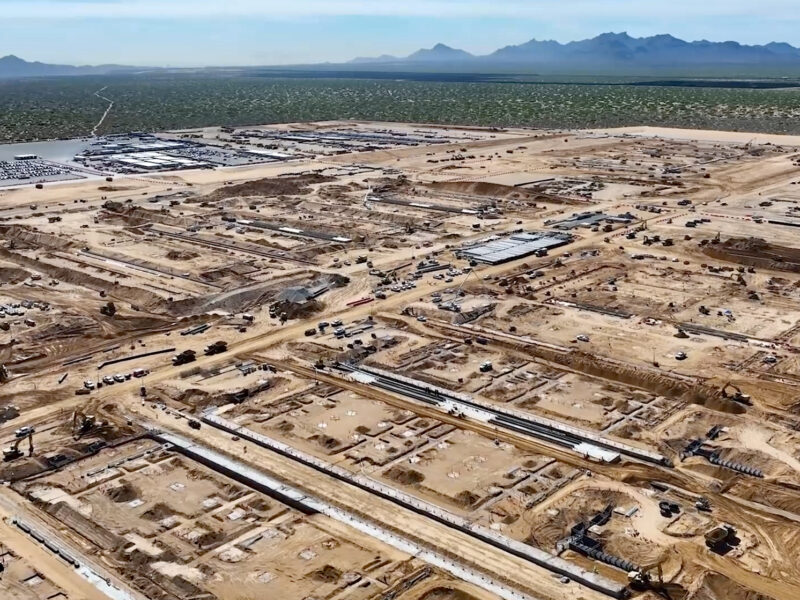
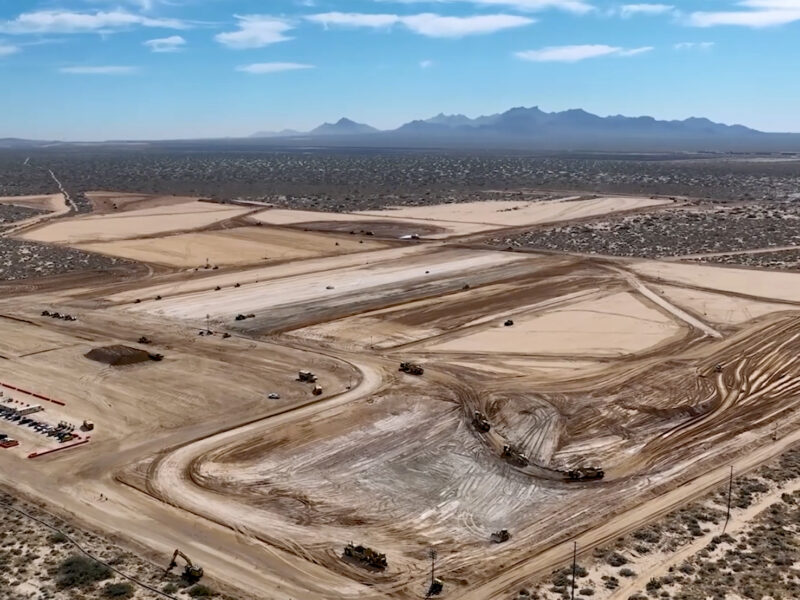
My husband was initially a supporter of this project and we even got any heated argument about it last year when it all came to light. He has since soured on it due to everything that you’ve been reporting on with the dishonesty. He also pointed out that scam artists rush people to sign documents or agree to things without fully understanding what they’re doing. If Project Jupiter was on the up and up, of course they would not have to keep lying. Something Oracle said at the BOCC meeting was that they already had a data center similar to Project Jupiter up and running in Abilene. This is untrue. I have told the county commissioners this. The data center in Abilene is approximately 1:12 of the size what Project Jupiter will be when it is completed, and is itself incomplete. Something I wanted to mention at the BOCC meeting (but couldn’t since I had to cut a minute from my statement) was that Oracle is rushing to fund these things because they are using funding from private equity and investors and those investors are souring on AI. That very morning before thE meeting there was a story on KRWG during the morning market report that stated that investors are specifically pulling away from companies that are involved with and building large scale data centers. I was really hoping to have that discussed. Something I alluded to in my comments then and you did a little in this article is that they could dissolve and then they would be out of all responsibility they have four LLCs that they have set up to run this so when they go out of business all they have to do is file bankruptcy. Oracle doesn’t get hurt. Stack Industries doesn’t get hurt It’s Yucca Growth Infrastructure and Red Chiles, INC (A, B, C and D). There is nothing any of us can do unless it is written into the contract that they cannot do that. That was another thing that I was hoping you could report on. And finally the thing that I was looking up that brought me to your website was there was a story on KRWG today about a gentleman who has done some fly over photography of the site and he said there is a large solar array going up and so I was hoping for someone to be able to find more information about that.
Again, I’m so sad to hear that you are unable to sustain this reporting. I very much appreciate it. I’d like to suggest that perhaps a different forum would be better like YouTube or TikTok? A gentleman I follow on YouTube (@ohhthatsrich) just announced that he is able to support his family with the videos that he’s been doing. He’s been doing them for quite a while and he explains his process and his background in the video where he announces this. I would love to see you do something like that if that is something you would be interested in. If you do, please let us know in your newsletter! I wish you all the best of luck and I wish I had found your website sooner. Thank you!
Thanks for your very kind words, and I’m really sorry I couldn’t keep this going. As for your questions, you ask some very good ones. There are journalists and activists still on this issue, so I’m hoping answers will be forthcoming. Keep on!!!
[…] state senators earlier this month, I listened to so many folks express frustration with Oracle’s broken promises, anger at the secretive process that led to Project Jupiter’s approval, and fear about the future […]
[…] far, those efforts include direct cash payments, divisive tactics around job creation vs. impacts on land, air, and water, and paid social media, TV ads, and influencer […]