 Heath Haussamen
When it comes to Project Jupiter, giant corporations and government agencies have made big promises to the residents of Doña Ana County.
They include the creation of hundreds of permanent good-paying jobs with benefits, money for local infrastructure and other government needs, strong efforts to protect our air quality and finite water, and no impact on residents’ utility costs.
“It’s a data center done right,” the narrator of one of Oracle’s ads proclaims in promoting what officials call the largest private infrastructure investment in our state’s history.
People are skeptical, and with good reason: Data center after data center across the United States has broken promises made to the communities around them. The developers of Project Jupiter, the massive campus of artificial intelligence data centers in Santa Teresa, have already broken one pledge related to their water use.
People are also furious, in part because approval of data centers often bypasses meaningful community involvement that would help build trust. That’s certainly been true with Project Jupiter, and it is especially upsetting given that democracy is increasingly under threat from our federal government.
Missing deadlines
Many of Project Jupiter’s pledges are in legally binding agreements with the county. The mechanism the public has to measure whether Project Jupiter is keeping its promises, and government is holding it accountable, is the reports those agreements require that would detail job creation and economic impact.
We learned last week that two deadlines have passed without Project Jupiter filing required reports.
One agreement — in which the state and county granted Project Jupiter a partial exemption from paying gross receipts tax in exchange for the creation of 750 full-time, permanent jobs — requires the developers to “submit quarterly employment reports” beginning Jan. 31 of this year.
That was nearly five months ago. And a second was due at the end of April.
Explanations for the lack of reporting include that no permanent jobs were created to report, and that the state has yet to build the portal for filing the reports.
Meanwhile, the developers continue their statewide, and sometimes disingenuous, marketing campaign. “We will continue providing updates so residents can see how the project is performing against the commitments we’ve made,” an Oracle official wrote in a column published last week by The Santa Fe New Mexican.
Continue? We’re still waiting for you to start. Submit the reports. Include temporary jobs, and break the numbers down by residency of the employees.
If the state hasn’t yet created a portal for the reports, post them on your website for the public.
It’s ridiculous that, nearly 10 months after commissioners approved this project, with construction rapidly proceeding, the developers still can’t slow down long enough to provide meaningful information to the public — and that government isn’t forcing them to do it.
Afraid of disclosing facts?
All of this begs the question: Why are the developers spending so much money to promote their promises instead of providing us required reports that would demonstrate they’re keeping their promises?
Maybe they are afraid of what the facts would reveal.
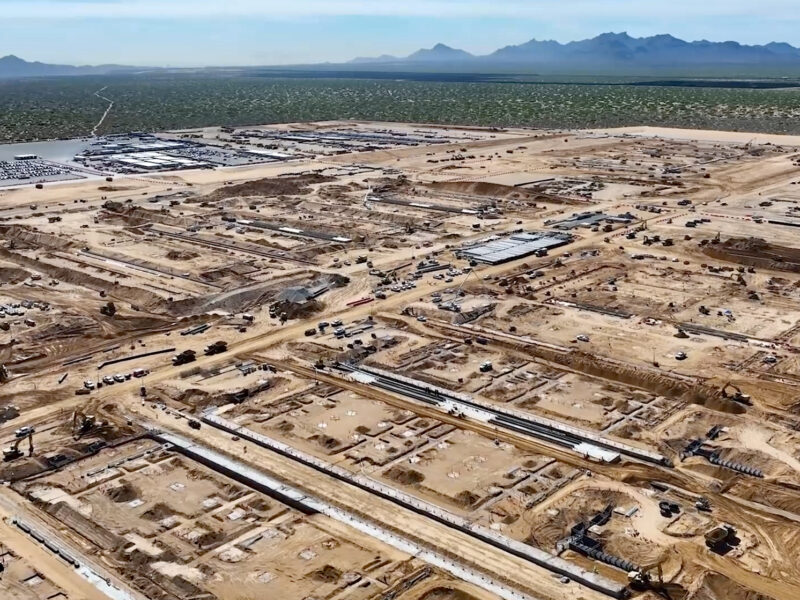
Opponents are quick to point out that the parking lot at the massive construction site, where at last public count 1,200 people were employed, is filled with Texas license plates, and even some from other states.
The truth is a little more complicated than what license plates suggest. These are border communities, and borders are fluid. Santa Teresa is a suburb of El Paso, Texas. Some of those vehicles with Texas plates belong to folks who live in New Mexico. Keeping residency in Texas saves money.
But absent reports from the developers, it’s fair to look at license plates.
They may not provide exact numbers, but they confirm a trend we already know to be true: It’s hard to fill jobs with New Mexicans. We haven’t successfully grown a workforce that’s ready to build something as massive as Project Jupiter.
Government and union officials (including my spouse, state Rep. Sarah Silva) and Project Jupiter’s developers are working to change that dynamic and get more New Mexicans into these jobs.
The reports would help us track the progress of these efforts over time. That’s the sort of transparency that would build trust.
Instead, harming public trust
Instead, the trio that is Project Jupiter’s developers, the county and the administration of Gov. Michelle Lujan Grisham are harming public trust.
The state’s Economic Development Department, which led negotiations on this deal, has consistently acted with disregard for the public. I first became aware of this when the department flagrantly — and illegally — failed to provide documents I requested under the state’s Inspection of Public Records Act.
Most offensive is the way legislation that exempted microgrids like Project Jupiter’s from clean energy requirements was snuck past our elected lawmakers and to the governor for her signature.
I have relentlessly documented the county’s violations of transparency laws and the exclusion of the public from the process of approving its agreements with Project Jupiter. I won’t repeat all of it here, but I’ll add that, since my last column, the N.M. Foundation for Open Government has sued the county for additional violations of IPRA that I didn’t previously know about. The problems are systemic, and they’re severe.
Add the developers’ dishonest marketing campaign, and the situation is outrageous.
County officials have tried
Frankly, I don’t care what twisted justification exists for not filing these reports. I don’t care whether the developers, county or state are to blame. I want the public to have the reports — now.
They are the mechanism the developers have to demonstrate that they are keeping their promises.
I never expected the developers to keep those promises unless they’re forced to do it. They can pretend they’re invested in our communities, but they’ve demonstrated that the only concern they have is profit.
I never trusted the Lujan Grisham Administration to hold the developers accountable. They’ve proven the opposite.
County officials, on the other hand, have tried. That’s why I devoted so much reporting and writing last fall to pushing the county to get it right. And in some efforts, they succeeded: When the state exempted Project Jupiter’s microgrid from clean energy requirements, for example, county officials put that requirement in their legal agreements.
County’s competence in question
But the county has failed in other ways — by excluding the public from meaningful involvement in the process, and by bowing to a threat from the developers to go elsewhere unless commissioners approved incomplete agreements last fall that they and the public hadn’t even had time to read.
The developers of data centers build in communities they believe they can push around. County commissioners proved them right that day. Now it appears the developers believe legally required reports are optional.
Parallel to its work on Project Jupiter, the county is dogged by a damning state audit that reveals extensive and systemic problems in the way the county has been operating. The commission chairman calls the audit politics. County administration says it’s already dealt with many of the problems.
It’s more serious than they admit. Last week, the state’s Department of Finance and Administration mandated additional oversight of state money flowing to the county until it addresses the problems, the Albuquerque Journal reported.
In a letter to the county directing it to appoint an independent fiscal agent to oversee state funding, DFA Deputy Division Director Hallie Brown referenced the “systemic, pervasive, and long-standing failures in Dona Ana County’s management of public funds.” Brown warned that noncompliance could result in additional sanctions.
I don’t doubt that county officials want to hold Project Jupiter accountable. I question their ability to do it. During last week’s meeting, commissioners didn’t seem to even understand which companies in the massive web of businesses created by Oracle and the others behind Project Jupiter are accountable for the failure to file job reports.
Opposition will grow
Americans largely oppose data centers in their communities. Doña Ana County residents are no exception. Until the county involves the public in meaningful ways and displays more competence in its efforts to hold Project Jupiter accountable, public anger will worsen.
Until the state, and especially our governor, start acting like they’re working for the people of New Mexico instead of out-of-state corporations, anger will become rage.
And until Oracle and the other developers start behaving like responsible corporate citizens, their data center project will be a pariah.
Project Jupiter may be built. Oracle and the other developers may make money, use our water and pollute our air. They may give us some jobs. But we won’t trust Project Jupiter, and we won’t trust the government officials and agencies that made it happen.
Instead, while the developers and government officials scorch earth, opposition to Project Jupiter will continue to grow.
AN ASK: Shining light on critical issues like Project Jupiter is my livelihood. Support my work by making a donation today or signing up to make monthly contributions by clicking here. Thank you!
DISCLOSURE: State Rep. Sarah Silva, who initially supported Project Jupiter but has recently been more critical because of the developers’ shifting commitments and the ongoing exclusion of New Mexicans from the approval process, is my spouse.
I laugh when the County Commissioners complain about how the audience at the Commissioner’s meetings are disrespectful. These Commissioners, with the notable exceptions of Commissioner Chaparro and Kimble who joined the Commission later, are the people who brought these ruthless carpetbaggers into our community. I frankly believe they deserve the same “scorched earth” treatment Jupiter is dishing out to us.
I don’t believe any of us deserve scorched earth treatment, but I understand why people are so mad at those county officials…
What a piece of trash. I had to plow through this whole long monologue looking for Project Jupiter’s side of the story and didn’t find it. Fake news. The only nugget I found was that Heath Haussamen apparently is the husband of state legislator Rep. Sarah Silva. You can see employment reports on ProjectJupiterTogether.com “As of April 2026, the project employs more than 1,200 team members, surpassed 1 million hours worked, and reached a new daily high of more than 1,600 onsite personnel.”
Thanks for your comment. A caption on a video on Project Jupiter’s website confirmed the number I had in this column, 1,200 employees? Great! Thanks for sharing. That’s one of the sources I used to confirm the number I reported.
Also, a video caption is hardly an official report that complies with their legal commitment to the county and state. Nor does it include many details a report would include.
Have a nice day.