 Heath Haussamen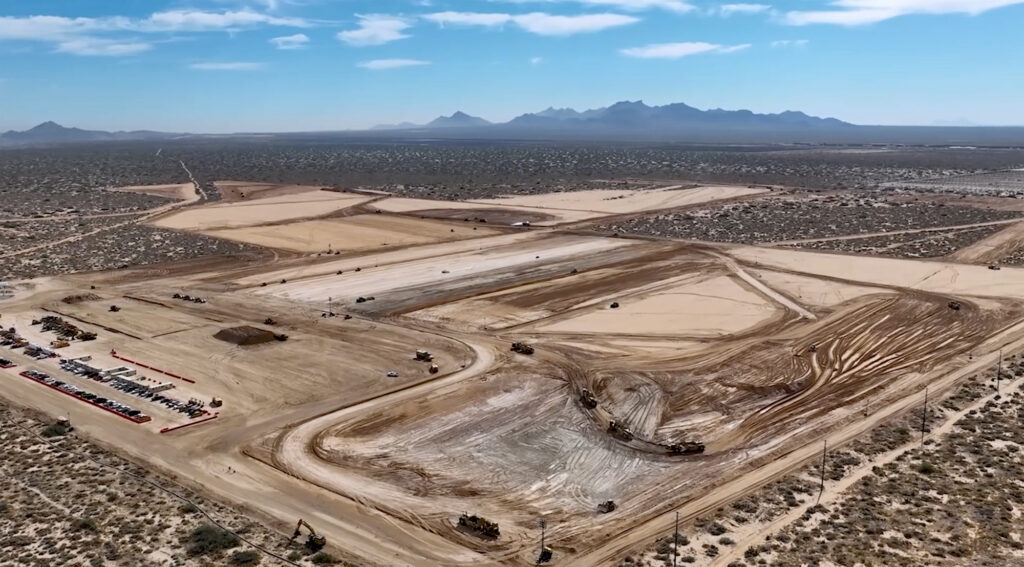
Project Jupiter’s new plan to generate electricity for its data centers with fuel cells instead of gas-fired power plants means water use will be very low, its developers say.
The shift away from burning natural gas also means a reduction of about 30 percent in emissions, based on numbers included in air quality permit applications.
And county officials say Oracle, one of the primary developers of the massive campus of advanced artificial intelligence data centers in Santa Teresa, has improved communication, which increases transparency around the project.
Doña Ana County Commissioners Susana Chaparro and Manuel Sanchez, the board’s chair, met recently with officials from Oracle. Before that, Sanchez had been complaining for weeks about a lack of communication from the developers.
“I feel like we’re back on better footing,” Sanchez told me.
Chaparro still has questions but said she is “relieved” by the improved communication. She said the Oracle officials “seemed open, seemed knowledgeable, seemed to be more prepared than the other representatives I’ve heard in the past.”
I’ve had an ongoing email conversation with representatives of Oracle and BorderPlex Digital, another Project Jupiter partner, since April 27, when they announced the new plan for power generation. My aim was to better understand how the use of fuel cells will impact Project Jupiter’s commitments to our community, and our air and water.
It took awhile, but Oracle answered all my questions. That is another sign of increased engagement with our community. In the past, the developers often refused to answer my questions.
Here’s what I’ve learned:
On water use
Project Jupiter’s promise of low water use for operations — an average of 20,000 gallons per day and a peak of 60,000 per day — is the primary pledge that set it apart from many other data centers in a positive way.
We knew the developers planned to also buy water from a nearby sod farm for construction and the initial filling of cooling systems, but expected that to be temporary based on pledges made to the public and county officials.
That came into question last month when the Office of the State Engineer said Project Jupiter planned to use up to 1 million gallons per day in operations of its gas-fired power plants. The developers never confirmed or denied that number but did acknowledge they planned to use sod-farm water in operation of their power plants, which would have made their water use substantially higher than promised.
Now that they’ve switched power sources, the developers are recommitting to low water use. They say they will use a minimal amount of non-potable water from the sod farm once construction is complete.
The initial fill of the fuel cells’ cooling system will require 960,000 gallons of water, or “the amount of water used by just nine households in a year,” Oracle says in a blog post.
After that, Oracle spokesperson Michael Egbert told me, “ongoing water maintenance needs” for the power plant will be about 167,000 gallons per year. Annual maintenance of the cooling systems at the four data centers will require no more than 4,000 gallons, he said.
“This is a negligible amount of water, especially relative to the size and scale of the power being generated,” Egbert said.
It averages out to just a few hundred gallons per day, Sanchez pointed out. He expects overall water use to remain within the 20,000 average daily gallons promised publicly.
Chaparro wants accountability. She asked, again, that a limit on use of non-potable water be added to the county’s legal agreements with the developers.
On power generation
Project Jupiter initially sought permission to emit more than 14 million tons of greenhouse gases into the air each year. With the shift to fuel cells, the developers are now asking to be allowed to emit 10.1 million tons per year, as detailed in the air quality permit application filed with the N.M. Environment Department.
While that’s a substantial reduction, it’s still more than the cities of Albuquerque and Las Cruces emit each year, combined. It’s also roughly equivalent to the yearly emissions from about 2.2 million passenger vehicles.
Redundancy is built into power generation. Project Jupiter’s actual emissions will be 18-35 percent less than 10.1 million tons per year “depending on the time of year and the utilization of the servers at any point in time,” another Oracle spokesperson, Candice Van Der Laan, told me.
Fuel cells are expensive. Using them to power such a massive project is essentially unprecedented. Solar is cheaper, but the amount of generation needed — 2.45 gigawatts, or an amount roughly equivalent to El Paso Electric’s entire generating capacity in Texas and New Mexico — would require somewhere around 20-30 square miles of land for solar panels. That would lead to substantial habitat destruction.
Still, I wanted to hear why Oracle doesn’t have at least some solar generation in its plans. Bloom Energy’s fuel cells better meet the need, Egbert told me.
“Project Jupiter requires highly reliable, around-the-clock power,” he said. “…for this deployment we need a power architecture that can provide consistent, resilient service at data-center scale.”
The state requires utility companies like El Paso Electric and PNM to be net-zero carbon by 2045. The language in state law exempts microgrids that aren’t connected to the grids the rest of us use — like Project Jupiter’s fuel cells — from that mandate.
Regardless, the county’s legal agreements with the developers include that requirement. To keep its 30-year property tax emption, Sanchez pointed out that Project Jupiter must move to clean energy in the next 19 years.
The fuel-cell technology allows natural gas to be replaced over time with biofuels, hydrogen, or a blend, Egbert said.
On Project Green
Oracle’s shift to fuel cells means an effort to develop up to 1 gigawatt of clean energy generating capacity in the coming years called Project Green is no longer part of the plan for Project Jupiter.
But that effort by BorderPlex Digital Assets continues, said Bryson Hull, a spokesman for that company. It’s just separate from Project Jupiter.
“With the project’s meaningful shift to cleaner fuel cell technology, the needs and focus for Project Green have evolved,” Hull said. “All parties continue to evaluate long-term investments in renewable energy across the region, and BorderPlex remains actively engaged in assessing the area’s geothermal potential.”
Oracle’s Egbert also called that work “a separate BorderPlex initiative.”
Southern New Mexico has substantial potential for the development of geothermal as a clean energy source. BorderPlex Digital announced in January that it had contracted with New Mexico Tech and the state to help it examine the possibilities.
What state lawmakers are saying
State Rep. Sarah Silva, a supporter of Project Jupiter (and this reporter’s spouse), authored a column published by the news organization El Paso Matters promoting trainings that will help folks get jobs building Project Jupiter. She wrote that she’s cautiously optimistic about the switch to less-polluting fuel cells. She said she will be monitoring water use.
“I’ll push for Project Jupiter to become greener,” Silva wrote. “I’ve been learning about New Mexico’s substantial potential for tapping into geothermal energy. I’ve been talking with New Mexico State University about a geothermal microgrid they’re planning.”
State Rep. Nathan Small, another supporter, praised the shift to fuel cells and Oracle’s improved communication.
“The place we’re emerging from was unacceptable, both in terms of resource use and lack of communication and lack of transparency,” he told me.
Project Jupiter remains highly controversial, and Small credited folks who have made their voices heard, including opponents of the project, with forcing Oracle to shift its power plans.
“The investment of time, energy and people’s feelings, their questions, their opposition or their support — all of that is very welcome,” he said. “It’s helped bring us needed changes.”
Small encouraged folks to keep pushing for Project Jupiter and other development projects to provide greater benefits in terms of jobs, reductions in emissions and water use, and protection of wildlife habitat and watersheds.
“I think our community should not be hesitant, nor shy, in fighting for more investment,” Small said.
Silva called for the state to learn from its experience with Project Jupiter by creating rules for future data centers “that require more community involvement and protect our water and air.”
State Sen. Jeff Steinborn is working on one aspect of that. He has proposed legislation to force microgrids to produce zero-carbon energy by 2045.
Steinborn, who doubts Project Jupiter will stay around for the 30-year term of the property tax exemption, isn’t sold by the shift to fuel cells.
“It’s still going to be a massive polluter at 10 million tons a year,” he said. “It’s imperative that they deploy a significant amount of renewable energy to continue to reduce and minimize their carbon footprint.”
What county commissioners are saying
Chaparro, meanwhile, is listening with an open mind. She described herself as “more comfortable with what I heard (from Oracle), but not sure if I can trust it.”
She wants the county to hire its own experts to examine Project Jupiter’s plans and provide “more neutral information” to commissioners.
“If the county were able to speak to our own subject matter experts… it would make me feel better about this data center,” Chaparro said.
Sanchez, meanwhile, said he is grateful for the developers’ increased communication. He said Oracle has committed to meeting twice a month with county officials. Sanchez raised the possibility of monthly presentations to the county commission and public on Project Jupiter’s progress.
Oracle is also creating a website that will publicly track numbers of people working to build Project Jupiter. It will identify how many are New Mexicans and how many are union members, Sanchez said.
Sanchez also met with officials from OpenAI, the company that will use Project Jupiter’s computing power. With New Mexico State University building an artificial intelligence academic program, he asked about the possibility of OpenAI providing special access for professors and students in that program.
“That would be an amazing step forward,” he said.
Commissioners worked to build legal protections for the community into the county’s agreements with Project Jupiter, Sanchez said. He shares Silva’s desire to standardize such protections for future development projects.
“It is my hope that Project Jupiter is an example of doing it the right way,” Sanchez told me.
What’s next?
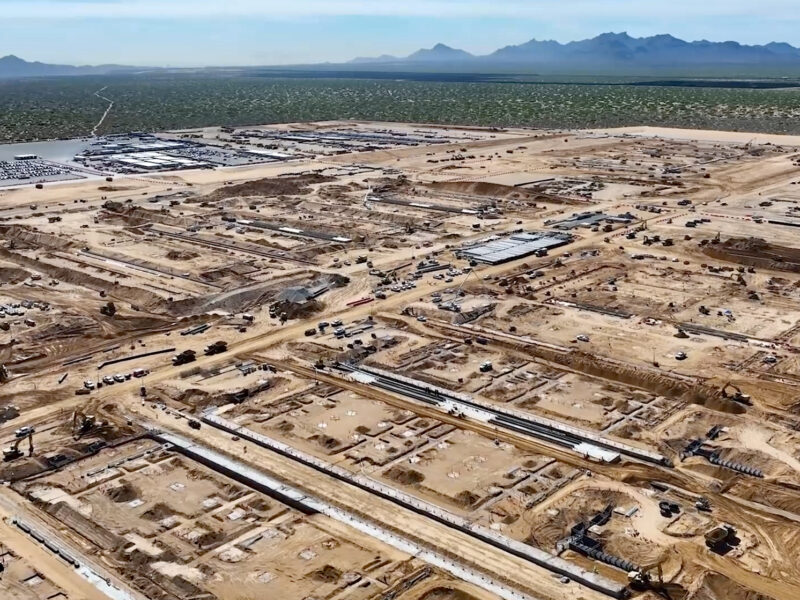
In the meantime, construction on Project Jupiter continues at a rapid pace. In her column, Silva described visiting the site recently and speaking to 1,200 workers there. She said 20 percent are New Mexicans.
The Environment Department is reviewing the application for the fuel-cell power plant to determine whether it is complete. If it is, a technical evaluation is next, and the department will solicit public comments.
Opponents of Project Jupiter have advocated for months for the county to hold a public meeting in the Santa Teresa area on the project. The meeting, which will include the developers, has been tentatively scheduled for June 18 from 5-8 p.m., county officials say.
AN ASK: I’ve been watchdogging Project Jupiter since the beginning. I won’t stop. I’m trying to grow my donor base to include 100 recurring monthly supporters. Please, help me by making a donation or signing up to make monthly contributions. Thank you!
DISCLOSURES: State Rep. Sarah Silva, a supporter of Project Jupiter, is my spouse. And state Rep. Nathan Small, another supporter, performed our wedding.
Caveat emptor: https://goodjobsfirst.org/ai-data-center-companies-want-public-support-their-rap-sheets-show-why-communities-should-be-wary/
“The same corporations now promising jobs and innovation have been penalized for privacy violations, wage and hour violations, anti-competitive practices, environmental violations, False Claims Act cases (defrauding the federal government), and more.
Oracle, the company behind the massive “Stargate” data center projects, has paid out one of the highest amounts of back wages and penalties for wage and hour violations of all the companies involved in data center development: over $117 million for allegedly failing to pay its workers overtime and paying female employees less than their male counterparts (it’s worth noting fines against companies cheating workers out of pay are notoriously low). Oracle also has the largest settlements related to the False Claims Act for charging the government higher prices for its products than commercial clients.”
but yeah, they’re “transparent.”
Hey, thanks for sharing that link!
The term ‘fuel cells’ is catchy but I urge digging deeply into how they work and where they carrently are used. Dig deep to find actual water use data. of existing fuel cells. Has what you have been told verifiable or just speculative. I know this is time consuming but it is necessary to verify what you are being told..
Good feedback, thanks.
Settling for ANYTHING other then reducing our CO2 emissions (and water use for the commodity that is AI) right now as humans is a massive loss. These are not “substantial reductions” when put next to Meta, being built in El Paso, that will use EPL’s backup diesel generators for power and has already caused Chaparral residents to lose water pressure. Fort Bliss is building a data center and Socorro and Gallup has one in the works. This is not just a story about Project Jupiter. This is not just a story about New Mexico data centers either. Project Jupiter and data centers across the nation are reliant on fossil fuels. We cannot look at this as a single project that is “on better footing.” Our future cannot afford data centers and your reporting is simply providing a platform to amplifying the narrative billion dollar companies are selling us. You are amplifying the non democratic decisions of our commissioners. This community does not want this data center in the first place and DID NOT have the time to meaningfully interact or be represented in this decision, period. Your reporting does not do justice to this community. You are complicit, Heath.
I’ll tune in here, in the future, to hear from people in office who have abused their power and the people they represent. Thanks.
Thanks for your feedback, Annie. FYI, the story in Chaparral is that one of the water companies allowed the construction crew building the Meta center to use water from its hydrants, but he cancelled that contract and cut off their access to the water because it was impacting water pressure for Chaparral residents. My understanding is it’s not happening anymore.
For what it’s worth, I agree completely, and have from the beginning, that the community did not have time to meaningfully interact or be represented in the tax-break decision the county commission made. That’s why I called for commissioners to delay the vote. They ignored me, but I certainly screamed about it.
https://haussamen.com/2025/09/18/county-commissioners-should-delay-project-jupiter-votes/
What other journalist has been as insistent about transparency, involving people in the process, and doing things in a way that builds up democracy, rather than eroding it?
Thats not enough. Where are the independent environmental studies?. .none. Just a sales pitch like before. We don’t want this data center!!!!! Fix our roads, provide long term jobs. This is ridiculous.
I appreciate you adding your voice to the conversation here!
In the spirit of transparency, I think it would be helpful for you to post your correspondence with the Jupiter folks. I’d be interested in seeing the questions you asked and their responses.
Glenn, that’s an interesting idea. I have an idea for another story where this might be appropriate, but tell me a little more about why you think it’s a good idea and what you think you and the public would gain from it? Thanks.
As we have learned from past experience with this project, there is sometimes a mismatch between the question asked and the answer given. Before this fuel cell proposal, if you asked about water, you got an answer about potable water. If the Commissioners signed a deal for a microgrid, it ended up with proposals for two microgrids. Even in your article there is some confusing information, They say they are going to be below the amount of water use they originally proposed. If you recall, that figure was for potable water, So, why do they seem to be holding open the possibility of using sod farm well water? Maybe I am misreading, but I’d sure like to know what is going on there. Ultimately, the major failure by Commissioners was to not invite the public to examine and provide feed back on this proposal. It’s huge, with many moving parts. Much we have plenty of expertise within the community who can provide valuable knowledge about various aspects of it. I don’t claim to understand all that they are doing, especially since so much was kept secret, but I think we have collective knowledge that could make great progress, if given the chance. So, give them the chance.
OK! Sorry for the slow response; I’m with family this week, but I think this is a good idea and I appreciate the suggestion. I’ll work on it!
Glad to see that all it takes for a shift in critical analysis is the project being willing to talk back and share all their own research and data. No matter what, this was still a huge debacle on our county commissioners part. With little to no true due diligence done. This project will still be putting out huge amounts of pollution. AND they still havent spoken on what they will do with the treated water for the closed loop system. Its that treated water that was responsible for higher cancer and miscarriages in Oregon. There is still so much wrong with this project and the county is not benefiting from its presence. This is also not the only data center in the area. There is already one in El Paso with a second on the way and another being proposed in Otero County thats 4 centers all pulling from the same water sources and all dumping their pollution in an already highly polluted area. NO MORE AI!!!!
Thanks for sharing your feedback here!
Heath, I want to push back a little on the idea that 20-30 square miles for solar + battery is an impossible amount — that’s basically an area 5 miles by 5 miles, which is like a postage stamp on the vast amount of land west of I-25 and south of I-10W. There are an increasing number of sites internationally that have that much and more in solar. It needn’t interfere particularly with habitat either — if thoughtfully done it can provide shade and refuge for all kinds of species to inhabit. You’re absolutely right, though, in concept: Project Jupiter should be developing a large amount of solar + battery from the very beginning, counting for it to gradually replace most of the fuel cells over time.
Thanks for the feedback, Don. I understand what you’re saying, and I’ve spent a ton of time on land across Southern New Mexico investigating the impact of climate change, overgrazing and other harmful things. It’s extreme. I can point out spots where fenceposts were cut to the ground a few decades ago but now pieces or iron are sticking up out of the ground several inches because aridification and then wind carried the topsoil away.
Even five square miles that is cleared of stable plants with deep roots gives me heartburn — and that’s what is generally done for solar arrays. I’d much rather see solar on existing rooftops and parking lot shade structures everywhere than massive arrays that destroy even more habitat — but then again, that would decentralize the grid, whereas allowing huge arrays on public land gives big corporations even more power and control over our land. So big corporations generally don’t want that to happen and work to disincentivize it.
Solar is and has to be instrumental in our power future. I am certainly not against Project Jupiter using solar power. I think it should include a strong solar component, and I wish there was a stronger effort to push it in that direction. I want a state law that clearly requires green energy, so the only legal requirement isn’t in a contract with Doña Ana County.
It will be interesting to see what happens over time. Thanks again for the discussion!