 Heath Haussamen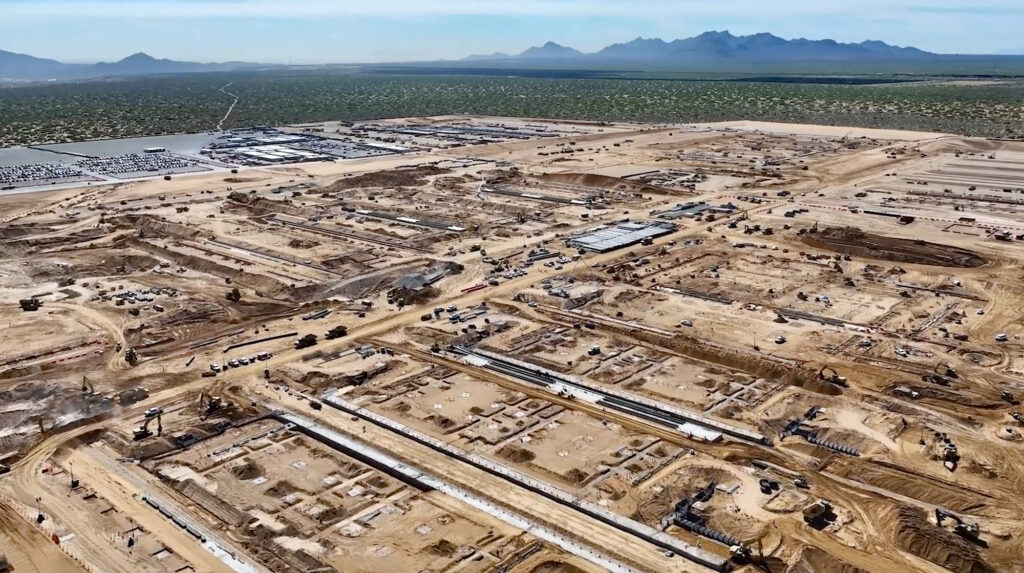
A tense exchange between two Doña Ana County commissioners at last week’s meeting clarified for me the disconnect that continues to ignite angry conflict about Project Jupiter months after construction began.
They were discussing the county’s broken promise to hold a town hall this month on Project Jupiter. It was to be a meeting in which commissioners, the developers and the public could have an open discussion.
We learned days before the promised meeting that we would instead get a corporate-run open house and job fair. It was held Wednesday evening in Sunland Park.
The bait-and-switch understandably had people up in arms. Rowdy folks blasted their elected officials during public input at last week’s meeting and interrupted other parts with shouting.
In defending the decision, Chairman Manuel Sanchez said town halls, like commission meetings, often devolve into shouting and aren’t productive.
He said people are seeking information, and officials from the companies building the massive campus of artificial intelligence data centers in Santa Teresa would staff booths at the open house to respond to questions.
Commissioner Susana Chaparro — who said she was blindsided by the switch to an open house — insisted the county hold a town hall. It should include independent experts who could help commissioners and the public understand and evaluate Project Jupiter, she asserted.
Chaparro was the only commissioner to vote against the county’s legal agreements with Project Jupiter’s developers last fall. She has relentlessly complained about the exclusion of the public, and in many ways commissioners, from meaningful involvement in the process. A town hall, Chaparro said, would finally be a moment where folks could become involved and informed.
Sanchez responded by chiding Chaparro for not doing her own research and talking to experts, which he said he has done. Exasperated folks in attendance at the meeting started shouting. They didn’t stop when Sanchez demanded silence.
A visibly irked Sanchez gestured to the crowd while looking at Chaparro, and said, “You see?”
County government is to blame
Sanchez’s I-told-you-so moment illustrates the divide between people who are begging for the county to stand up for its residents and the officials who are frustrated folks don’t see their work to do that.
While I recognize the latter, I want to state unequivocally that it’s the county’s fault we’re here. Commissioners failed to do some critical things last fall before voting to enter into legal agreements with the developers of Project Jupiter:
• They should have ensured that they and the public had complete drafts of the documents before the votes, so everyone had a chance to read, understand and provide input on the proposal. They didn’t.
• Then, at the Sept. 19 meeting where they voted 4-1 to approve massive tax breaks in exchange for money and protections for the county and its residents, commissioners should have asked tough questions to ensure accountability. They needed to force the developers, on the record and in front of the public, to answer clearly. None did.
• Absent those things, commissioners should have delayed the votes. Instead, they let the developers hold them hostage with a threat to abandon the project if they didn’t approve the tax breaks that day.
With those bad decisions, county officials set themselves up for months of criticism from the residents they marginalized. They also showed the developers that they could get away with threats, broken promises and other bad behavior.
Dishonest water claim
Now the developers, led by the multinational tech company Oracle, are engaged in a dishonest spin campaign.
“Project Jupiter does not use drinking water for cooling or power generation,” declared a full-page ad Oracle ran Sunday in the Albuquerque Journal. “The data center cooling system and fuel cell power use ~460 gallons of non-potable industrial water per day.”
Oracle paid to have the ad run on two different pages — one in Spanish and the other in English. Similar ads have also been running in the El Paso Times.
The goal is to get you to submit comments to the N.M. Environment Department in support of Project Jupiter’s application for a permit to build a highly polluting power plant. They’re also paying canvassers to knock on New Mexicans’ doors, running ads on social media, and trying to hire online influencers to shift public opinion in their favor.
The rhetoric about water is sophisticated corporate spin. The truth is that all water is just… water. Potable wells that provide water to our homes and non-potable wells intended for agriculture and industrial uses draw from the same groundwater.
And it’s finite.
Our reality in an aridifying desert is so serious that county and state officials are making plans to build a desalination plant, at a cost of well over $100 million, so they can tap into deeper groundwater that isn’t currently drinkable and make it safe for us.
The situation is so dire that the U.S. Supreme Court just approved a settlement that requires New Mexico to retire more than 18,000 acre feet of annual groundwater use in the lower Rio Grande, where Project Jupiter is being built, so more surface water will flow to Texas instead of seeping into the ground here.
We can’t trust Oracle
Oracle’s dishonest rhetoric amplifies the developers’ broken promise to only use non-potable water during construction, and then stop.
A flaw in the county’s agreements with the developers let Project Jupiter break that promise. The agreements limit potable water use to 20,000 gallons per day but place no limit on non-potable water.
That’s quite a loophole.
It’s unfortunate, because Project Jupiter’s pledged water use is really low — not only compared to other data centers, but even compared to many other industrial uses. If we’re going to have development that creates jobs, we need projects that use little water, as Oracle promises.
But we can’t trust what Oracle promises. The sod farm that is selling Project Jupiter non-potable water is permitted to use more than 2.2 million gallons per day. How do we know Project Jupiter won’t use it all?
But not to worry, Oracle’s marketing campaign tells us. If you support jobs, clean water and clean air you support Project Jupiter.
The project’s revised power plan reduced proposed emissions by about 30 percent, but it still seeks permission to emit 10.1 million tons of greenhouse gases per year. That’s more than the cities of Albuquerque and Las Cruces, combined.
That’s less-dirty air than their previous plan, but it’s not clean air.
Jobs are another contentious point. The legal agreements require Project Jupiter to create 750 permanent jobs. That’s substantial, but it’s also half of what Project Jupiter’s marketing campaign promises the public.
These are among the reasons people remain skeptical of Project Jupiter and upset that the majority of county commissioners aren’t acting on that skepticism.
Too many betrayals
There have been too many betrayals of the public’s trust. Project Jupiter’s developers have been in charge from the start. Gov. Michelle Lujan Grisham fawned over them. County Manager Scott Andrews signed non-disclosure agreements that required county staffers to keep negotiations with the companies secret — even from the commissioners who are his bosses.
State and county employees negotiated the deal, and only looped in our elected representatives at the last minute. Sanchez and Commissioner Christopher Schaljo-Hernandez worked at that point to secure protections for the county and its residents, but didn’t force a slowdown that would have given them time to be thorough and rigorous in their consideration of the deal.
In a particularly disastrous example of how shoddy this process has been, I discovered in December that Sanchez and Schaljo-Hernandez had a different interpretation than county staff of how much water the finalized legal agreements allowed Project Jupiter to use.
To make matters worse, neither interpretation was correct. Project Jupiter is allowed to use lots more water than the two commissioners wanted, or intended.
Clearly, the county didn’t do its due diligence before approving the agreements. That due diligence is what many people still want. It’s what we all need.
Instead, folks who regularly set aside their busy lives to sit for hours at commission meetings so they can speak during the public comment period got contempt from Andrews at last week’s meeting.
“Those calling for more engagement, we’ve had hours and hours of public comment,” the county manager said. “… We continue to hear from the same 50 people throughout the community that are really upset about this.”
Sanchez and Schaljo-Hernandez deserve credit for ensuring some legal protections for the county’s residents in the agreements. That’s more than Lujan Grisham’s administration gave us. The state exempted microgrids like the power plant Project Jupiter plans from a mandate to be net-zero carbon by 2045, so the county put that requirement in its legal agreements. And the two commissioners tried, even if they failed, to limit the amount of water use to an average of 20,000 daily gallons.
But process matters. Being in relationship with your constituents matters. Public accountability matters. These things make agreements better.
When you’re up against out-of-state corporations that don’t care about our communities, these things are essential.
Bring in independent experts
I don’t doubt Sanchez’s sincerity. I also don’t doubt that he has worked to understand the agreements in the months since he voted to approve them, even if he didn’t fully understand them on the day of the votes.
But the fact that commissioners approved these agreements before they were finalized, and without publicly questioning the developers, has the county playing a guessing game about what the developers plan to do and how they interpret the agreements. It hasn’t worked out so far.
This stuff is complicated. It’s been difficult for me, and I’ve spent my career learning about complex things from experts and translating for the public.
Leaving the job of educating commissioners and the public to corporate officials who have proven themselves untrustworthy is not useful or acceptable. Bringing in independent experts, as Chaparro suggests, is a good idea.
But even that isn’t enough.
We need a town hall
Our community still needs, and deserves, what commissioners should have done before voting on these agreements.
We need an official meeting of the county commission, an open session that’s recorded and archived. We need the county to require the developers’ attendance.
We need our commissioners and the developers to go through the Project Jupiter agreements together, in front of the public, so we can verify that the developers share the county’s understanding of those documents.
Given the misunderstanding about water use, I’m not convinced they do.
Commissioners need to ask the developers hard questions on the record, in front of the public. For example, ask why Project Jupiter broke its public promise on water use. What are its current plans for water use? (I’ve asked and reported on this, but my articles are not official records.)
How will the developers reach net-zero carbon power generation by 2045?
Will Project Jupiter create 750 permanent jobs or 1,500?
Hold the developers accountable
Commissioners should also negotiate. Ask the developers, in front of the public they’re so desperate to win over, to derive 15 percent of their electricity from solar from the day the data centers go live. Ask them to change the language in the agreements to limit all water use, not just potable use, to 20,000 gallons per day.
Ask to increase the legally required number of permanent jobs to 1,500. If Oracle’s marketing campaign isn’t just spin, they should agree to do that.
More than two decades ago I watched then-county Commissioner Gilbert Apodaca grill Santa Fe art dealer Gerald Peters about his proposal to build a casino in Anthony. With the public watching, he asked Peters to commit to paying 100 percent of health-care premiums for employees working at the casino.
Peters had no choice but to agree.
Those commissioners voted to support that proposal, but it was later rejected at the federal level. Regardless, Apodaca stood up for the county’s residents that day and won an important commitment.
Sanchez told me last fall that it will be on the county to hold Project Jupiter’s developers accountable. People need to see him and other commissioners asking hard questions and getting clear answers from the out-of-state corporations that are spreading lies and have broken promises.
They need to see their representatives in government advocate for them instead of defending the developers. And people must be allowed to give public input — not only to commissioners, but also the developers.
No substitute for the work of democracy
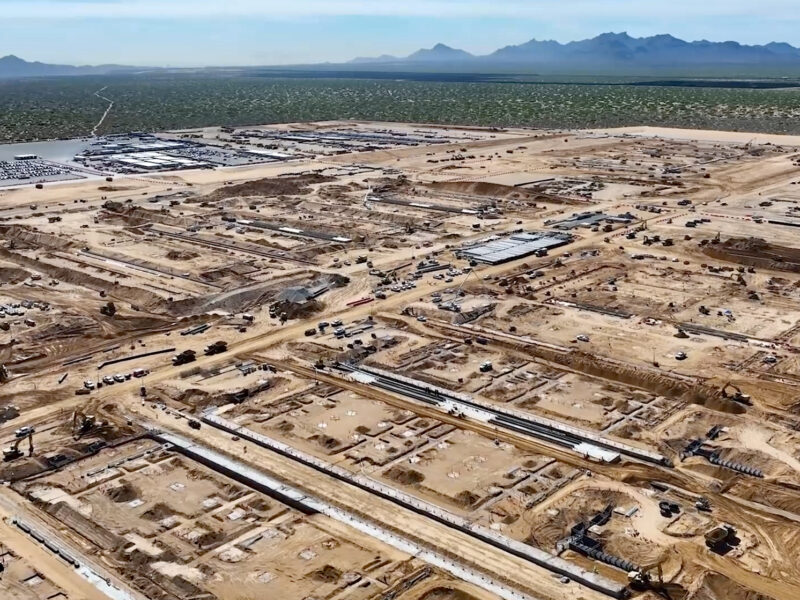
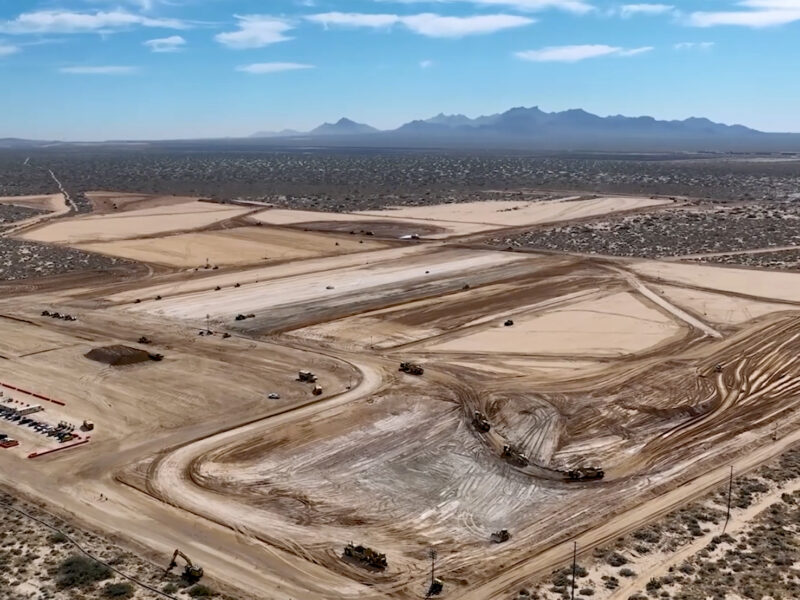
Project Jupiter is happening, as Commissioner Susie Kimble said at last week’s meeting. Construction is proceeding rapidly. “We can’t stop it,” said Kimble, who wasn’t on the commission last fall at the time of the votes.
Cancelling the county’s agreements with Project Jupiter, as some opponents want, wouldn’t halt the project, but it would eliminate the only real protections we have. That would be disastrous.
We need these agreements, even if they’re flawed.
We also need jobs. The developers should hold employment fairs and help ensure as many New Mexicans as possible work at Project Jupiter. (My spouse, state Rep. Sarah Silva, has been working to facilitate union and community college partnerships that help New Mexicans get these jobs.)
But a corporate job fair and open house is no substitute for the difficult, messy work of democracy that commissioners failed to do last fall. That’s work they still owe us, the 230,000 people who live in this county.
And there’s a real chance that doing that work, even at this late hour, can improve our county’s deal with Project Jupiter.
AN ASK: Shining light on critical issues like Project Jupiter is my livelihood. If you want me to keep doing it, I need your help. Make a donation today or sign up to make monthly contributions by clicking here. Thank you!
DISCLOSURE: State Rep. Sarah Silva, who initially supported Project Jupiter but has recently been more critical because of the developers’ shifting commitments and the ongoing exclusion of New Mexicans from the approval process, is my spouse.
These county commissioners were totally outclassed by the Project Jupiter folks strategically. They didn’t know the questions to ask or how to negotiate. They didn’t hire professionals with expertise in micro grids, data centers, environmental impacts,etc. They were seduced by the wealth and glamor. This will likely be the biggest policy blunder this county has ever seen.
Thanks for weighing in here!
Bernie, you are correct but I don’t believe the 4 commissioners were outclassed especially having the information the developers provided was INCOMPLETE. They were courted by the developers…”Stupid is as stupid does”. It should have never, ever been approved!
Heath,
You are spot on with your detailed reporting. The residents of Doña Ana County deserve to have their voices heard and their questions answered on a project as complex and consequential as Project Jupiter.
The enormous sums being spent on PR and advertising to portray Project Jupiter as a benefit to our county are striking. The way the project’s proponents steamrolled both the County Commission and the public in order to secure approval is precisely why there has been such widespread negative reaction.
The County Commission appears to be in over its head on this matter. As you point out they would benefit greatly from outside expertise and independent review to help shore up the agreements, protect the public interest, and ensure the process is truly transparent and fair.
Thank you for continuing to cover this important issue in our county.
Great to hear from you! And thank you for your kind words…
The commission wasn’t steamrolled. They actually want the economic development and the increased revenue.
Thank you, Heath.
I think there are some ideas you didn’t cover.
Your readers do not seem to know that Jupiter purchased the rights to use 2.2 million gallons a day when they purchased the Turf Farm. Unless you want to rewrite the water use laws in New Mexico, the state/county is obligated to let Jupiter use that much water unless it cuts the allotments for everyone. Presumably, if the Data Center wasn’t built there, some other enterprise would have purchased the land and used the 2.2 million gallons a day for some agricultural purpose. So denying Jupiter the use of the land for a data center will not prevent Jupiter from using the water for another purpose. Your readers don’t seem to know this. Nor do they know that 2.2 million gallons a day are about one-half of one percent of Dona Ana County’s daily water consumption of 400,000,000 gallons.
Jim,
As I responded to another of your comments on this post, this sentence is literally in the column: “The sod farm that is selling Project Jupiter non-potable water is permitted to use more than 2.2 million gallons per day.”
Did you read the entire thing?
Here’s a fact you don’t seem to understand: Water law in New Mexico is not settled. We’re caught up in a massive, decades-long court case that combines multiple legal battles to inventory and resolve who gets to use the finite water we have. Many experts believe we don’t have as much water as we’ve permitted folks to use. If so, this will not end well for any of us. Junior water rights holders will be in trouble if that happens. Guess who’s among them? Las Cruces, NMSU, and the sod farm whose water Project Jupiter is using.
Here’s a district court web page about those efforts: https://lrgadjudication.nmcourts.gov/about/water-rights-adjudication/
Water rights in New Mexico are the most complex and convoluted legal issue I’ve ever encountered in my decades as a journalist. I’m not going to pretend to fully understand them. Anyone who thinks they have a clear and full understanding of them suffers from hubris and is fooling themselves.
Heath, you failed to mention that Jupiter has the right to use 2.2 million gallons a day because of the water rights it holds. Even if you prevent the Data Center from completion and/or operation, that water can be used for whatever purpose the owner wants. So the issue is not saving water vs. using water. The issue is whether we use the water in a way that facilitates the economic growth and prosperity of DAC.
Jim, this sentence is literally in the column: “The sod farm that is selling Project Jupiter non-potable water is permitted to use more than 2.2 million gallons per day.”
Did you read the entire thing?
I don’t actually know what the private agreement is between the sod farm and Project Jupiter, so I have no idea how much of that 2.2 million gallons Project Jupiter “has the right to use.”
But that isn’t the point. You criticize a lot of people you disagree with for being emotional instead of rational, and in doing so you sometimes end up oversimplifying issues dramatically. First of all, there’s nothing wrong with people considering their feelings in addition to their thoughts when they form opinions. Second, there are rational ways to look at the same set of facts and come to different conclusions in nearly every situation.
So you can look at the facts in this instance and say the water is going to be used so we might as well use it for economic growth. That’s fine.
I look at the same set of facts, and I think I’m actually considering some others you are not, and I come to a different conclusion. Whether you like it or not, New Mexico is legally required to reduce water use in the lower Rio Grande, where Project Jupiter is being built, by more than 18,000 acre feet over the next decade. And many experts, looking at the same set of facts, believe that won’t be nearly enough to preserve our ability to continue living here in the future and we’ll have to reduce water use much more dramatically.
As our overall water use is reduced, and legal battles over finite water proceed (and they will), junior water rights holders — among them the City of Las Cruces and NMSU — will be in tough spots. These are facts.
There is a legal reality that a sod farm has the right to use 2.2 million gallons of water per day currently. There is another legal reality that New Mexico has to reduce water use in the area where the sod farm is located regardless of what’s currently permitted.
Most importantly, there is a practical reality that the sod farm’s water may not continue to be there in the future, regardless of what it is legally permitted to use.
I would encourage you to dig much deeper into this issue than Project Jupiter’s corporate talking points and develop a more nuanced understanding of the issue.
Why do you want to limit Jupiter to 20,000 gallons a day? The water usage by Jupiter is fairly trivial.
Jim,
For reasons stated above in my response to your other comment on water. And for the same reasons that Commissioners Schaljo-Hernandez and Sanchez intended to place that limit on Project Jupiter’s water use. Here’s what Schaljo-Hernandez told me in December:
“That is what this Commission will be holding them to,” Schaljo-Hernandez said. “…That is what I will be holding them to.”
(https://haussamen.com/2025/12/18/final-project-jupiter-agreements-grew-exponentially/)