 Heath Haussamen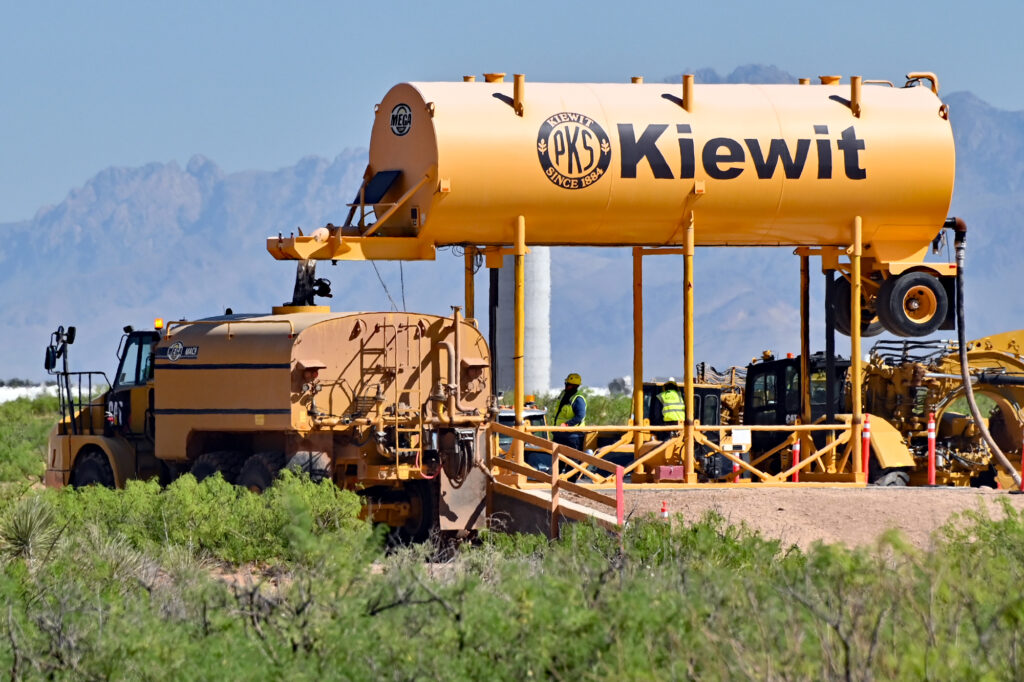
The first article I wrote about Project Jupiter called for the developers to guarantee their rosy promises, and for county commissioners to ensure that happened.
“Process matters,” I wrote in that Sept. 3 article. “It’s what determines whether a project moves forward with the community’s support or instead fosters mistrust… And process is what ensures developers are legally bound to keep their promises.”
We didn’t get the transparent, community-involved, thorough process we needed and deserved. So on the eve of the Doña Ana County Board of Commissioners’ votes to approve tax incentives and legal agreements, I called on commissioners to delay action. The public hadn’t seen final versions of the proposed agreements. As far as I could tell county commissioners hadn’t, either.
Faced with a threat to take the deal at that moment or lose it, approving it without knowing all the details is exactly what commissioners did on Sept. 19. Only Commissioner Susana Chaparro objected.
Then the county negotiated and altered the agreements in secret, making changes and adding pages that weren’t there on the day commissioners voted. When the dust settled 11 weeks later, 359 pages had grown, behind closed doors, to 1,583.
Already a broken promise
Now the consequences are becoming clear. The addition, in secret, of the word “potable” in the legally binding agreements means Project Jupiter must limit use of water that runs through the local utility to an average of 20,000 gallons per day.
But nothing in the agreements appears to prohibit Project Jupiter from purchasing additional water from a sod farm whose wells are considered non-potable. As the developers of the gigantic campus of data centers that will power artificial intelligence assistants have confirmed, that’s exactly what they’re going to do. They’ll use that water beyond construction in the operation of their power plants.
That isn’t what county commissioners believed they were promised. It isn’t what the developers continue promising to this day in their public messaging.
Project Jupiter’s developers now admit their intent to break one of the rosy promises they made to the public.
They aren’t saying how much non-potable water they will use, so we don’t yet know the full impact. Regardless, I’m not convinced the county has the ability to hold them to the commitment commissioners believed they made.
This matters. Potable and non-potable water may rise to the surface through different wells, but they come from the same, finite supply. And our arid region is in crisis.
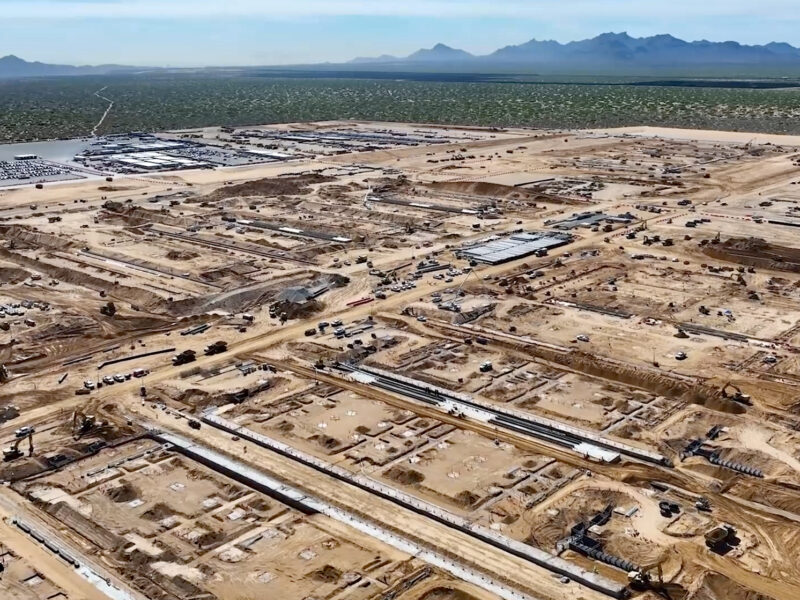
Construction on Project Jupiter is well underway. It seems unlikely that those who want to stop it have the power to do that. But we must push for changes to this deal.
Astonishing actions
The blame for this mess doesn’t all lie with the county commission. Gov. Michelle Lujan Grisham made this deal. She fawned over one of the developers, Lanham Napier of BorderPlex Digital Assets, when she announced the project alongside him in February 2025.
Then some shady lobbyists and at least one state senator slipped legislation past the majority of lawmakers, who had no idea what they were approving when they essentially voted to let Project Jupiter build massively polluting natural gas power plants.
Soon thereafter, the Doña Ana County manager signed a non-disclosure agreement with the developers, apparently without the knowledge of the five elected officials who are his boss. That let county staff and state economic development officials negotiate with the developers in secret. It prohibited county staff from sharing most information with the commissioners who would eventually have to vote on the proposed agreements.
By the time commissioners were let in on the deal by their sole employee, the developers told them to take it or leave it. I still can’t believe commissioners let their employee and a bunch of out-of-state developers get away with that.
There’s a lot about this deal I find astonishing.
Not being ‘good neighbors’
The developers — BorderPlex Digital, Stack Infrastructure, Oracle and OpenAI — recently placed a full-page ad in the Albuquerque Journal proclaiming that they would be “good neighbors.”
“We look forward to honoring the values of Doña Ana County and commit to working together with local leaders to nurture its vitality,” the ad states. “Remember, we are your neighbors and plan to be around for a long time — Doña Ana County will be our home as well, so we want and need it to thrive for years and years to come.”
With the first chance they had to demonstrate that commitment through action — by building power plants that that wouldn’t require our precious groundwater — they did the opposite.
Jobs are hard to come by in our county, but water is even more scarce. Good neighbors understand that without water our communities may not exist in the future. Good neighbors take steps to reduce water use to help ensure our long-term survival.
‘The gap between promises and reality’
Good neighbors don’t break their promises. But the developers and operators of data centers regularly do. Article after article documents such situations, which prompted me to ask my AI assistant of choice, Anthropic’s Claude, about data centers. Its responses were revealing.
“The evidence is pretty clear: no, data center companies generally do not keep their job creation promises,” Claude told me. “The gap between what’s promised and what’s delivered is often dramatic.”
And on environmental issues, Claude said this: “The pattern across both water and emissions is consistent: companies make ambitious public pledges, but the AI-driven surge in demand has outpaced their sustainability efforts by a wide margin.”
OpenAI’s ChatGPT, which Project Jupiter will power, wasn’t much more optimistic: “Companies aren’t necessarily ‘breaking promises’ — they’re often presenting the rosiest interpretation of job impact, and local officials may amplify that,” it told me. “The disconnect comes from how those numbers are communicated versus what actually materializes on the ground.”
Companies sometimes meet their emissions goals, ChatGPT told me, but water use “is where the gap between promises and reality tends to be larger.”
Still repeating dishonest talking points
For those of us who live in these communities, Project Jupiter’s agreements with Doña Ana County are moral documents. They promise jobs we desperately need and pledge to limit use of water we must protect.
But to the developers, this is nothing more than a financial transaction. Even this week, after all the reporting I and others have done about their planned water use, a secretive media campaign continues repeating dishonest talking points in paid ads on social media.
Fortunately, on Thursday the N.M. Ethics Commission sued to force the pro-Jupiter group Elevate New Mexico to disclose information about its funding and spending.
Because state law requires such disclosure. And good neighbors follow our state’s transparency laws.
In this moment, we need our elected officials to be grounded, like the Ethics Commission, in their commitment to the people they represent.
The buck stops with the governor
I’m glad our county commissioners voted to investigate and negotiate with the developers. I hope they act decisively to protect our water. I hope the developers are willing to come back to the table.
But frankly, the buck stops with the elected official who made this happen, Lujan Grisham. “We’re going to sign this deal before you can get away,” the governor told Napier in 2025 when the two inked a memorandum of understanding.
The terms laid out in that MOU were, frankly, not good. There was an opportunity to restrict water use in that document. It didn’t happen. And instead of limiting pollution and emissions, the agreement goes to great lengths to justify the use of natural gas.
Our county commissioners deserve credit for trying to make the deal better, at least in terms of water, even though they were under immense political pressure and excluded from negotiations unit the last minute.
Now, we need our governor and other state officials to help negotiate a better deal — one that truly limits water use and reduces Project Jupiter’s pollution and emissions.
It’s time to unite
With the developers’ air quality permit applications pending approval from the N.M. Environment Department, there’s an opportunity for the state to intervene. The promise of low water use was the only aspect of this agreement that made it demonstrably better than other data-center deals. Now that’s gone.
But Lujan Grisham has the power to make Project Jupiter better — or, depending on your perspective, at least less bad.
Project Jupiter has understandably divided folks who live in our communities. At the end of the day, we all want people to have access to good jobs. We want clean water and air. We just have different perspectives how to balance and reach those goals.
It’s time for us to unite and push for a better deal from Project Jupiter’s developers. I hope the governor hears from folks on all sides of this debate that we need her to intervene immediately.
AN ASK: I’ve worked tirelessly to watchdog Project Jupiter since the beginning. I won’t stop — but if you value such journalism, I need your help. Support my work by making a donation or signing up to make monthly contributions. Thank you!
DISCLOSURE: State Rep. Sarah Silva, a supporter of Project Jupiter, is my spouse.
A very strong and revealing report. Exactly what the press must do. Thank You.
I’m trying! Thanks for your kind words.
In a world increasingly framed by the dark masking of non-disclosure agreements and feckless governance, where “promises” are worth nothing and lies, blatant in-your-face dishonesty, and fraud are the name of the game, it doesn’t take “Claude” (but in all irony, I’m glad you asked) to discern the real-world dynamics of Project Jupiter and its ilk. Maybe Claude might have some pertinent views on DHS’s concentration camp projects as well. Thanks for your reporting.
You’re welcome!
Heath, thanks for your reporting.
Please put the issue of water usage into scale.
At one million gallons a day, we’re talking about one quarter of one percent of our county’s water. Not only that, but the water is not potable and is already allocated. They are buying rights to water. Whatever water they use will be redistributed from other already authorized uses.
Please make your readers aware of these facts.
Jim,
It sounds like you’ve settled on a position that they should be allowed to use this water? Where did you get your statistics from?
I addressed the issue of potable and non-potable in this column. I reported in a past article that they are buying water that was previously used elsewhere.
Also, it’s not accurate to say they’re buying “rights to water.” They’re not purchasing water rights. They’re buying water from someone else who owns water rights.
None of this changes the fact that they aren’t doing what they promised to do.