 Heath Haussamen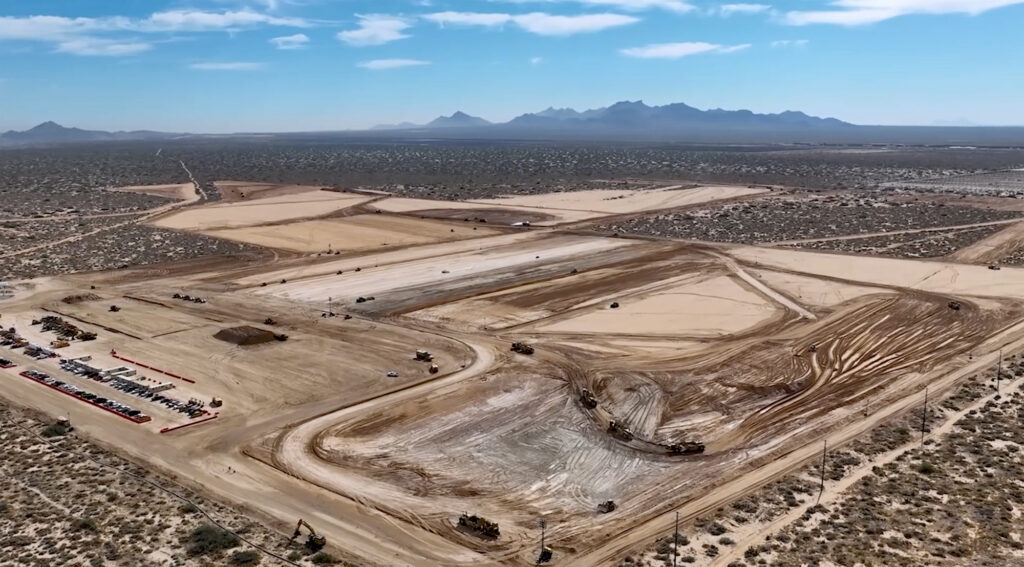
Among borderlands reporters, El Paso Matters’ Diego Mendoza-Moyers and I are probably the most acutely focused on data centers. Last week I sat down with Mendoza-Moyers to talk about Project Jupiter for a podcast he produces.
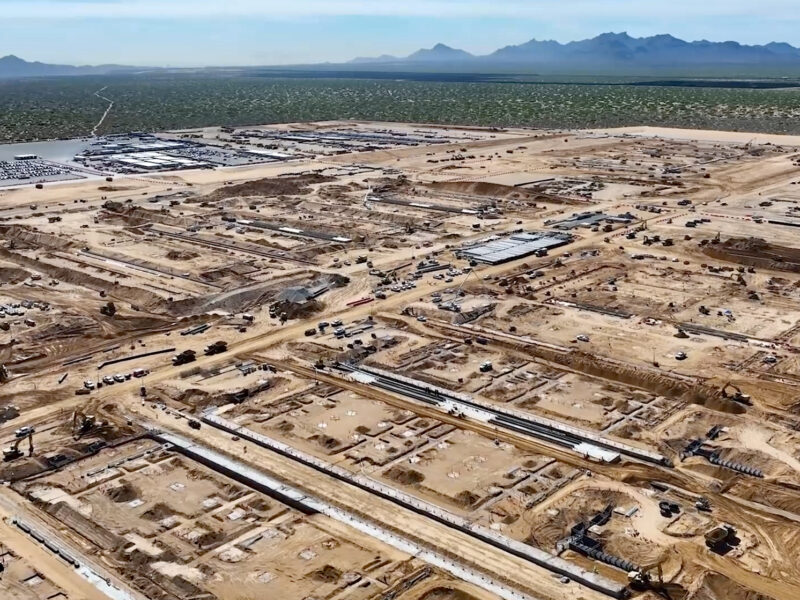
We discussed how Project Jupiter came to be and the latest on the massive campus of advanced artificial intelligence data centers that is being built in Santa Teresa. We talked about how it fits into a region where three massive data center projects could require more than twice as much electricity as every El Paso Electric customer from Van Horn, Texas to Hatch, N.M. combined.
The reporting Mendoza-Moyers and I have done was recently featured in Columbia Journalism Review’s article on doing journalism on data centers in a time of diminished local news capacity. So it was great to talk with him.
I believe it’s really important, when possible, to think about the region we live in as one, rather than three separate states in two nations. We breathe the same air and drink from the same water sources. Jobs and economic activity in any part of this region benefit us all.
I think you’ll find the conversation insightful. It’s 52 minutes long. Listen when you have time by clicking here.
My work is entirely funded by people like you. I’m aiming to increase the number of people who support my journalism with monthly, recurring donations from 76 to 100. Can you join my funders? Click here to give. Even a one-time donation helps. Thank you!
It is like we are now watching the destruction of our state, at least this portion of New Mexico as well as possibly near portions of Texas, in slow daily “doses.”
I read the transcript. I wonder why, after detailing all the ways in which Oracle et al. were disingenuous, non-transparent and evasive about water & electricity use (and fuel cells are not all that much better, sorry, than on-site gas), you both chose to believe their “job creation” lines? Those numbers have apparently changed a great deal and keep doing so, so it’s not all that triumphal a “win” for NM, especially when you consider the downsides–which includes (and few talk about it) the fact that these things create massive heat islands, not a welcome thing in Southern NM.
Also, framing the argument as one between “retirees” and “blue collar Democrats” is not at all true. Most massive data center opposition is coming from the working class in the Rust Belt. Why? because that’s where data centers go–because they think there won’t be any opposition. see, for example. https://datacenteropposition.com/. But people don’t want them–there’s no upside to living near one, and most people are savvy enough to know the “Jobs jobs jobs” rhetoric is as old as the many extraction and other booms we’ve seen in the US over the years.
Lastly, It is far from inevitable that this will happen. There has been very successful opposition throughout the US (again, mostly in Michigan, Ohio, etc.), so perhaps the “inevitability” rhetoric isn’t really warranted, and serves to neutralize nascent opposition.
Hi Lorie, thanks for reading, and thanks for your feedback! On the question of job numbers, what really matters is what’s in legal agreements, regardless of the rhetoric (which has been shifty). The legal agreements with Doña Ana County require the developers to create 750 permanent, full-time jobs that pay an average of $75,000-$100,000 per year. It’s not a matter of whether I believe they will do that or not. It’s just a matter of what’s promised in a way that is legally enforceable, from my perspective. I will watch and see what they actually do.
As for whether Project Jupiter can be killed, my perspective is that there wasn’t one policy vote on whether to allow it to be created or not, and similarly there’s not one vote that can be undone to kill it. They tax incentives could, theoretically, be undone, but the longer construction proceeds and the more money they spend, the less likely I think it would be that undoing the tax incentives would cause them to abandon the project. And undoing the tax incentives would also erase the legal requirements on the jobs they create and the limitations on water use through the CRRUA system, for example. So there are some negatives that would come with that.
Some pending approvals, like on power generation, aren’t political decisions — it’s simply a matter of whether they meet legal requirements. I don’t think they were on track for approval with their two-microgrid proposal, so they’ve replaced it with a different proposal that is more likely to meet legal requirements.
As I said in the podcast, it would be a helluva flex of local democracy if folks do succeed in killing this — but the fact that it’s been successful some other places does not speak to whether it can be done in this unique situation where construction has already been ongoing for several months.
The “legal agreements” are based on early MOUs I believe, and, in more recent court filings on the Open Meetings Act lawsuit, the numbers keep changing. As to enforcement, well, I’m not sanguine about enforcement.
As to killing it? Yes, there have been instances when projects were stopped after ground breaking.
In NM however, you are right–NM has a long history of allowing messed up industries to run rampant over poor areas. So there’s precedent for that. But quien sabe?
Here are the final legal agreements: https://haussamen.com/2025/12/18/final-project-jupiter-agreements-grew-exponentially/
The numbers they’ve claimed publicly and in legal filings have not been consistent, but, again, what matters is what they’re legally required to do. (It’s also, incidentally or not, the lowest number of jobs of all the claims.)