 Heath Haussamen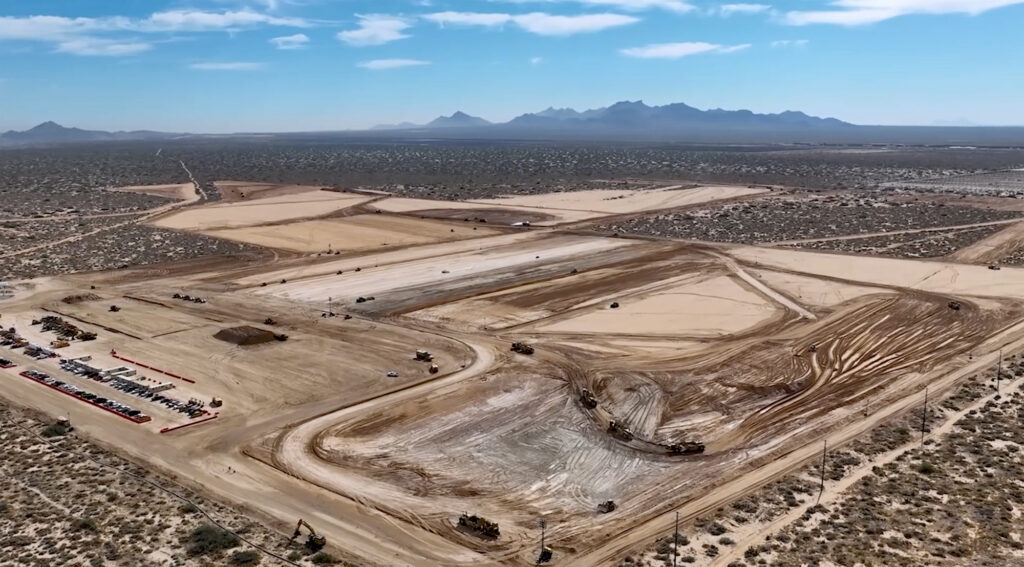
COMING NEXT WEEK: I’ve been interviewing folks about the economic benefits of Project Jupiter and the debate over whether jobs and increased revenue outweigh the costs, which include a great deal of air pollution and emissions. Look for my in-depth report next week.
A lawsuit challenging the funding mechanism for Project Jupiter can proceed, a judge ruled Friday in rejecting a motion from Doña Ana County to throw out the petition on procedural grounds.
District Judge Jennifer E. DeLaney of Deming also allowed the county’s approval of that funding mechanism to remain active while the lawsuit advances, rejecting a motion from the plaintiffs to pause it.
The dual rulings essentially preserve the status quo, for now. One lets the parties argue the case on its merits. The other leaves in place legal agreements between the county and the developers of the campus of data centers that are already under construction in Santa Teresa while the case is adjudicated.
The judge also allowed two Project Jupiter companies, Green Chile Ventures and Yucca Growth Infrastructure, to intervene in the case.
There was lots at stake at Friday’s hearing. A dismissal of the lawsuit would have bolstered county government’s support and advocacy for Project Jupiter, which remains highly controversial among residents. And with resolution of the lawsuit likely to take months or longer, a funding pause could have halted construction and financial benefits for the county.
Turing to the substance of the case
Now the focus will turn to the substance of the arguments made by the N.M. Environmental Law Center on behalf of Jose Saldaña Jr. of Sunland Park and Vivian Fuller of Santa Teresa. They argue that the county failed to follow required processes in approving $165 billion in industrial revenue bonds and a gross receipts tax break.
The bonds are not public funding. Project Jupiter is privately financed by banks through a complex mechanism that results in the county giving the developers a 30-year property tax exemption in exchange for $360 million in financial payments and other perks. The lawsuit also challenges the GRT deduction the county gave in exchange for $50 million for water and wastewater infrastructure and promises of job creation.
Last fall, the county went through a secretive, chaotic, rushed process that included commissioners voting to approve ordinances authorizing the legal and financial agreements without the public — or even some commissioners — knowing final details.
Just before commissioners approved the bonds in September, the developers publicly presented approval as a make-or-break issue for the project and threatened to go elsewhere.
After the votes, the county commission chairman continued negotiating in secret, which is an alleged violation of the N.M. Open Meetings Act. It took nearly three months after approval for the public to see executed contracts.
Are the legal agreements valid?
The case centers on the allegation that the county’s process for consideration of the bonds failed to examine relevant facts about Project Jupiter, including potential negative environmental and health impacts.
Kacey J. Hovden, an attorney for the N.M. Environmental Law Center, said at Friday’s hearing that the county had a legal duty to consider the effect on public welfare, but failed to factor into its decision things like impact on air quality and soil health, and even how much property tax revenue it would be giving up in exchange for the $360 million in direct payments.
“We’re not asking this court to determine whether Project Jupiter will benefit or harm the county,” Hovden told DeLaney. Instead, she said, her clients are simply asking the judge to determine whether the legal agreements are valid or not.
The county’s attorney, Randy Autio, countered that a courtroom is not the right place for constituents to second-guess policy decisions made by their elected county commissioners. He said approval of Project Jupiter is, appropriately, shaping two county commission races in this year’s election.
“If there’s a problem with their decision, the ballot box is the answer,” he said.
In allowing the lawsuit to proceed, DeLaney effectively disagreed that the courtroom was not an appropriate place to resolve the issue.
‘The workers are already getting paid’
Though the lawsuit brought by Saldaña and Fuller doesn’t directly challenge construction of Project Jupiter, it’s not clear what would happen to the data center campus if a court invalidates the funding mechanism.
Lawyers for Yucca Growth Infrastructure and Green Chile Ventures argued on Friday, in asking to intervene in the case, that the companies have a lot at stake. “Hundreds of millions of dollars are already invested in this project. The workers are already getting paid,” one of the lawyers told DeLaney.
The Deming judge is hearing the case because all judges in the Third Judicial District that encompasses Doña Ana County recused themselves or were excused by one of the parties to the lawsuit.
Second appeal ongoing
Meanwhile, another judge tossed out a separate legal petition asking for a judicial review of the Project Jupiter bond agreements last month.
That petition, filed by county resident Derrick Pacheco, made similar allegations that county commissioners approved the bonds based on incomplete information. His petition called that decision “arbitrary, capricious, an abuse of discretion, and not supported by substantial evidence.”
In that case, the county’s attorney argued that the procedure Pacheco sought to invoke did not apply to industrial revenue bonds. In dismissing the petition, the judge in that case, James B. Foy of Silver City, gave Pacheco time to file an amended petition. Pacheco has done that, and the case is pending.
A prior version of this article incorrectly stated that the deadline had passed for Pacheco to file an amended petition and the case had been dismissed.
AN ASK: I’ve worked for months to produce rigorous, nuanced reporting on Project Jupiter that holds power accountable and helps the public understand the issue. If you value such journalism, please donate to help me keep doing it. Thank you!
DISCLOSURE: My spouse, state Rep. Sarah Silva, is a supporter of Project Jupiter.



Bad news for the surrounding communities. Pollution both in the air and dumping into the Rio Grande. They try to minimize but one can look around the country to see what bad neighbors data centers are.
Technically nothing was “tossed out”. Judge Foy said that even seasoned attorneys make similar errors in their filings. My amended petition is pretty spicy… the multiple defense arguments filed this week are hinging on some pretty thick irony. I feel like my case is worth a separate deep look instead of constantly being a sidecar to the parallel suits. It’s Derrick vs. 17 top attorneys; this is real.