 Heath Haussamen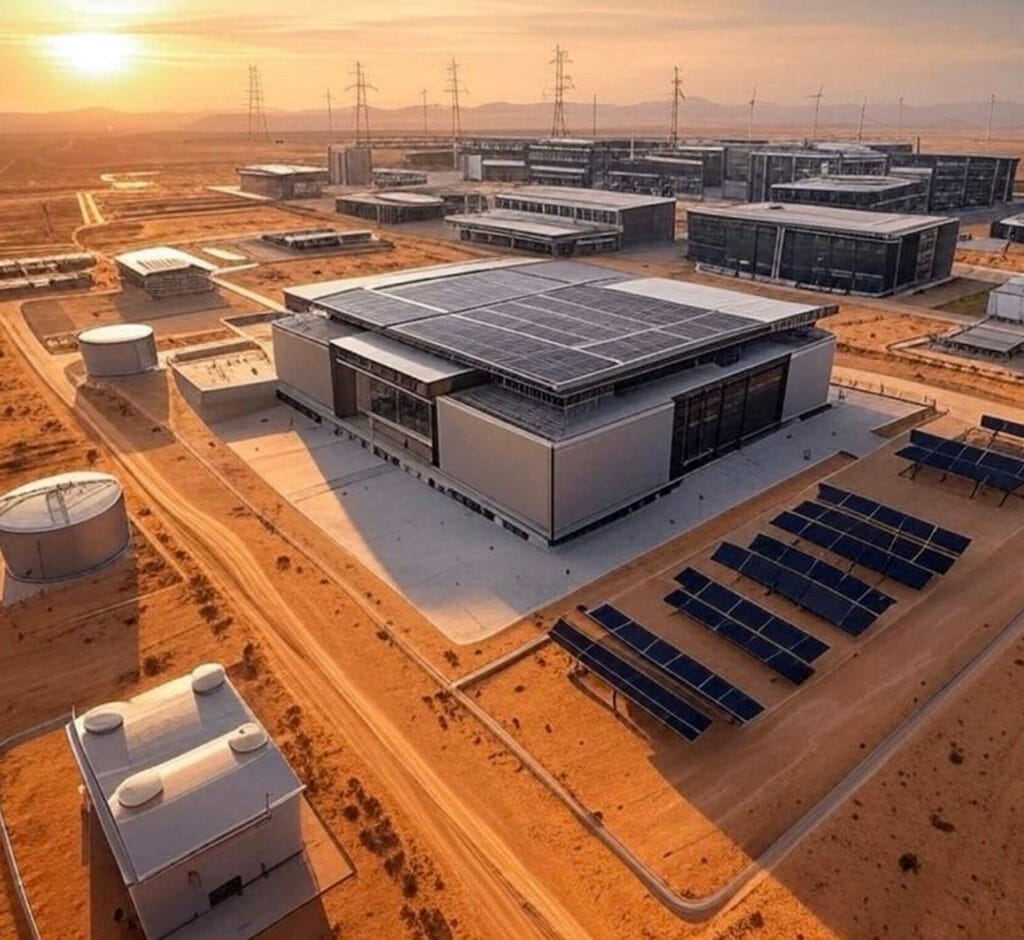
Note: All of the Project Jupiter agreements the Doña Ana County Board of Commissioners approved at their Sept. 19 meeting are listed at the end of this article, with links to each document.
Project Jupiter’s promises, including use of a closed-loop water system to cool electronics and a cap on water use of 60,000 gallons per day, are included in legally binding documents authorized by the Doña Ana County Board of Commissioners last month.
In the days leading up to the commission’s votes on Sept. 19 to authorize the issuance of industrial revenue bonds totaling $165 billion and gross receipts tax breaks, Project Jupiter’s developers made lots of public promises.
One of the biggest — that the developers of the massive campus of data centers being built for tech giants Oracle and OpenAI would provide $50 million for water and wastewater infrastructure in southern Doña Ana County — was in a legally binding agreement.
But many other pledges were not in versions of legal agreements the county shared with the public before the commission’s contentious September meeting. That meant even as commissioners voted 4-1 to approve the tax-incentive agreements, the public didn’t know what the county was legally requiring from Project Jupiter.
But Commissioner Manuel Sanchez, who was pushing before the Sept. 19 meeting for the developers’ promises to be made legally binding, shared the updated documents with me. That allowed me to write this article and provide the documents to you.
Sanchez said he listened to feedback from community members and had worked to ensure the developers were not just making “statements to appease.”
The burden is now on county government to hold the developers accountable, he said.
“Speaking for myself, we as a county have to step up now and ensure that happens,” Sanchez said.
The promises
There are several lease agreements because the developers created different companies to build out various portions of Project Jupiter. Each lease includes provisions that immortalize promises as legally binding. They include:
• That the companies will make annual payments to the county of $12 million, which over 30 years will add up to $360 million, instead of paying property taxes. The county will get $10,793,100 each year, while the Gadsden Independent School District will receive $820,456, the Las Cruces Public Schools will receive $240,018, and the Hatch Valley Public Schools will receive $146,276.
• Building a closed-loop water system to cool electronics and using an average of 20,000 gallons of water per day for the facilities. Use would be “capped” at 60,000 gallons per day. The developers also promised to pay for any extensions of the public water and wastewater lines to the site and build their own lift station for sewage.
• A pledge that the project “will not impact existing customers power reliability or costs.”
• That the companies intend to hire 750 full-time and 50 part-time employees within three years of commencing operations of the data centers. During construction, the companies project hiring 2,500 employees. Salaries for jobs “shall” be between $75,000 and $100,000.
• That the companies will offer health insurance to employees and pay at least 50 percent of premiums.
• Donating $4 million for university, college and high school workforce development programs, including the construction of a career and technical education center for LCPS, and a public safety facility serving Otero and Doña Ana counties.
• Giving $1.5 million for construction of the new Boys and Girls Club facility in Las Cruces.
• Donating $250,000 “to advance the evaluation and exploration” of building a desalination plant, which is planned to serve communities in southern Doña Ana County.
• Giving $150,000 to Doña Ana Community College to aid public transportation between Las Cruces and Santa Teresa, where the data centers will be built.
• Donating $1 million “to preserve, improve and protect key habitats” in Doña Ana County.
Those donations for various items not directly related to Project Jupiter total $6.9 million. In addition to being included in the lease agreements, those gifts are also made legally binding by amended language in a separate memorandum of understanding that summarizes commitments by the county and by the developers.
The MOU states that provisions it includes other than those donations are not legally binding. That’s why it was important to get Project Jupiter’s promises into other, legally-binding documents.
Moving forward
Project Jupiter’s price tag is massive — an estimated $165 billion over 30 years — and the public timeline to consider the project before commissioners gave it a green light by approving the tax incentives was short. That means there’s still some back-and-forth in the community about the developers’ plans.
There are no pledges in the leases related to pollution or energy generation, which will be handled by other regulatory agencies, though the lease agreements state that the companies will obtain “all necessary permits and approvals” including “any required air permits” from the state.
The developers plan to build their own microgrid to power the data centers, and have said they plan to use natural gas initially. State law requires their energy generation to be net-zero carbon by 2045, which will require the project to transition away from natural gas.
A group of state legislators led by Sen. Jeff Steinborn, D-Las Cruces, sent a letter to county commissioners last week asking for further assurances on power generation, utility rates and water use before final issuance of the tax incentives.
“We invite the County and Project Jupiter to meet as soon as possible to discuss these issues prior to the issuance of any economic incentives,” the letter states.
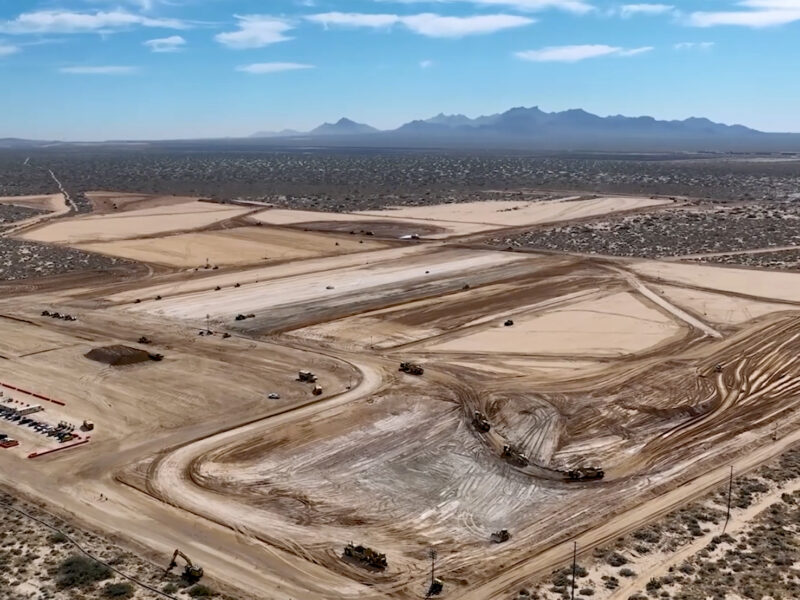
In the meantime, Project Jupiter is moving forward. A road has appeared on the land where the data centers will be built. The county’s planning and zoning commission voted Thursday to change the zoning for part of Project Jupiter’s land to match the industrial designation for the rest of the land. And the Board of Commissioners has three items on its agenda for Tuesday’s meeting related to Project Jupiter.
Difficulty obtaining public records
I intended to report sooner on whether the developer’s promises made it into legally binding documents, since the public didn’t get to see those records before the Sept. 19 meeting. But obtaining the agreements from county administration has been difficult.
I filed a formal request under the state’s Inspection of Public Records Act for updated versions of agreements as the commission approved them immediately after the meeting. Five days later, the county provided me with signed copies of the two ordinances commissioners approved but not the legal agreements those ordinances authorized.
Then on Oct. 2, the county asserted that my request for those legal agreements was “excessively burdensome or overly broad” and said it would need more time to respond. It promised another reply to my request by Oct. 17.
I emailed the county’s lead attorney and an assistant manager that day. Here’s what I wrote: “Folks, all I’ve requested here are the versions of the agreements the commission voted to approve at the meeting on Sept. 19 as they existed when they voted on them that day. It’s a handful of documents, and they should have been gathered for and provided to the commission that day — which is now 13 days ago. I do not see any way this can be deemed overly broad or excessively burdensome. Can you please explain this to me in more detail, or provide the records immediately?”
Those staffers never responded to my email. I did receive a message on Oct. 2 from a county staffer who works on records requests stating that another staffer who should have been working on my request was out of the office.
Not wanting to wait further, I called Sanchez to ask if he had the agreements. He did, and immediately forwarded me an email from county staff containing all of them.
Frankly, I was surprised that the documents were already gathered in one email that could be forwarded to me so easily, given the county’s response that it needed more time to respond to my request. As of publication of this article, I’ve still not received the documents from county staff.
It was noteworthy that county staff didn’t release updated versions of the agreements before the Commission’s votes. It’s even more noteworthy that county staff still haven’t released them weeks later.
I’ve reached out to the N.M. Foundation for Open Government about the situation, but I haven’t yet heard back.
The documents
Here are the documents commissioners voted to approve related to Project Jupiter at their Sept. 19 meeting, as provided to me by Sanchez:
The industrial revenue bonds:
• Ordinance 367-2025
• Lease with Yucca Growth Infrastructure, LLC
• Yucca Growth bond purchase agreement
• Yucca Growth indenture
• Lease with Red Chiles (A/B/C/D), LLC and Green Chile Ventures, LLC
• Red Chiles bond purchase agreement
• Red Chiles indenture
• Red Chiles sublease
• Lease with Green Chile Ventures, LLC
• Green Chile bond purchase agreement
• Green Chile indenture
• Green Chile sublease
The LEDA (gross receipts tax) agreement:
• Ordinance 368-2025
• Project participation agreement
Other:
• Memorandum of understanding
It’s worth noting that I converted some of these documents from Word files to PDFs, but otherwise I’m sharing them here exactly as they were provided to me.
Disclosure: My spouse, state Rep. Sarah Silva, is a supporter of Project Jupiter and signed the lawmakers’ Oct. 7 letter to county commissioners. In addition, she is working to fund the public safety facility for which the developers donated money.


This a good and important article. Do you have any inkling why getting this info was so hard?
I don’t, really. They have received a lot of requests related to Project Jupiter and are having to spend a lot of time responding. But that’s also not an excuse. They need to be better than this.
I see no practical enforcement mechanism for the “Project Participation Agreement.”
Who owns the water Project Jupiter wants to take? Do individual Dona Ana County employees own water? What about the Interstate Water Commission’s pacts between NewMexico, Texas, and Mexico?
Water and lack thereof are the biggest problems facing New Mexico. How does the recent agreements impact Project Jupiter?
These are good questions with complicated answers. I’m hoping to get a slowdown in the news cycle to find some time coming up to dig deeper into the water question — apart from, but related to, Project Jupiter.
how are these promises legally enforceable? who will hold borderplex or any of these companies accountable if they don’t meet their promises? feels like a way to put a positive spin on a destructive project that your wife is backing and selling out NM residents for
Thanks for your question. At the time of these drafts, the promises were in legally binding documents, as this article states. As to the question of who will hold them accountable, that’s the responsibility of the county, and it’s our responsibility as voters to put people in office there who will do that.
But the story doesn’t stop there. You might want to check out these two articles I’ve published since this one:
https://haussamen.com/2025/10/20/project-jupiter-bond-agreements-are-still-changing/
https://haussamen.com/2025/12/08/project-jupiter-votes-broke-law-scorched-earth/
And keep an eye out this week for my newest about this topic.
I’m certainly not interested in promoting of putting a “positive spin” on anything. That’s not what I do. This is journalism, not propaganda.
What happened to that legally binding 60,000 gallon a day water use cap??? Now that it’s suddenly estimated to use over 1 MILLION gallons A DAY….