 Heath Haussamen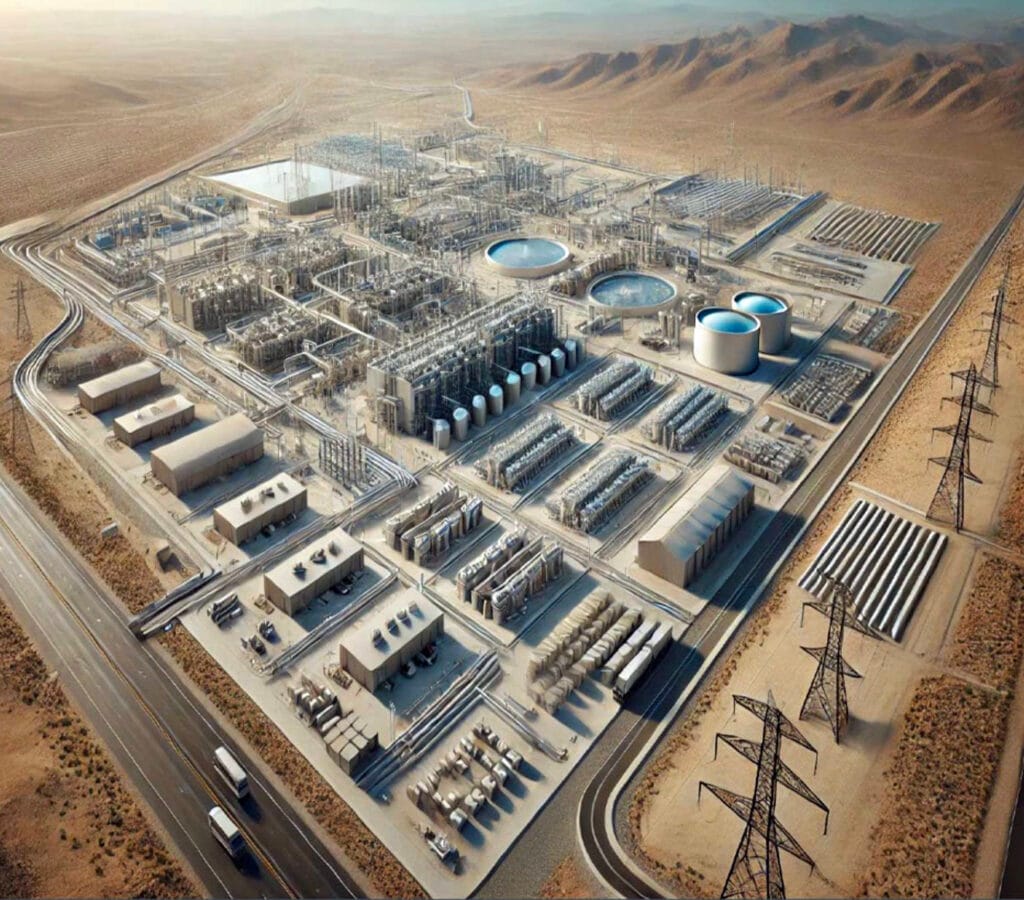
LEARN MORE:
• Documents and articles that provide more information about Project Jupiter
• Timeline of BorderPlex Digital’s public activity in NM
• Upcoming public meetings hosted by Project Jupiter developers
ARTICLE SUMMARY: On its face Project Jupiter looks to be the boost our region needs to better the lives of our residents and diversify our state’s economy away from the oil and gas industry. But citizens are being asked to give a lot without a chance to see whatever substance lies beneath many of the rosy promises. This article delves into the county’s strong legacy of negotiating with developers, and how the current commission is falling short of that responsibility.
It digs deep to provide details about Project Jupiter and include source documents. It investigates what is known about the water and power situations to provide accurate information to the public.
Doña Ana County just announced five upcoming public meetings to discuss the project. That’s a strong first step. But with the project moving at light speed toward approval, this article makes the case that commissioners need to negotiate a contractual agreement that backs up Project Jupiter’s big promises with legal guarantees.
This article is a long read. If you’d rather listen, click the play button in the audio player:
FULL ARTICLE: I was there 18 years ago when Doña Ana County commissioners slowed consideration of a massive development to allow more time for negotiation and public input.
I watched commissioners who included Karen Perez and Bill McCamley wrestle with the process in 2007 as they sought to do the right thing when the El Paso-based Verde Group proposed the construction of a new city in Santa Teresa that would create jobs and boost our economy.
Commissioners listened to their constituents. They sought commitments from the developers. When Verde refused a demand related to affordable housing, commissioners stood their ground. They sided with the people they were elected to represent.
In other words, they acted with integrity.
I wish that were happening today with our current group of commissioners. I want to be able to support the proposal to build a campus of data centers in Santa Teresa. But only one of five current county commissioners is acting in a way that matches the standard those past commissioners set.
On its face Project Jupiter, as the developers call it, looks to be the boost our region needs to better the lives of our residents and diversify our state’s economy away from the oil and gas industry.
The developers promise jobs. They and some county commissioners hint at improved water and sewer infrastructure. Those are things our communities desperately need.
The stakes are high
We’ve pumped countless dollars over decades into building a border economy in Santa Teresa in an attempt to grow and diversify our state’s economy. Project Jupiter could take those efforts to a whole new level.
But there’s so much at stake. Citizens are being asked to give a lot without a chance to see whatever substance lies beneath many of the rosy promises.
They’re being asked to support their government facilitating an eye-popping $165 billion loan to the developers for construction, which would likely make this one of the largest infrastructure projects in the state’s history.
They’re being asked to allow the use of natural gas, a heavy polluter, and nuclear, which is always controversial, to power the data centers.
And, in an increasingly aridifying climate, with our groundwater already being depleted and no clarity about how much is in the ground, they’re being asked to commit water. And they’re being asked to trust developers who claim their use will be low.
Given all that’s at stake, the developers and government agencies considering approval must be transparent and engaged with the community. Officials must negotiate incentives that make what we’re being asked to invest — in this case tax revenue and some of our precious water and air quality — a worthwhile trade.
Process matters. It’s what determines whether a project moves forward with the community’s support or instead fosters mistrust that either kills the proposal, which happened last month in Tucson, or results in it being rammed down people’s throats, which can harm future economic development efforts.
And process is what ensures developers are legally bound to keep their promises.
Project Jupiter has been rushing ahead at light speed without transparency and community input. As I was preparing to publish this article on Sept. 3, the county, which has come under a great deal of criticism from residents, announced a series of public meetings about the planned development leading up to scheduled votes on Sept. 19.
That’s an encouraging step — as long as commissioners use those meetings to listen and inform negotiations on a contractual agreement that protects the county and its residents, and not as a chance to market the developers’ plans to the public.
Thus far, most county commissioners have not acted in a way that earns my support for this project. But there’s still a chance for them to do the right thing.
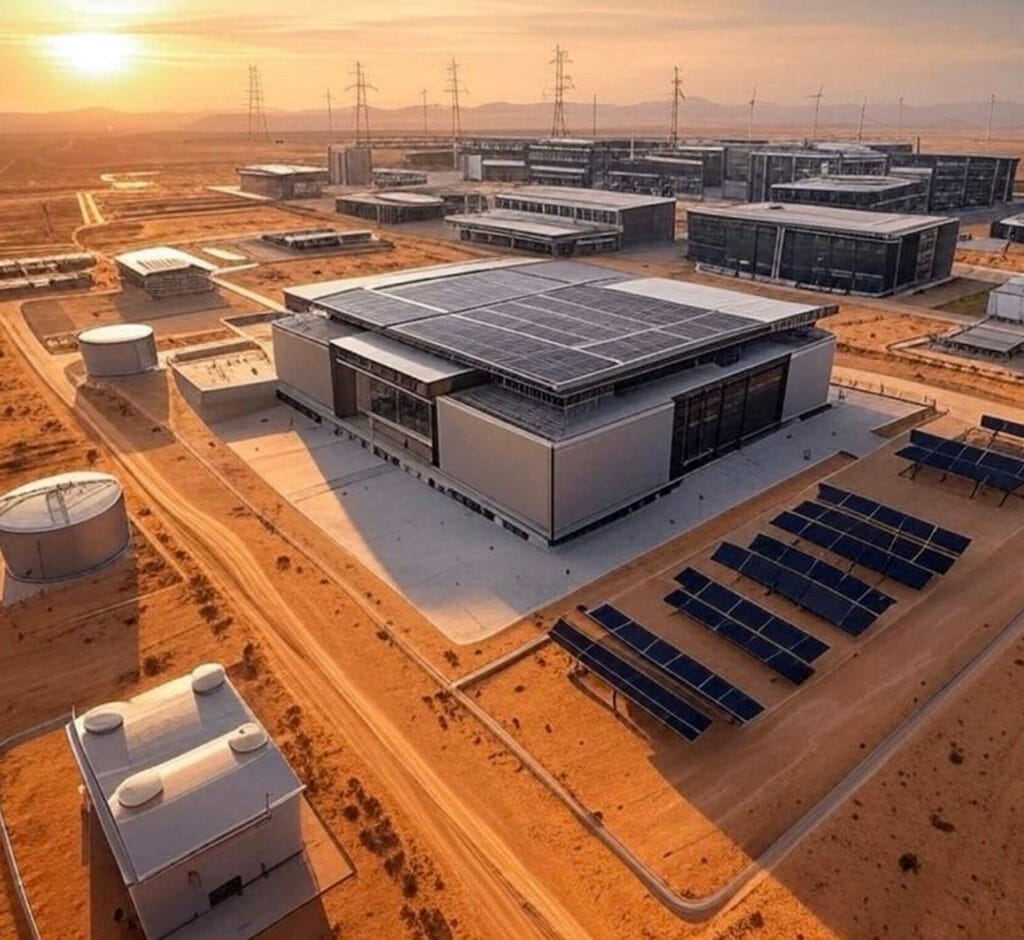
A massive project
Gov. Michelle Lujan Grisham unveiled the proposal to build a campus of data centers — vast facilities that house infrastructure including a company’s servers and hard drives — in February. She and Lanham Napier, chairman of the Austin-based company BorderPlex Digital Assets, signed a memorandum of understanding on Feb. 25 stating that New Mexico would aid the project with the construction of desalinization and treatment infrastructure for water, financial incentives, and by allowing the company to use natural gas and nuclear to power its data centers.
The governor’s news release promised 1,000 new jobs.
Napier said BorderPlex Digital planned to spend $5 billion on construction over the next decade, The Santa Fe New Mexican reported.
That article portrayed Lujan Grisham as fawning over the company. “We’re going to sign this deal before you can get away,” The New Mexican quoted her as telling Napier.
Details were thin then. Months later, they’re still not fully fleshed out.
BorderPlex Digital made two presentations to legislative interim committees this summer. The company’s presentation from a July 16 hearing before the interim Transportation Infrastructure Revenue Subcommittee states that it aims to create a “repeatable model of vertically–integrated Digital Infrastructure Campuses — traditional data centers, AI-specific data centers, advanced manufacturing, and other applications on a single campus.”
The presentation suggested the campus would use a mix of natural gas and small modular reactors, which are nuclear, to generate its own power.
Then in mid-August, Doña Ana County announced that the Board of Commissioners would consider issuing $165 billion in industrial revenue bonds to facilitate construction of the project, which the county said would create 750 new, full-time jobs. (Apparently the governor was rounding up.)
The news organization El Paso Matters put in context “how gargantuan” the company’s proposed investment is: All property in El Paso County is collectively valued at $95 billion. And $165 billion is about two-thirds of what the United States spent on the Apollo project to put men on the moon, adjusted for inflation.
Commissioners voted 4-1 on Aug. 26, following a lot of public input and a brief presentation from Napier, to move towards the issuance of the bonds. A second 4-1 vote moved the county toward providing 50 percent breaks on gross receipts and compensating taxes. Final votes are scheduled for Sept. 19.
A dizzying network of companies
If the scale is massive, the network of companies involved is a bit dizzying.
In addition to Napier, BorderPlex Digital’s leadership team includes Alicia Keyes, a former economic development secretary in Lujan Grisham’s administration, and George P. Bush, a former Texas land commissioner and former President George H.W. Bush’s grandson.
But BorderPlex Digital isn’t mentioned in the county’s resolution declaring its intent to issue the bonds. Instead six other companies, which are all incorporated in Delaware, are named: Yucca Growth Infrastructure, Red Chiles A, Red Chiles B, Red Chiles C, Red Chiles D, and Green Chile Ventures.
Yucca Growth Infrastructure would be responsible for “power generation, battery storage, a microgrid and related infrastructure and facilities,” the resolution states. The other companies would be responsible for building and equipping the data centers.
A trade website reported last week that BorderPlex Digital has partnered on Project Jupiter with the Denver-based company Stack Infrastructure, which is owned by the asset management firm Blue Owl Capital and builds infrastructure like data centers.
Stack isn’t mentioned in the bond resolution, but SAC III Acquisition Co. is named as the agent for the companies. SAC III Acquisition is an affiliate of Stack Infrastructure, according to Albuquerque Business First.
About that $165 billion
Here’s how the financing would work:
The county would issue what are called industrial revenue bonds. That’s essentially when government helps a business obtain low-interest financing and gives it tax breaks.
The county plans to issue three separate bonds — one for $15 billion to fund construction of the microgrid, a second for $25 billion to fund the data centers, and a third for $125 billion to equip the centers.
The developers would buy the land where the data center campus would be built and deed it to the county for the duration of the bond-repayment period. That lets the companies avoid paying property taxes.
The developer would lease the land back from the county. The county would use lease fees to repay the bonds. The developer is legally responsible for the bonds, which would not impact the county’s credit rating.
The resolution states that developers and the county would also negotiate “annual in-lieu tax payments” that the companies would pay to the county instead of property taxes. Napier has said publicly that developers propose giving the county $300 million over the 30-year repayment schedule.
More details about the project
The county is moving quickly toward approving funding because the developers want to move fast. They plan to break ground on Project Jupiter in the fourth quarter of this year, “pending issuance of all necessary governmental approvals and permits,” according to the application they submitted for bond financing.
The county released that document with many redactions, saying some details would reveal trade secrets that can be kept confidential under an exemption to the state’s Inspection of Public Records Act.
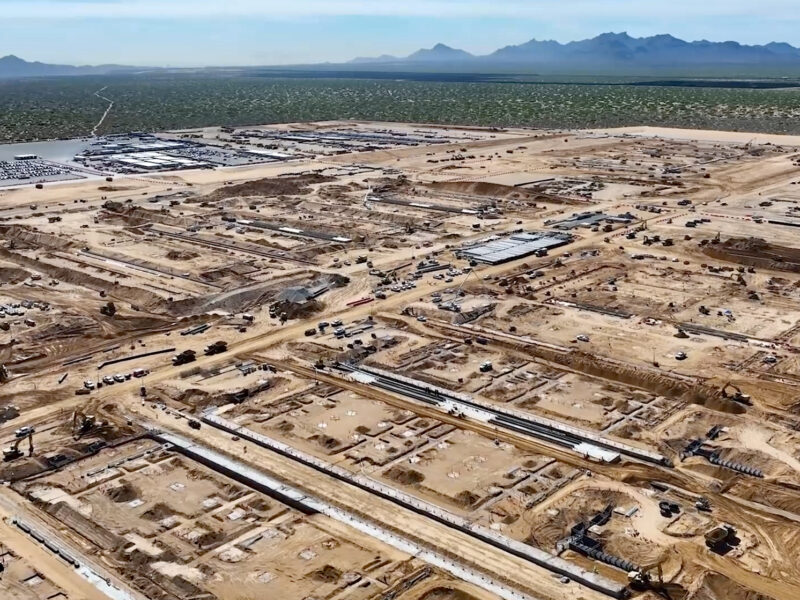
The campus of data centers would be built on the southeast corner of N.M. Highway 136 and N.M. Highway 9, just north of the Santa Teresa Industrial Park, the application states.
That document formally estimates the creation of 750 full-time jobs and another 50 part-time jobs by the third year of operation of the data center campus. It estimates creation of 2,500 construction jobs during a two-year building phase.
The companies will offer health insurance and retirement options, the application states, though some details about that are redacted. Also redacted are building costs that would help the public understand why the project is so expensive.
BorderPlex Digital and Stack Infrastructure don’t operate data centers. They plan to build this campus for at least one yet-to-be disclosed client.
Public records I’ve obtained do not list that client, but as El Paso Matters pointed out, “Only a handful of global technology companies – including Meta, Alphabet, OpenAI, Oracle and Microsoft – have the financial capacity to operate such a sprawling data center campus.”
Oracle, like BorderPlex Digital, is headquartered in Austin.
‘There’s a right way and a wrong way to do this’
If you’re thinking this sounds like a great deal, several county commissioners said the same at the Aug. 26 meeting. But one also expressed concern about the way the county has handled the process.
“This sounds to be a wonderful thing for Doña Ana County, but there’s a right way and a wrong way to do this,” said Commissioner Susana Chaparro, who later cast the lone vote against advancing Project Jupiter.
She demanded more public engagement. “We as a community need to understand what will be happening in our county,” she said.
Chaparro pushed Napier to host public meetings. He responded with a vague pledge that she said was not good enough. That prompted another BorderPlex Digital official, Jose Ibarra, to join Napier in front of the commission and detail upcoming engagement plans in Sunland Park that he said would expand countywide.
Two days later BorderPlex Digital released a list of upcoming public events that includes three public meetings being held this week. Then on the morning of Sept. 3 the county announced an updated schedule of upcoming public meetings hosted by the developers.
While the meetings are positive, Ibarra’s situation illustrates why the actions of the developers and some county officials are breeding suspicion. Before joining Napier at the podium as someone who works for BorderPlex Digital, Ibarra spoke during public input in favor of Project Jupiter. He identified himself then as a resident of Sunland Park and did not disclose his employment.
In an Aug. 28 news release announcing its involvement in Project Jupiter, Stack Infrastructure’s chief executive officer, Brian Cox, said the company had a responsibility to “earn the trust of the community by building in a way that is transparent, accountable, and aligned with local priorities.”
While this project easily aligns with local and state priorities of building the economy of the Santa Teresa region, this has not been a transparent, accountable process. It is the responsibility of the county, and particularly its elected commissioners, to facilitate such a process. Ultimately, I share Chaparro’s concerns.
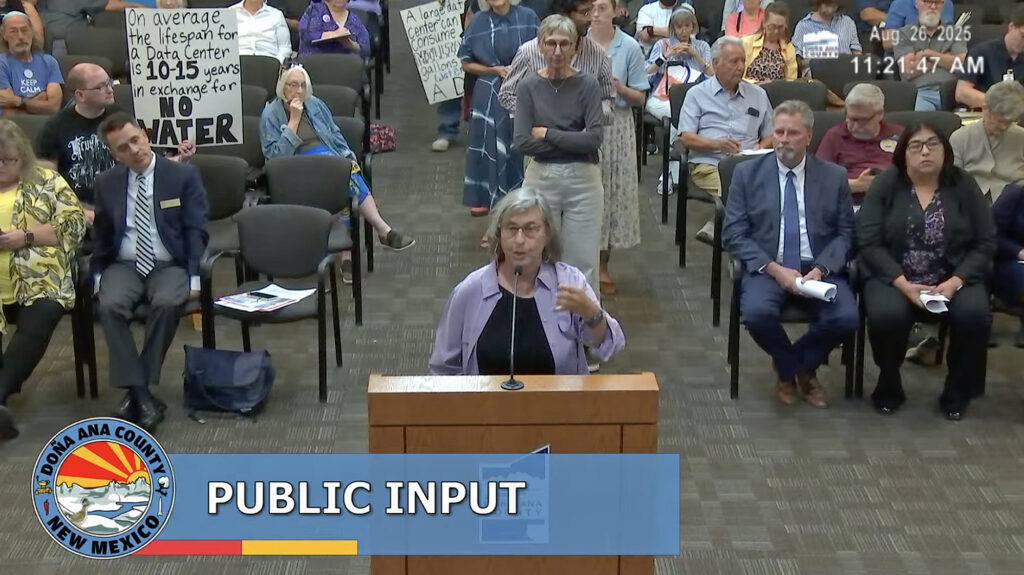
Not transparent
By all appearances, the county designed its unveiling to meet the legal requirements for public disclosure without going one step further. That looks like an attempt to minimize scrutiny of the project.
Even though at least some county officials have known about this project for some time, there were no county-run public meetings to inform the public and give people a chance to ask questions and provide input before Aug. 26.
County commissioners and staff spent the weeks before the Aug. 26 session holding public meetings in all corners of the county to promote a general obligation bond that will be on the ballot in the November election (which is different than the proposed industrial revenue bonds for Project Jupiter).
The GO bond would raise property taxes to fund infrastructure projects. Commissioners could have included discussion of Project Jupiter at those meetings without expending additional public resources.
But other than Chaparro, commissioners haven’t shown much inquisitiveness about Project Jupiter.
At the Aug. 26 meeting, commissioners asked almost no questions of Napier, who gave only a brief presentation about the project. There was little discussion with him and there were no attempts to negotiate terms of an agreement, other than Chaparro’s efforts to secure public meetings.
To make matters worse, the chairman of the county commission, Christopher Schaljo-Hernandez, tried to limit public comments during the Aug. 26 meeting. When it came time for public input, he told people if they planned to speak about a specific item on the agenda they needed to wait until that item came up for discussion, as is standard procedure.
But when consideration of the Project Jupiter bonds came up, he told people they should only speak on whether they supported or opposed the county’s resolution declaring its intent to issue the bonds, and not give input about Project Jupiter itself.
Fortunately, most people ignored the chairman and spoke about the project anyway.
The county made it more difficult to get a copy of the Project Jupiter application than it does most documents related to items on commission agendas. Instead of including the application in the online packet for the public to access, it included a note stating the application was being withheld because it contains trade secrets, and it would be released with redactions if someone filed a formal request for it.
I requested it and was provided a copy two days after the meeting, on Aug. 28.
When I questioned the reason for the redactions, the county told me the document will be released in full if and after the commission approves the bonds on Sept. 19. Calling the redactions “temporary,” Amy Perez, a paralegal for the county, said, “this exemption will eventually go away as the project progresses and documents are formally filed with the Clerk’s office.”
So in essence, the public doesn’t get to know certain details about the project while there’s still time to provide input — but once the deal is finalized, the public will get to know.
Chaparro hinted at the Aug. 26 meeting at having concerns that even she hasn’t been fully included in the process. She said she had met twice with the developers, for a total of two hours. While staff told her that was more time than any other commissioner had spent with them, Chaparro said she did not believe that and still did not have all her questions about the project answered.
Commissioner Shannon Reynolds, on the other hand, said more than once he knew things about the project he couldn’t share with the public. He initially said at the Aug. 26 meeting that he’d been in discussions about the project for “probably four months.” He later backtracked, saying he “didn’t know I was talking about this when I was talking about this.” He added that he “found out more details about this when everyone else did on the commission about 3-4 weeks ago.”
Why didn’t these discussions happen in public, instead of developers meeting privately, and separately, with what was almost certainly a quorum of county commissioners?
Concerns about water
There are many issues Reynolds and other commissioners have a responsibility to be talking about publicly — and should have been discussing with the public sooner. None is of greater importance than the region’s water.
Quality and availability are both concerns in the Santa Teresa area.
Water customers in the area have been served by the Camino Real Regional Utility Authority, which includes the City of Sunland Park and the unincorporated Santa Teresa area, but its water system has long been plagued by high arsenic levels. Sunland Park and Doña Ana County are in the process of parting ways with the shared water system and dividing its assets.
The county is also working to improve water quality. Assistant County Manager Stephen Lopez shared with the commission at the Aug. 26 meeting that a request for proposals from companies to build a desalinization plant in the Santa Teresa area had led to several positive responses.
This is an effort that predates Project Jupiter. Researchers from New Mexico State University’s Water Resources Research Institute have been studying how to improve water quality there for years.
The fresh water is being depleted by use in Sunland Park and Santa Teresa, so being able to tap into the brackish groundwater underneath has become increasingly important.
In 2023, the NMSU researchers reported that there are conservatively estimated to be 65 million acre feet of fresh and slightly brackish water in the Mesilla Bolson, an underground reservoir that runs from Las Cruces south into Mexico. The U.S. Geological Survey estimated the brackish water at 717 cubic miles in a 2017 report.
However, Lopez said in an interview that “in ground” measurements that would verify the estimates are “desperately needed.” The county has reached out to NMSU, New Mexico Institute of Mining and Technology and the Office of the State Engineer to do this work.
Regardless, that’s a lot of water. Lopez shared some rough calculations based on an estimate that about 35,000 users will need water service in the Santa Teresa area in 2027. There are currently about 22,000 users. Based on those numbers, there is potentially enough brackish water for thousands of years of use.
Of course, the Mesilla Bolson covers an area larger than the Sunland Park/Santa Teresa area.
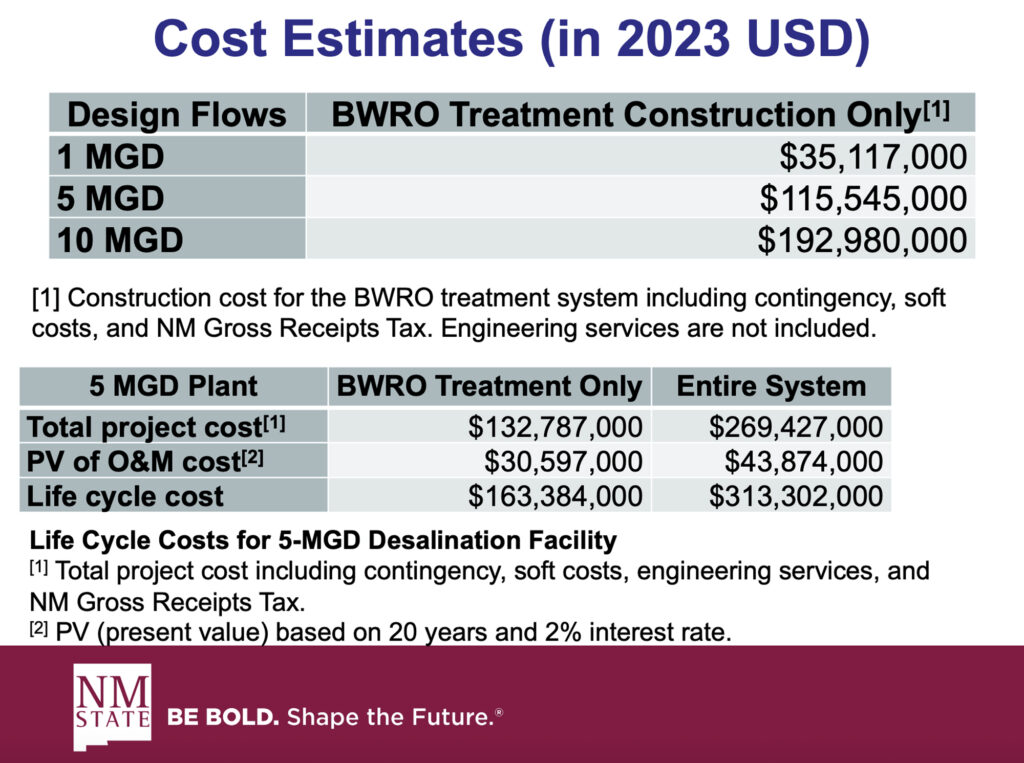
NMSU has also been developing engineering designs for a desalinization plant. They estimated the cost in 2023 to be between $35 million and $192 million depending on the capacity needed, with a mid-range system estimated to have a total construction cost of almost $133 million.
Lopez said the county is talking with Sunland Park about buying desalinized water from the county and will speak with other area water districts as well.
What does all of this have to do with Project Jupiter? Many data centers use a lot of water for cooling. Those being built across the West are often draining water from arid communities that need it. Even those that have attempted to use less water by installing closed-loop systems often lose water to evaporation.
Microsoft announced in December that its “next-generation” data centers would consume “zero water for cooling” after an initial filling of a closed-loop system during construction. The company said the system would lose no water to evaporation.
BorderPlex Digital describes a similar system in its application for bond financing, saying it would use a “closed loop, non-evaporative cooling technology” that will require “one-time water demand per building to fill the closed-loop system.” It promises no other water use beyond “typical domestic usage” like sinks and toilets for employees.
In his presentation to the county commission, Napier pledged that BorderPlex Digital would also “invest tens of millions of dollars toward essential county water infrastructure improvements to ensure long-term water security and sustainability for the region.”
What that means isn’t clear. Lopez said the company isn’t directly involved in the county’s efforts to build a desalinization plant but “has indicated a strong interest in supporting getting the water and wastewater system in the area up to full strength to ensure they are not impacting water and wastewater needs of the greater community.”
Power generation
Some folks are also concerned about how BorderPlex Digital plans to power its data centers. No formal documents that I’ve obtained (I have several records requests outstanding) commit the company to a specific plan for how it will power its microgrid, but it has suggested using a combination of natural gas and nuclear.
The governor’s MOU with BorderPlex Digital mentions “electricity generated from natural gas and nuclear resources.” The slideshows BorderPlex Digital presented to legislative committees talk up the benefits of small modular reactors. One also mentions natural gas.
Those are the only details in documents I’ve seen. The company’s application for bond financing states that environmental assessments “are pending,” with some of them not expected to be complete for as long as six months even though the company hopes to break ground later this year.
But BorderPlex Digital has clearly been working with officials on its power plans. The company hired its first lobbyist in New Mexico, Vanessa Alarid, on Jan. 20. It had four lobbyists on its payroll during this year’s 60-day legislative session.
The state doesn’t require lobbyists or their employers, like BorderPlex Digital, to tell us what legislation they’re working to influence — but there was a proposal this year to allow the construction of microgrids in New Mexico. And the governor’s MOU committed her to support legislation to help Project Jupiter succeed.
Senate Bill 418 would have authorized “a new energy production modality known as a ‘microgrid’ in state law,” according to the bill’s fiscal impact report. That legislation died, but language legalizing the construction of microgrids from that bill was added to House Bill 93 at the final stage of approval, on the Senate floor, on March 20 — three days before the end of the 60-day session.
The governor later signed HB93 into law.
Past commissions set a strong standard
Clearly, the developers of Project Jupiter have been working hard behind the scenes for many months to gain approvals and tax breaks. Now, with the primary funding mechanism racing toward approval, it’s time for county commissioners to ensure the public is in on what’s happening.
Back in 2007, the Verde Group wanted developers to control governing boards of three tax increment development districts the county was considering creating to help fund the projects. Commissioners disagreed and stood their ground. Eventually Verde caved, agreeing to boards controlled by the county.
That came after then-commissioner Perez, as I wrote at the time, “was concerned that the plan was proceeding too quickly and without enough public scrutiny.” She wanted to formalize the requirements of Verde’s master plan so there was accountability. She slowed the process and convinced Verde to hold more public meetings about its plans.
That revealed another sticking point. Verde had verbally pledged that 15 percent of the housing it built would fit the definition of affordable housing. But when it shared its final master plan with commissioners, the plan listed that as a goal, not a requirement.
That was a deal breaker for then-Commissioner McCamley. Without his support, Verde didn’t have the votes. The company withdrew its application to create the tax districts. The plan to build the new city died.
Similarly, when Santa Fe art dealer Gerald Peters and the Jemez Pueblo were proposing to build an off-reservation casino in Anthony, I watched then-Commissioner Gilbert Apodaca negotiate with Peters at a commission meeting in front of the public. Apodaca asked Peters to commit to paying 100 percent of health-care premiums for employees working at the casino, and Peters agreed.
The commission voted to support the proposal, which was later rejected at the federal level.
It’s time for negotiations
Our current county commissioners have not come close to meeting the standard of integrity set by these past commissioners. With the exception of Chaparro, this group is falling spectacularly short of the responsibility their oaths of office require.
Reynolds said at the Aug. 26 public meeting that he’s still learning about Project Jupiter, even as he went on to explain why he’s supporting it. He didn’t ask a single question of BorderPlex Digital’s Napier, who he referred to by Lanham, his first name.
That’s not the due diligence we need from our commissioners in this moment. They need to ask all their questions. And they should be negotiating.
Do they want BorderPlex Digital to help fund the desalinization plant? Ask for that. Do they want to allow nuclear and natural gas power in the Santa Teresa area? Let’s have a public policy discussion on this point. They can certainly ask BorderPlex Digital to obtain power another way.
Do they want to ensure union workers are building the data centers? That a percentage of those jobs will go to New Mexico residents? That BorderPlex Digital will fund workforce development programs? Demand those things.
Require a formal agreement. Put the company’s water pledge in it, and the fees the company will pay instead of taxes. Include clawbacks and enforcement provisions to ensure the developers meet their contractual obligations.
There’s lots to like about Project Jupiter. But without legal commitments and protections, it’s risky. A public process pushes our elected officials to get the best deal they can from developers who have been wooing them, and to make their promises legally binding.
The developers’ application states that the “location decision for Project Jupiter remains competitive and is contingent” on the county approving the bond funding.
Fair enough. The developers could walk away from negotiations. But our county also brings a lot to the bargaining table, and our commissioners should act like it.
We have water. A state law that allows them to generate their own power. Tax incentives. And all the benefits of being near the Santa Teresa Industrial Park, a port of entry, the county’s jetport, and manufacturing plants in Ciudad Juárez.
Secure legal guarantees
Commissioners need to show up confident in what they bring to the table and grounded in their responsibility to their constituents. I hope they’re serious enough about their oaths of office to do the right thing.
If they continue on their current path, this will increasingly look like something other than the good deal BorderPlex Digital presents.
Las Cruces City Councilor Cassie McClure said it well at Tuesday’s meeting of the Council, where many people showed up to speak during public input about Project Jupiter even though the city has no role in approval.
The massive amount of money and the speed at which the county is moving breed mistrust, McClure said.
“I would counsel some of my county peers to consider why this is happening so fast and consider listening to people slightly more,” she said.
The county’s public meetings are a strong first step. Now let’s see them negotiate a contractual agreement that backs up Project Jupiter’s big promises with legal guarantees.
DISCLOSURES: My spouse is state Rep. Sarah Silva, who was present for BorderPlex Digital’s recent presentation to the Legislative Finance Committee. In addition, this article references past actions of former County Commissioner Bill McCamley, who is my close friend.
ADDITIONAL DISCLOSURE (added Sept. 9, 8:12 a.m.): Days after I published this article, my spouse, state Rep. Sarah Silva, participated in negotiations related to Project Jupiter. To preserve my ability to report on Project Jupiter and my spouse’s ability to do her job, I will not use any anonymous sources in my articles about this topic. I will continue to report using documents and named sources only.
CORRECTION: A prior version of this article incorrectly stated that the upcoming public meetings were being hosted by Doña Ana County, not the developers.
You list what NM brings to the bargaining table, but missing is the fact that the proposed Santa Teresa site is a stone’s throw from long-haul fiber optic routes, the connection to which is critical for data centers.
https://www.lumen.com/en-us/resources/network-maps.html
This map even depicts a fiber route across the street from the proposed site: https://www.vtc.net/business-wholesale
The commissioners hold a strong hand and should act like it. Instead of falling over themselves to offer blank checks to big tech, they should demand obligations that are legally enforceable to safeguard our resources and protect our people.
That’s a good catch! Thank you for adding that detail.
This is a thorough, balanced and totally professional job on an enormous and consequential project the county (and of course the developers) seem hellbent on fast-tracking. I’ve posted it to Facebook and Nextdoor, and also forwarded it by email and made a contribution to support your work. I am particularly struck by the enormity of Project Jupiter and the amount of power it would undoubtedly consume, let alone the amount of water and the questionable assurances of controlling its use. Other communities have seen their electric rates skyrocket because of data center projects, especially with the explosive development of AI. Yet I see no mention of using renewable energy sources such as solar, wind or geothermal but rather a commitment to natural gas and nuclear. If Bill McCamley were on the current county commission we can be sure the project and the process would be thoroughly scrutinized. But aside from Susana Chaparro I see no real efforts at due diligence from the BOCC. Tucson just turned away a similar project. We might do well to study and follow their example.
Thank you for your support and your kind words, Steve! I really appreciate it.
Thanks for bringing up the context of past dealings between the commissioners and developers. I would feel a lot happier if there were explicit, enforceable provisions specifying the maximum amounts of water and electricity which will be used per year or phase. Also, I don’t understand who bears the risk of an AI bubble bursting — leaving a half built “campus” generating little or no revenue.
That’s a great question! I would love to hear our commissioners address it.
Important and necessary reporting. “Project Jupiter,” on its face, seems to be a caricature of how not to proceed with a hugely expensive, issue-filled private project of some $165 billion at a minimum, who knows, only made possible with “massive” government support, as Counselor McClure points out, especially in a context of embarrassingly minimal public input to this point. If this is a project that will benefit the region in the long term, it should be able to withstand proper, detailed public scrutiny. To do otherwise is not acceptable on any level.
It should be able to withstand the scrutiny. I agree!
I sent this sketchof analysis to Commissioner Shannon Reynolds 2h before the meeitng, which I was glad not to waste my time attending. I’ve alwaws been a systems thinker. Jupiter has massive potential…to be another millstone around our necks like the Spaceport. Project Jupiter
Ownership
· Who?
· Terms (time, liens…)
Exact functionality?
· Data center – for whom? Locked in? Or marketable access?
· AI
o Has hit a plateau or the peak?
o Cio.com – https://www.cio.com/article/4049933/what-ai-tools-actually-deliver-versus-the-hype-machine.html
o https://www.reddit.com/r/AskProgramming/comments/1kikl7a/why_is_ai_so_hyped/
o Is AI a net social good? For some people or businesses it adds productivity. That said… It eliminates more jobs than it improves other jobs. It spreads information (“hallucinations, as many studies show and asI have seen in testing it). It’s used for cheating by students.
Scope?
· Physical size
· Power draw
· Whose technology?
Infrastructure needed
· Power!
o Demand, and peak demand
o Renewables are NOT available → Impact on climate, and on EPE/PNM plans for same
o New capacity from EPE or PNM?
o Transmission line upgrade
· Land
o Siting – BLM? If no]t, who owns it and who is recompensed?
o Value –
· Water for cooling
· Road access – who pays?
Impact – remember the Spaceport debacle?
· Taxation underlying all of these
· Jobs, the usual mantra – for whom?
Hi, Shannon,
You expressed full support for Project Jupiter. I’d like you to consider questions that balance the hype.
Thanks,
Vince
Project Jupiter
Ownership
· Who?
· Terms (time, liens…)
Exact functionality?
· Data center – for whom? Locked in? Or marketable access?
· AI
o Has hit a plateau or the peak?
o Cio.com – https://www.cio.com/article/4049933/what-ai-tools-actually-deliver-versus-the-hype-machine.html
o https://www.reddit.com/r/AskProgramming/comments/1kikl7a/why_is_ai_so_hyped/
o Is AI a net social good? For some people or businesses it adds productivity. That said… It eliminates more jobs than it improves other jobs. It spreads misinformation (“hallucinations, as many studies show and as I have seen in testing it). It’s used for cheating by students.
Scope?
· Physical size
· Power draw
· Whose technology?
Infrastructure needed
· Power!
o Demand, and peak demand
o Renewables are NOT available in large amounts or at all in new resources that will be needed → Impact on climate, and on EPE/PNM plans for same
o New capacity from EPE or PNM?
o Transmission line upgrade will almost surely be needed. Who pays? How long is the lead time?
· Land
o Siting – BLM? If not, who owns it and who is recompensed?
o Value –
· Water for cooling – We are quite possibly heading into a long-term drought here
· Road access – who pays?
Impact – remember the Spaceport debacle?
· Taxation underlying all of these
· Jobs, the usual mantra – for whom?
Thanks for your feedback! I wonder if you saw this recent study that found the spaceport having a substantial, positive impact?
https://www.lascrucesbulletin.com/stories/spaceport-equaled-239-million-in-2024,131791
https://www.spaceportamerica.com/wp-content/uploads/2025/08/Economic-Impact-of-Spaceport-America-2019-2024.pdf
Thank you for your great investigative reporting on this issue. You have reinforced what I believe to be a project that has been fast tracked to ensure that it gets passed with little regard for transparency and due diligence. I am grateful for your work. I am greatly disappointed in the lack of oversight and integrity from our county commissioner’s, with the exclusion of Chaparro. It appears that their egos have gotten in the way of serving the people who elected them!
Thank you for your kind words.
Thanks for the excellent reporting Heath and suggestions on the path forward. As a legislator it stokes my resentment for our secretive legislative process where special interests get to hide their role in passing bills. This project seems to benefit from several bills passed this session, not to mention potentially a significant appropriations for water desalination projects. Were these all done as pieces of this project? If we had full disclosure of lobbying we might have been able to connect these dots.
I resent our legislature, citizens, and communities being fed up to a corporate beast, in secret. It’s insulting, manipulative, and offensive. While I understand economic development has to be developed with discretion to a point, there’s also other significant principles of transparency and scrutiny to good policy making that should be respected and instituted. Given a project of this size and the magnitude, this process hasn’t begun to have risen to that level. Nuclear power in Dona Ana County? Really? Thanks for helping to start a serious discussion along with your commenters, about some of those issues.
Thank you, senator. If only we had transparency in the lobbying process…
I appreciate your comments also. Do you have an opinion on NDAs signed without any public hearing? In particular, the County Manager taking the position that he bound the commissioners to an NDA they never saw, let alone voted on? It seems inconsistent with democracy, and kleptocratic.
If the company is based in Austin why are they not building in Texas where there is an abundance of water?
Good question! I think they like what we have to offer here…
Nuclear or natural gas? No thanks. That should be a deal breaker. I don’t want nuclear reactors in my backyard. And There is no way at a time when the fossil fuel industry has been greenlighted by the corrupt federal government to ramp up its efforts to make the planet uninhabitable that any locality should allow for the use of more fossil fuels, regardless of any promised benefits.
Thanks for this article Heath.
Thanks, Kevin! This is certainly a public policy discussion the county commission should be facilitating and having with the public, not just with the developers.
When you think of Nuclear Power most minds turn to Three Mile Island. That debacle was brought on by engineering and design faults. I am not a nuke trained sailor, but spent over 20 years in our Navy, a large portion in submarines. When you consider how many nuclear subs we have and zero accidents, I think nuclear power is the answer to our electrical power and water needs. How many trained plant operators has the Navy produced that would jump at a chance for a second career using what the Navy trained them to do.
There was a desalinations plant in San Diego many years ago that was nuclear powered. When Castro cut off water to Guantanamo Bay Navy Base, they moved that plant to Gitmo to furnish the base without incident.
Technology has made nuclear power as safe as any power plant you can think of. I’m for the Jupiter Project with more guarantees from the contractor’s building the plants to hire a high percentage of employees from New Mexico with right to work to prevent unions from bringing in outsiders claiming we don’t have enough train tradesmen. Remove a portion of the tax breaks, get all the promises in writing.
We are looking at a long term investment for our future. We need to think of the impact on our children and grandchildren. What benefits will they have from our decisions today.
William, thanks for sharing your opinion! I really appreciate your feedback.
The natural-gas power plant for this data center would emit more CO2 than all of El Paso Electric, and that is just the first phase (700 MW natural gas plant). This totally bypasses and subverts the Energy Transition Act passed in 2019 to reduce greenhouse gas emissions by using exceptions for “micro-grids” passed this year (HB-93). See attached chart and table showing the CO2 emissions and my data sources. Unless the project commits to renewable energy sources, with natural gas used only as a backup for reliability, it should be rejected on climate grounds alone, apart from water and other issues.
Thanks for sharing!