 Heath Haussamen
• READ THE STUDY: Economic Impact of Spaceport America, 2019-2024
• SUPPORT MY WORK: In-depth reporting like this takes a lot of time. Pitch in a few bucks to support my journalism by clicking here.
Armed with data that says Spaceport America is boosting New Mexico’s economy, supporters say the debate about whether to continue funding the project should be over.
But even the new economic impact study, which shows the spaceport bringing in tens of millions of tax dollars for government and creating hundreds of millions of dollars in economic activity per year, appears unlikely to satisfy the spaceport’s biggest critics.
“Where is it? I don’t see how anybody could really believe that with a straight face,” said state Sen. Joseph Cervantes, D-Las Cruces.
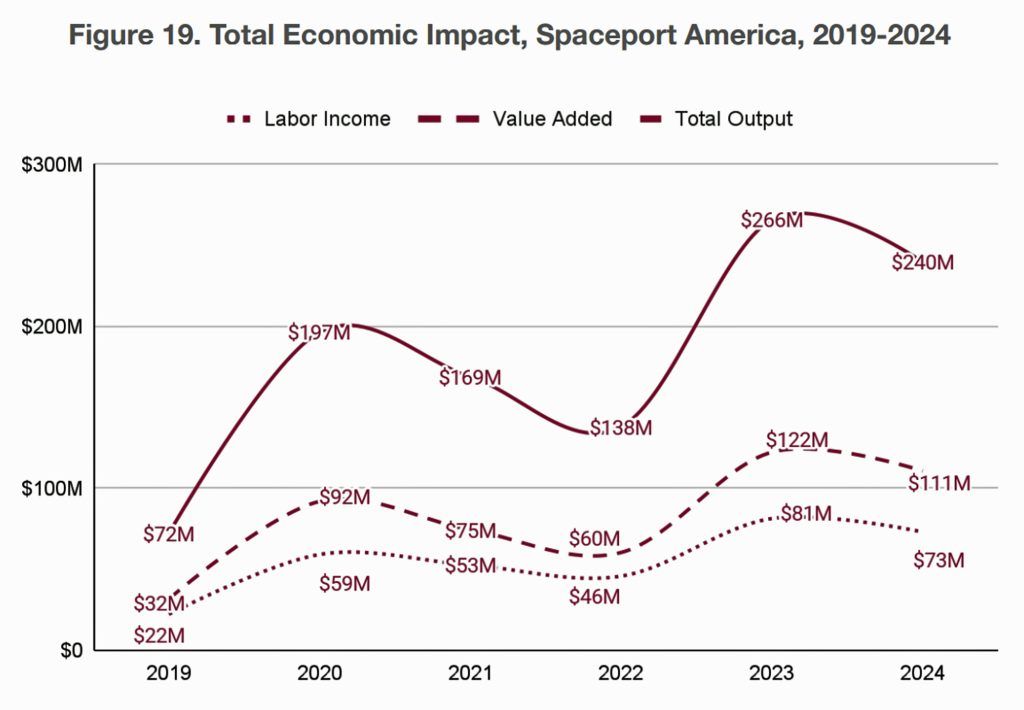
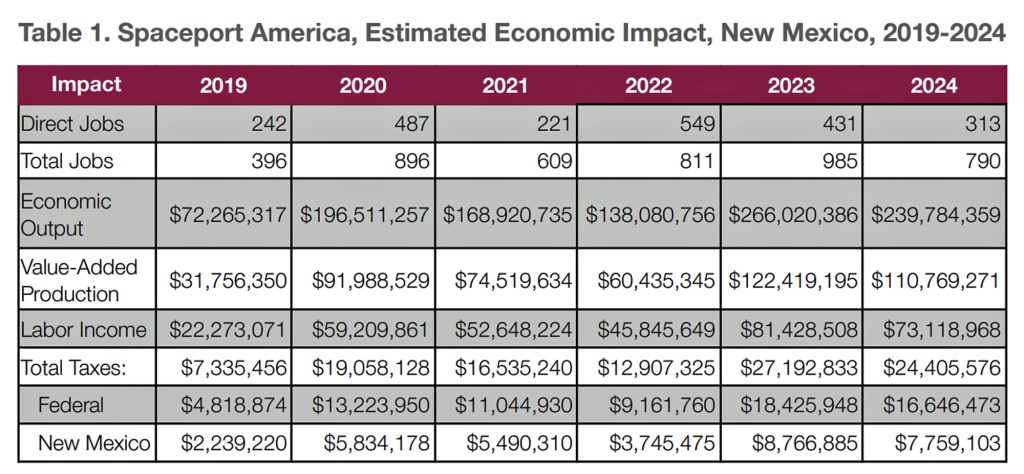
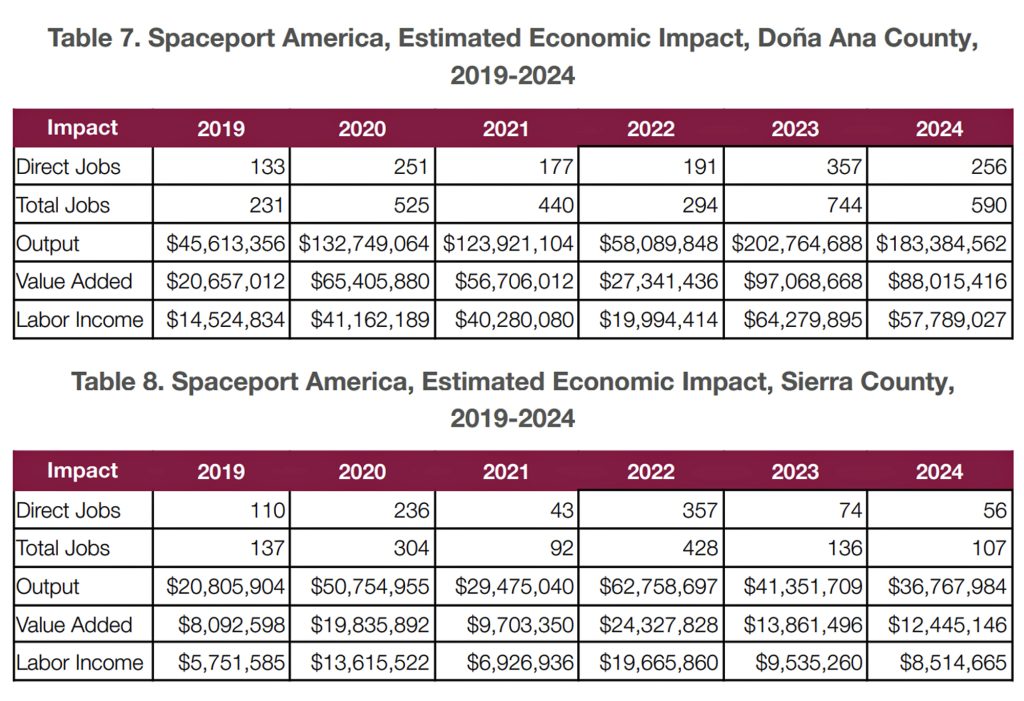
The six-year study showed Spaceport America’s impact growing substantially from 2019-2024: Jobs increased from 396 to 790. Annual tax dollars collected rose over that period from $7.3 million to $24.4 million. Annual economic output — the overall impact on the area — increased from $72.3 million to $239.8 million, according to the study.
That growth comes in spite of the fact that the facility’s anchor tenant, Virgin Galactic, continues to struggle to reach its goal of regularly flying paying customers into suborbital space. The company laid off 185 employees, 73 of them working in Doña Ana and Sierra counties, in 2023 and paused spaceflights as it builds a new spaceship in Arizona. Virgin says it plans to restart flights from Spaceport America later this year.
The company’s success is far from certain. But, as the economic study points out, New Mexico’s spaceport has successfully diversified its client base and revenue.
“It’s very difficult to justify not continuing with the spaceport at this point,” said Chris Erickson, an economics professor at New Mexico State University who co-authored the study. “…It’s close to self-funding and it generates a lot of economic impact.”
A positive shift since 2017
Erickson hasn’t always had such a positive view. When I investigated Spaceport America in 2017, he was not optimistic about the project’s future and helped me deconstruct a flawed economic analysis officials were touting.
“The spaceport economic impact study suffers from a classic mistake, which is to only count the benefits and not count the costs,” he told me nine years ago.
The staff who led the spaceport back then created quite a bit of scandal. But today, they’re long gone.
Current Spaceport America Director Scott McLaughlin is doing a good job and has hired strong staff, Erickson said. And the new study Erickson co-authored subtracts the costs of operating the spaceport from estimates of the facility’s impact.
In 2017, Erickson said, the data didn’t support the positive story spaceport officials tried to tell. Today, he said, the big claims are true.
“The data tells the story that says the spaceport is successful at this point,” he said.
Documenting economic activity
Cervantes is unimpressed. While cautioning that he hadn’t read the new study, he said, “Whenever someone at the university writes the study, it’s usually favorable to those who are paying them to write the study.”
The Spaceport Authority, the state agency that runs the spaceport, rents office space at Arrowhead Park on the NMSU campus. The study was led by NMSU’s Arrowhead Center and the Center for Border Economic Development at NMSU. Erickson leads the latter.
Cervantes, whose real estate company leased office space to the Spaceport Authority before the agency moved to Arrowhead Park, said he’s not seen economic activity generated by the spaceport in the Las Cruces area. But my past reporting has documented economic activity. My 2017 investigation included profiling two Virgin Galactic employees living in Las Cruces and detailing a boost in hotel occupancy, among other things.
“Though today’s reality is far short of the vision laid out years ago, a months-long NMPolitics.net investigation found reason for optimism,” I wrote at the time. “The spaceport is spurring tourism and has created some jobs in southern New Mexico.”
Of course, that was before Virgin Galactic’s layoffs. My doctor shares a parking lot with Virgin’s office in Las Cruces. Before the layoffs, it was always difficult to find parking. It isn’t today.
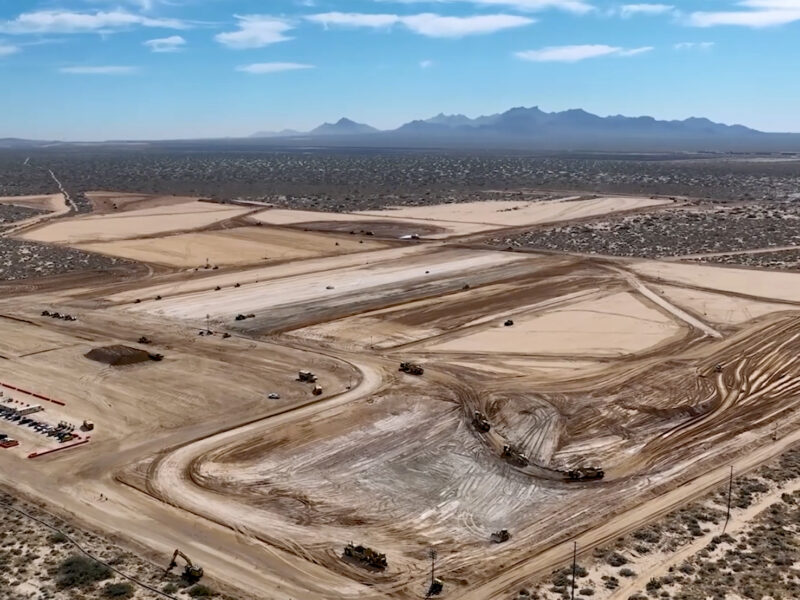
But that’s not the only activity I’ve seen. For example, while hunting oryx in the desert near the spaceport in recent years, I’ve often stared through binoculars at a circular facility the company SpinLaunch built at the spaceport.
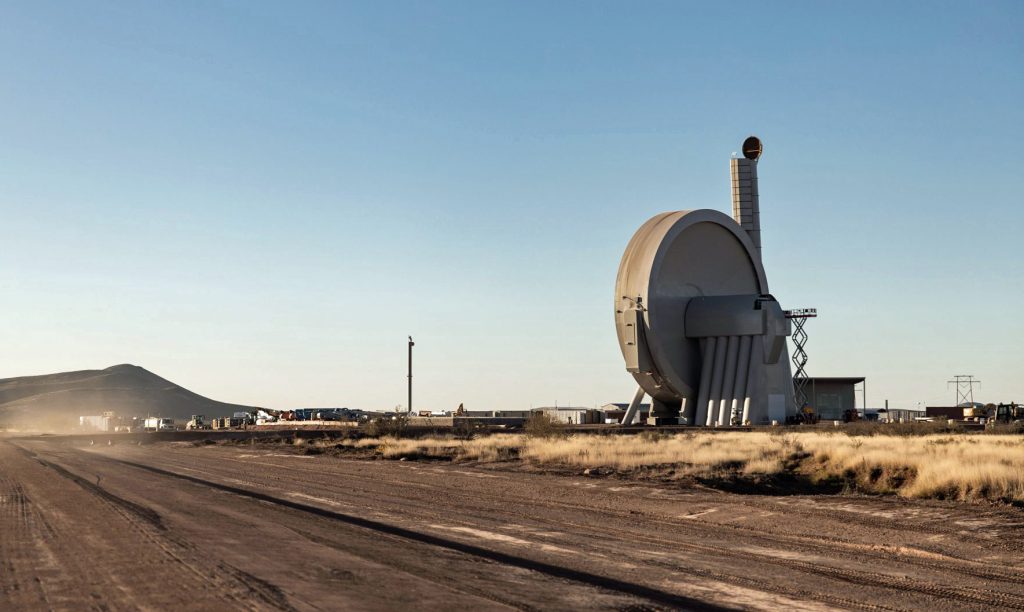
Construction of that facility is economic impact. So is any testing or other work done there.
Unfortunately, we don’t get to know much about it. The secrecy state lawmakers granted the spaceport to protect company trade secrets limits our knowledge of that work. As such, it is a barrier to public trust in the project.
‘Real economic value’
While I can spot some economic activity in our communities, I can’t quantify it. I don’t have access to enough information because of the secrecy law, and I’m not an economist. That’s why the study Erickson co-authored is important.
The study factors in Virgin Galactic’s layoffs. It attributed 985 jobs to the spaceport in 2023 before the drop to 790 in 2024. Overall economic activity fell over that year from $266 million to just under $240 million.
But the spaceport survived Virgin’s layoffs. The economic numbers remained positive. The study gives examples of economic activity beyond Virgin Galactic.
It mentions the U.S. Air Force Thunderbirds using the spaceport as their winter training location every year since 2021.
It lists six other tenants besides Virgin Galactic, including SpinLaunch and UP Aerospace, which was the first company to launch from the facility 20 years ago. UP Aerospace conducted its 23rd suborbital fight from the spaceport in November.
Spaceport America’s recently-released annual report lists 16 customers and tenants. The last public announcement of a new tenant was in May.
Tourism is another biggie: There were more than 60,400 visitors to the spaceport in 2024, the economic impact study states, “evidencing the growing public interest in commercial spaceflight and the facility’s role in regional tourism and outreach.”
The study found three primary drivers of economic activity: the operations of tenants, which includes private employment and privately funded construction; out-of-state visitor spending, which the study’s authors calculated using numbers reported by the spaceport and tenants; and income generated by the spaceport, which includes “rental revenue, tours and launch revenue, and lease interest revenues.”
“The data now shows that Spaceport America produces real economic value and is building capacity for the future,” McLaughlin wrote in a recent column published in the Sierra County Sentinel.
‘Running some companies off’
Cervantes compared the positive claims about the spaceport to the Trump Administration “telling us the economy is great.”
As one of the state’s most senior lawmakers and the chair of the Senate Judiciary Committee, Cervantes’ opinion carries great weight in the Roundhouse. He’s often an ally of Sen. George Muñoz, D-Gallup, who chairs the powerful Senate Finance Committee and has proposed selling the spaceport in the past.
The chatter among some lawmakers about shutting down or selling the spaceport came up during a hearing of the House Appropriations and Finance Committee last week.
Rep. Rebecca Dow, R-Truth or Consequences, who called herself “a huge fan” of the spaceport, said threats from her colleagues don’t provide the certainty companies need.
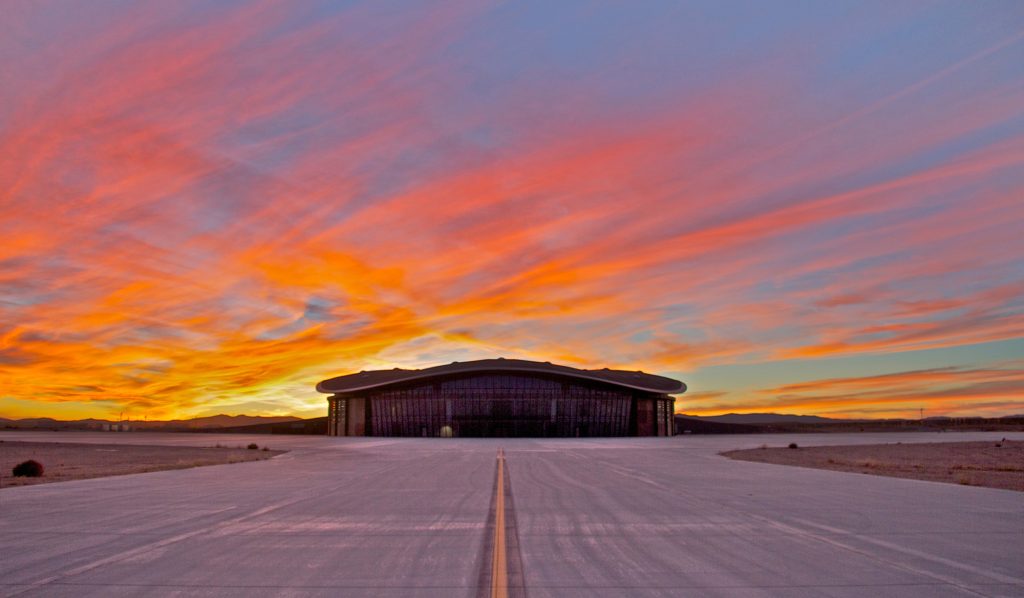
“Why would someone make a $200 million capital investment at the spaceport if the Legislature is threatening to sell it or shut it down?” Dow asked.
McLaughlin agreed, saying the threats have been “a factor in running some companies off.”
‘Reasonably successful’
Officials say the spaceport’s funding also limits its growth. It’s operating on a budget of about $15 million this year.
The Spaceport Authority is asking for five new, full-time positions in next year’s budget: a contracts manager, facilities technician, deputy director, capital projects coordinator, and STEM coordinator to organize outreach to schools and workforce development.
“We’re saturated on what we’re doing right now with the customer load we have,” McLaughlin told lawmakers last week.
Erickson, who examined other spaceports while doing his study, said New Mexico provides smaller subsidies than most other governments that operate publicly owned spaceports.
“I think we have been reasonably successful in getting customers and I think the spaceport administration is doing a good job,” Erickson said. “Could they do better if they had more funding? Yes.”
Dow also asked whether the spaceport would survive if Virgin Galactic fails. McLaughlin acknowledged the possibility, saying the state has appraised Virgin’s hangar at the spaceport at about $40 million. The Spaceport Authority would seek to lease it to Boeing or Lockheed if Virgin abandons it.
“I think we would get someone probably within a year,” he said.
‘A wave of space economy growth’
McLaughlin and Erickson both mentioned the rapid growth of the commercial space industry. The spaceport director pointed out to lawmakers that NASA is sending humans to the moon in February for the first time in decades.
“We’re just in a wave of space economy growth that has never, ever been seen before,” McLaughlin said.
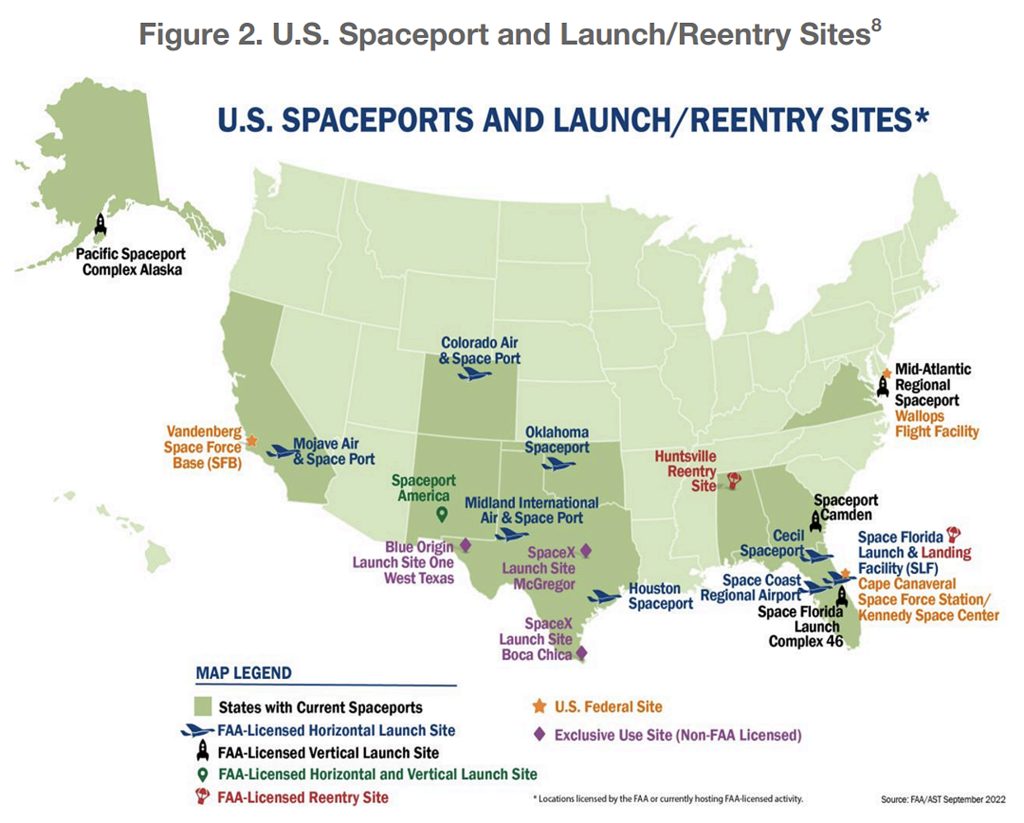
New Mexico’s journey toward operating a successful spaceport has not gone as predicted, he acknowledged. It was the first spaceport designed and constructed for that purpose rather than being built in the skeleton of an airport.
McLaughlin noted the state’s decision to build its spaceport in the middle of nowhere — in the desert southeast of T or C, adjacent to White Sands Missile Range — and hinted he might make a different choice today.
But the location provides some opportunities, including access to restricted airspace and the unique ability, because of its license from the Federal Aviation Administration, to facilitate both vertical and horizontal launches. McLaughlin told lawmakers the U.S. Department of Defense is beginning to consider the need for an inland site for launches to offset the vulnerability of facilities located on a coast.
Reason for skepticism
To be clear, there are understandable reasons folks like Cervantes remain skeptical. Past mismanagement and Virgin’s delays are among the primary causes.
The spaceport also notably lost a lucrative college rocket competition last year, which was a huge economic hit and another point Cervantes mentioned.
Cervantes is especially critical of Virgin Galactic, which has worked for nearly 20 years without success to fulfill its promise to New Mexico. Though founder Richard Branson’s company, Virgin Investments, remains one of the largest shareholders in Virgin Galactic, Cervantes noted that Branson has sold much of his stock in the space company.
Cervantes interprets that as an acknowledgement of the inevitable. While Virgin Galactic is designed to take paying customers to the edge of space, other companies are launching rockets deeper into space.
“I’ve been in business my whole life,” Cervantes said. “It was abundantly clear to me from the onset that this was not a viable business plan or model.”
But Virgin Galactic isn’t trying to compete with companies like Space X for NASA contracts. It’s working to build what it calls a “spaceline” that could eventually fly folks around the globe more quickly than an airline and with the novelty of a few moments of weightlessness.
Cervantes simply doesn’t buy it.
“Virgin is on life support,” he said. “I don’t see the patient surviving under any scenario.”
A real study was long needed
We all have different experiences with having a spaceport in our backyard. Some of us have seen launches; others have not. Some have experienced signs of economic impact, like I did in my doctor’s parking lot at the height of Virgin’s activity in Las Cruces. Others have not.
So opinions on the spaceport vary widely. That’s why we’ve needed real data.
I worked hard to debunk the previous spaceport administration’s unsubstantiated economic claims in 2017. My work included getting the staffer behind the bad analysis to admit in a deposition that he factored in no documents when he claimed the spaceport was having a positive economic impact.
That deposition was part of my lawsuit to win release of documents the spaceport was illegally keeping secret.
In my 2017 reporting I also highlighted the need for a real economic impact study. I quoted Erickson as saying spaceport officials should “not try to do the things they don’t have the expertise to do.”
In 2023, spaceport officials released the first real economic study. It covered one year, 2022, and showed a positive impact. And today, we have a legit study that shows the positive trend over six years.
The important question
The spaceport is a massive investment by our state that aims to generate revenue for government and economic activity in our communities. Ultimately we’re trying to create jobs and reduce dependence on the oil and gas industry.
The six-year study says the spaceport is doing that. It is not the silver bullet some hoped for two decades ago, but the spaceport is one of many projects around the state that are helping diversify our economy.
“What these numbers tell us is the promise of the world’s first purpose-built commercial spaceport is being fulfilled — finally,” The Santa Fe New Mexican wrote in an editorial about the new study.
“These are early days in the space industry, and New Mexico’s investment must be for the long haul to realize potential in an industry where beyond the sky is the only limit,” the newspaper wrote.
Disclosure: For anyone who is new to my reporting, I want to disclose that I’ve worked since the spaceport’s inception to hold it accountable, including suing to win the release of records officials were illegally keeping secret and filing a formal complaint with the state attorney general. I’m also a fan of space exploration and growing New Mexico’s economy, and I hope for the spaceport’s success. In addition, my spouse, state. Rep. Sarah Silva, serves on the House budget committee and is a supporter of the spaceport.
This article has been updated to clarify that 73 of the 185 employees Virgin Galactic laid off in 2023 were working in New Mexico.


An excellent effort to reveal the current status amid strong efforts to amplyfy or dismiss current claims.
Thank you!
Unlike the quick hot burn of a space rocket engine, the economics of a municipal spaceport is a slow burn. Entities on both sides of the equation may struggle due to funding, investors, and technology. We must be patient. Our state, being at the forefront of this budding industry, sees payoff in ways we can’t always measure with dollars and jobs. Public perception, inspiration towards college, and the dreams of people who want to be near the action can’t be quantified. Mr. McLaughlin is doing an excellent job keeping the public informed, attracting customers, and running a tight ship (pun intended). Thank you Mr. Haussamen for your excellent reporting over these years.
Thank you for your kind words!
You say that Virgin isn’t trying to compete with Space X, etc., that it wants to get people to different places around the world in sub-orbital flights knocking hours off travel time. But that is not how Virgin’s business plan was sold to the people to induce them to tax themselves. It was sold as space tourism with 200,000 visitors a year. That’s a big difference in economic impact and trickle-down and delivering on promises.
Dow says we should keep it because we made a $200m investment. Does she not know we (i.e., public money)spend and have spent many millions more each year in building out what was originally meant to be a unique horizontal-space-launching facility? If only it had cost us $200m. She too makes the “classic mistake” of not subtracting costs from her economic impact assumptions. And the $200m investment for the runway? Evidently overkill, since Virgin is making deals with airports for its spaceship jetting flights. Bragging about being the first purpose built spaceport is misguided and only points out how it would have been wiser to diversify an airport to become a spaceport, maximizing public investment. And even the horizontal space runway is not done! It still needs cross-wind runways.
And these “studies.” Arrowhead lied, brazenly, in 2017. Dow and a bunch of other officials touted that study as gospel.
You allude to the scandal under a prior director and say those people are gone now. But no one was held accountable and nothing has been resolved about the malfeasance. And wasn’t McLaughlin in 2019 when the scandal broke out? I bet the current study didn’t account for the millions wasted back then. CFO DeGregorio’s case, his whistle blower’s case, is STILL hanging fire. You have done much, personally, to try to hold the spaceport gov. officials accountable, and I laud you for it, but it still has lots of secrets.
Why should we believe this study? If you had put in a chart, which includes the massive capital projects’ costs, it would have evinced more trust. And the value-added stuff? The multipliers? No one gives a real explanation at how they arrive at all that multiplication.
I have asked through the years: “Where is your master plan?” I gave up. I think the build out to enable diversification for vertical/horizontal and other space services is probably too shocking to show the public.
Hey Kathleen! Thanks for taking the time to respond. If any other journalist has dug as deeply into spaceport issues as me, it’s you, and I appreciate your work!
A few points:
– Virgin Galactic’s primary plan from the spaceport has always been, and remains, flying tourists into suborbital space from Spaceport America. The longterm vision is a spaceline, and that’s all I was trying to communicate, because it’s far different than what SpaceX and other companies do. In fact, Virgin created a separate company, Virgin Orbit, to try to compete with those companies, and it went bankrupt. Virgin Galactic stands alone in what it’s trying to do, without a lot of competition, probably in part because their model depends on paying customers rather than lucrative NASA and DOD contracts. Would they ever use Spaceport America as a spaceline destination? Given that it’s in the middle of nowhere, I’m skeptical.
– You make a good point about all the capital outlay. I didn’t dig into the past infrastructure costs in this article because I was trying to look forward. And this isn’t the last article I’ll write about the spaceport.
– Help me understand what you’re talking about when you say Arrowhead lied in 2017? I don’t know what that refers to. It was DeGregorio who created the bad economic estimates, and it was he and Hicks who were promoting them.
– There are explanations for the multipliers used in the study. They use the IMPLAN economic model. Check out page 16 for example, for estimates of different types of visitor spending by IMPLAN categories including Hotels, transit, gasoline and restaurants.
Thanks again! As I stated in the article, the secrecy has been and remains a problem I’m concerned about as well.
I am still wondering if we in Las Cruces are still paying for this in our sales tax? It was Dona Ana and Sierra Counties that put citizen’s money into it from the start. Is this still being done?
Hi Helen! Yes, folks in Doña Ana and Sierra counties are still paying increased gross receipts tax to help fund the spaceport that voters approved years ago. Those taxes are set to sunset, I believe in 2029.