 Heath Haussamen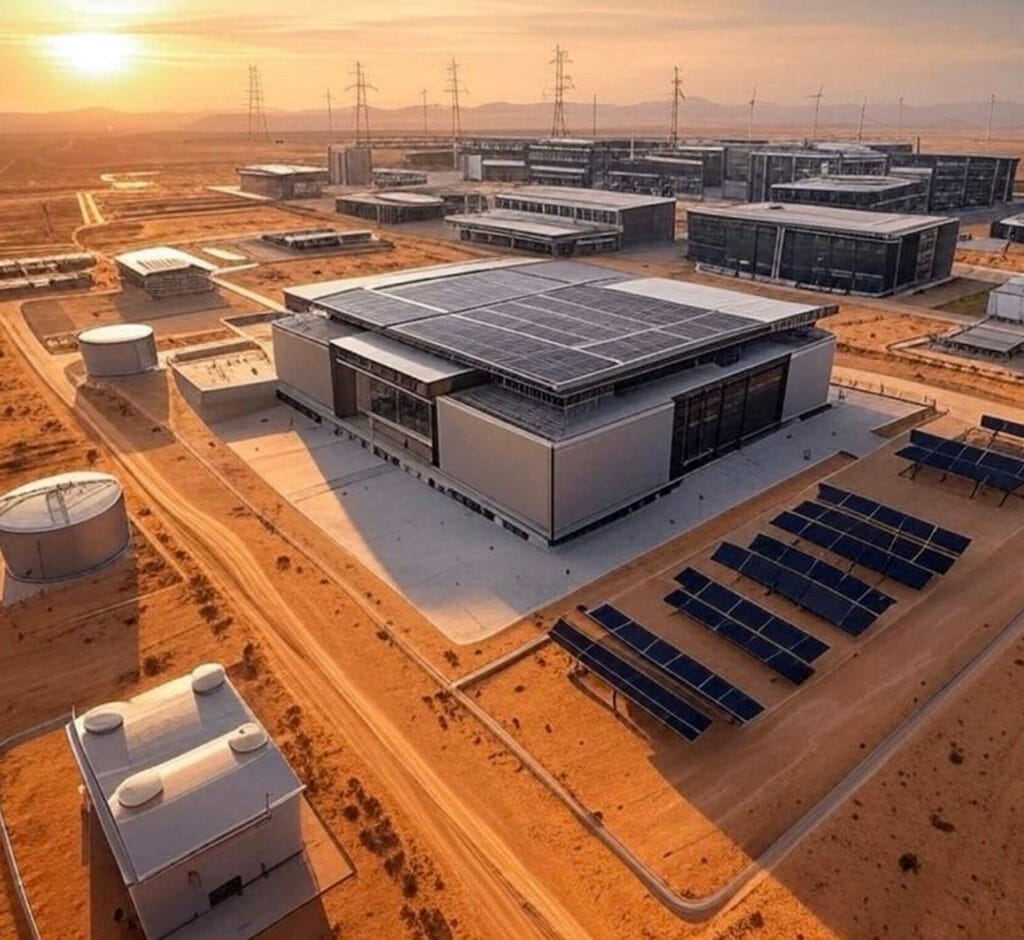
GET CAUGHT UP: In case you missed it, read my article that digs deep into Project Jupiter by clicking here.
Years ago I worked alongside journalist Kent Paterson, an expert on the U.S./Mexico border, to shine light on government’s failure to provide safe drinking water to people in Sunland Park.
Paterson explored whether the city was the border’s Flint, Michigan. He wrote about efforts to hold the area’s water system, the Camino Real Regional Utility Authority, accountable for high arsenic levels and other problems.
I visited the Anapra neighborhood in Sunland Park, which is located in New Mexico at the spot where the borderlands come together on the west side of El Paso, Texas and Ciudad Juárez in Mexico.
I sat with Ramon Sierra in his kitchen. During that interview in 2016, he told me about his wife Maria, who died a few weeks earlier from a host of ailments that could have been caused by arsenic.
Sierra said a test of his tap water revealed high arsenic levels that caused him to worry about the children in his neighborhood. He had switched to drinking bottled water and sometimes handed bottles to kids he saw outside.
Nine years later, high arsenic levels are still a problem in Sunland Park.
This is about our people
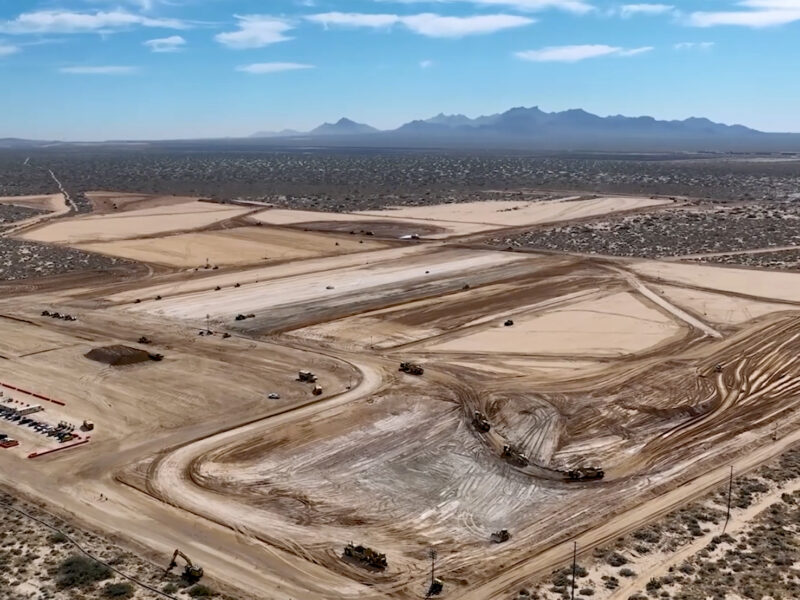
As we’re discussing a proposal to allow out-of-state corporations to build a campus of data centers in Santa Teresa, it’s important to keep our focus on what this is all about.
Our county and state have been working to build a cross-border economy a few miles west of Sunland Park since at least 1992, when construction began on the Santa Teresa Port of Entry. For context, the Chicago Bulls won their second of six NBA championships that year. “End of the Road” by Boyz II Men topped the Billboard Hot 100.
That’s how long we’ve been working to attract companies like Stack Infrastructure and BorderPlex Digital Assets, the developers of Project Jupiter. With a combination of local, state, federal and private money, we’ve constructed a port of entry, an industrial park, a rail hub and a jetport.
It’s all intended to help replace our state’s dependence on oil and gas money with a more diverse and robust economy. It’s about creating jobs and educational opportunities for our people.
It’s about being able to afford infrastructure that will make our people safer and healthier, like a treatment facility that could provide clean water to folks in Sunland Park.
Staffers from Doña Ana County and the state’s Economic Development Department have been negotiating with the developers of Project Jupiter and should finalize proposed agreements this week, according to Assistant County Manager Stephen Lopez.
County commissioners have final say on these documents. They will have time to review them before their scheduled Sept. 19 meeting, Lopez said.
As commissioners consider these proposals, I want to urge them to center our people and the challenges they face.
Seeking ‘some assurances’
I am generally supportive of Project Jupiter, as long as legal agreements protect our water and benefit our people.
The developers have sharpened their assurances in recent days. They’ve unveiled a website and started holding public meetings — though they’ve seriously fumbled communication, which has contributed to distrust of the project.
As commissioners consider the proposed agreements, they may need to negotiate additional terms. After talking with Commissioners Manuel Sanchez and Susana Chaparro last week, I’m optimistic that commissioners are up to the task.
Sanchez said he spoke with the developers Friday and communicated that he wants “some assurances that what they say is what they’re going to do.” For example, he wants commitments on the percentages of New Mexico businesses and residents they’ll bring on board.
“I want to make sure we have enough oversight over this,” Sanchez told me. “I want to make sure that we’re trying to do right by the people.”
Chaparro agreed, citing the proposed 30-year agreement that grants a property tax exemption to the developers. She wants commitments on water use, permits and job numbers. She wants performance metrics.
“I’m not against this, because the more I think about it, it could be good for our community,” Chaparro told me. “…My concern is that it is going to bind my grandchild’s hands to this.”
What we know about proposed agreements
Commissioners “are not directly involved in the negotiations,” Lopez said. That preserves the line between operations and policymaking, he said. In addition, a quorum of commissioners being involved in closed-door negations — at least three of five — would violate the N.M. Open Meetings Act.
So Sanchez, Chaparro and the other three commissioners don’t yet know what the proposed agreements will look like.
After a lengthy back-and-forth with Lopez, I have a sense of some of the things that might be included. The developers have publicly proposed giving the county $300 million in exchange for a 30-year property tax exemption that’s made possible by the county approving $165 billion in industrial revenue bonds.
That should be formalized in the bond documents commissioners will be asked to approve.
At least some commitments related to jobs, like the number of new positions promised, will be formalized in a second legal agreement under the state’s Local Economic Development Act that would grant the developers a 50-percent break on gross receipts and compensating taxes.
“…there are performance requirements under the LEDA statute that will require regular (at least annual) reports, and if the company fails to meet them, there are very strong clawbacks and the potential they would lose all future GRT rebates,” Lopez told me.
He shared a number of other points at which the county could hold developers accountable, including the consideration of building permit applications and the monitoring of water use. But I’m not convinced that’s sufficient to guarantee Project Jupiter’s public promises.
I believe we need legal agreements to address water issues.
Water quality
Project Jupiter’s website references the long struggle to provide “safe and reliable” drinking water to Sunland Park residents and pledges “tens of millions of additional dollars in county drinking water and wastewater infrastructure improvements to ensure long-term water security and sustainability for the region.”
That might be a promise to help fund a desalination plant, which the county has been planning for years to treat brackish water in an aquifer underneath Sunland Park and Santa Teresa.
But I’m speculating. Without an agreement that details how much the developers are giving and for what, this promise effectively does not exist.
The county and Sunland Park are in the process of dissolving their shared regional water utility and each creating their own. It would be up to city officials to decide whether they want to buy desalinated water produced by a future plant.
Project Jupiter can’t ensure that step, but it can help the county build a plant with the capacity to serve the entire region. And it must.
Water use
In addition, there are questions about how much water the project will consume. Historically, data centers have used lots of water to cool electronics, but the industry is moving toward lower use.
Stack and BorderPlex Digital promise a closed-loop system that requires only a one-time fill-up of water during construction. While earlier systems lost water to evaporation, the company says this design won’t.
Lopez said Stack has experience building such a system in a data center in Oregon, which “helps give me personal confidence that this isn’t a brand new concept that is only theoretical.”
Sanchez said he’d like to see the developers release actual numbers for water use in that Oregon facility to illustrate what people here should expect. I agree.
If the technology is real, the developers should have no problem committing to it in a written agreement.
At a public meeting on Friday, the developers suggested they might be willing to fill their closed-loop system with water they truck in. With the company not providing specifics about how much water it takes to fill the system, perhaps we should ask for that.
Other requirements?
Commissioners might want to add other protections to a legal agreement. Early on, the developers hinted at using nuclear power, but their new website states that nuclear “isn’t a viable generation source to meet this project’s timeline and is not currently contemplated.”
That could change over time. Data centers are moving in the direction of using small modular reactors for power — though Sanchez, an engineer who works for General Electric in power generation sales, said he believes deployment in the United States is probably a decade away.
Do commissioners want a ban on using nuclear during the 30-year agreement? They can negotiate that point, too.
We can’t fully flesh out ideas about what protections we need until we see the agreements county staff negotiated. But Sanchez said a memorandum of understanding that’s separate from the bond and LEDA agreements might be necessary to protect the region’s water and ensure financial help with the desalination plant.
Sanchez said the developers’ willingness to help provide clean water for area residents will be a key factor in whether he decides to support Project Jupiter.
What now?
Negotiations should wrap up this week so commissioners have time to review the documents before their Sept. 19 meeting.
I believe commissioners should schedule a work session to discuss the proposed agreements together in front of the public. Give us all a chance to see what’s included and talk about what’s missing, if anything.
If commissioners decide additional agreements are needed, I suggest they pick two of them to join closed-door negotiations. (Three or more commissioners would violate the Open Meetings Act.)
Those two can bring revised agreements back to the full commission.
I realize the additional meeting and negotiations might necessitate a delay of the final votes, but it shouldn’t be a long pause. Commissioners should take enough time to get this right without allowing the process to get bogged down. I’m suggesting few days, or at most a couple of weeks.
We need certainty
The companies say they’re looking at other sites in case Doña Ana County doesn’t work out. But Stack has also posted several job openings on its website for high-paying positions based here.
The company is ready to get to work. The developers of Project Jupiter have already invested a great deal of time and money on their Santa Teresa project, going back to negotiations with the governor and lobbying the Legislature earlier this year.
We’re in the final stages now. The developers want to make this work. If commissioners approve the bond and LEDA agreements, they’ll be giving the companies the certainty they need to move ahead with construction.
To earn my support, all that’s left to do is ensure we also get the certainty we need, especially around water infrastructure and water use.
I’m hopeful we’ll be able to finalize such agreements and take another step toward a future in which the children of Sunland Park are drinking safe water, their groundwater is protected, and they have greater educational and job opportunities ahead of them.
DISCLOSURE (added Sept. 9, 8:12 a.m.): After I published this article, my spouse, state Rep. Sarah Silva, participated in negotiations related to Project Jupiter. To preserve my ability to report on Project Jupiter and my spouse’s ability to do her job, I will not use any anonymous sources in my articles about this topic. I will continue to report using documents and named sources only.


Thank you for your in-depth reporting and attention to detail. This is good writing. I, too, have mixed feelings and understand the concerns residents in the area have regarding water usage. A couple of things. First, were this major development to be abandoned after all the exhaustive groundwork already laid, it would take an unimaginable number of new Walmarts and small businesses to equal the employment and economic impact of this single project. Second, Los Lunas to our north is embarking on a second data center project with Facebook that has revitalized that community. Third, were New Mexico to nix this development, there is a better than average chance that Texas in the form of El Paso would pursue it. The draw on water on the bolsons would be the same but without the monetary and employment benefit to us. Ai is here to stay and will only expand. Data centers are their lifeblood.
We have never seen this size of project in Doña Ana County. We need to carefully consider the benefits to our area. Questions must be adequately answered, however. Good journalists like you press the movers and shakers for clear responses.
Along these lines, the state (currently there is little hope for federal help) and localities should begin the process of planning desalinization plants above the Jornada Del Muerto and Tularosa Basin Bolsons. The water, though brackish, is staggeringly plentiful. Perhaps some of the state budgetary surplus could be diverted to this? I dunno. That might take cooperation and that is in as short supply as is water in the Chihuahuan Desert.
These are all good thoughts. Thank you for your comments!
Great article, and very balanced after so much research.They originally said it was one big fill, then small top offs. Now they said they’d be using 10 million gallons to fill, and 7.5 million each subsequent year. Important to remember this is just one project of many, and in their materials they are courting a slew. Future development will absolutely impact the region. Also – that’s a HELL of a lot of construction in a region with high asthma rates already. SO much dust – Valley Fever is very real here, and it’s deadly.
Thanks for your feedback!