 Heath Haussamen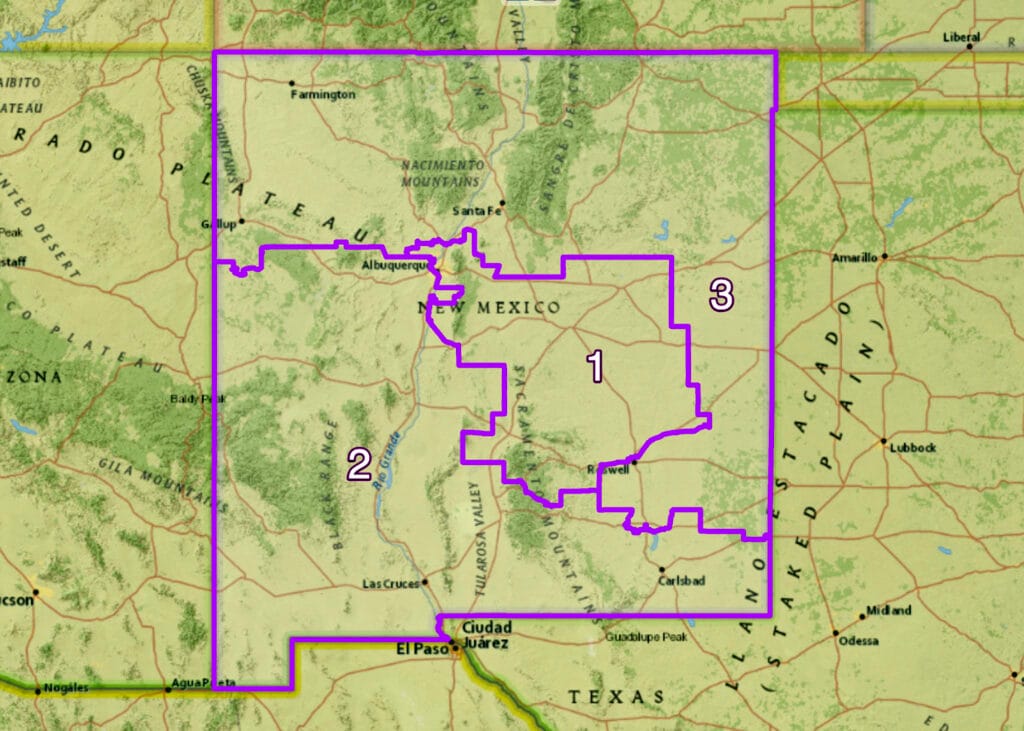
Democrats didn’t start the current redistricting war, no matter how loudly and how often Republicans shout that lie.
Republicans decided to institutionalize gerrymandering as a strategy in 2010. After voters handed Barack Obama the presidency in 2008 and gave Democrats majorities in the U.S. House and U.S. Senate, Republican State Leadership Committee (RSLC) Executive Director Chris Jankowski came up with Redmap, or Redistricting Majority Project.
As reported by the Guardian, this was the plan: “Target states where the legislature controls redistricting. Pour millions into underfunded state legislative races. Drown Democratic incumbents. Flip as many chambers as possible. Redraw the lines.”
That would help Republicans take Congress without having to win over more voters.
It wasn’t a secret. It was something Republicans proudly admitted. As Karl Rove wrote in 2010 in the Wall Street Journal, “Republican strategists are focused on 107 seats in 16 states. Winning these seats would give them control of drawing district lines for nearly 190 congressional seats.”
That round of redistricting helped Republicans win 64 of 94 U.S. House seats in 2012 in Ohio, Florida, Virginia, Pennsylvania, Wisconsin and Michigan, even though Obama carried all those states in his successful campaign for re-election, the Guardian reported.
Democrats won 1.4 million more votes than Republicans nationwide in that election, but Republicans won 234 House seats to the Democrats’ 201.
Conservative rhetoric
And yet, the lie was repeated last week by New Mexico conservatives who are defending Texas’ mid-cycle gerrymander of its congressional map from Democratic criticism. “The original gerrymandering party (Democrats) hate it when they are exposed,” state Sen. Ant Thornton, a Republican from Sandia Park, tweeted. “They scatter like roaches when the lights turn on!”
And state Sen. Jay Block, a Rio Rancho Republican, said New Mexico “continues to be a prime example of blatant gerrymandering, which denies almost half of our state’s voters a voice and fair representation.”
Republicans make up 32.2 percent of the state’s electorate, not “almost half.”
The MAGA blog Piñon Post, which is run by state Rep. John Block, an Alamogordo Republican who is not related to Jay Block, accused Democrats in New Mexico of “suddenly calling foul” in a war where Texas Republicans are simply “attempting to strengthen their own position.”
And conservative Albuquerque Journal columnist Jeff Tucker, a member of the newspaper’s editorial board, authored a column that published Sunday with the headline “Democrats have been the granddaddies of gerrymandering for generations.” Tucker conveniently made no mention of Redmap.
I call bullshit.
Moves and countermoves
To be clear, the courts have determined that Democrats gerrymandered New Mexico’s three congressional districts in 2020 to give their party an edge in Southern New Mexico’s 2nd Congressional District.
The N.M. Supreme Court determined that the gerrymandering was not so egregious that it was legally actionable. The new districts approved by Democrats were implemented.
State Sen. Joseph Cervantes, a Las Cruces Democrat who helped draw the new districts, insists the intent was to make all three districts more competitive — and, to be fair, that is also a valid perspective, though in the process the 2nd District shifted from leaning red to leaning blue.
Regardless, fast-forward five years, and the next scheduled redistricting in 2030 isn’t soon enough for President Donald Trump, who asked Texas Republicans to gerrymander their state’s congressional map.
The timing alone is unusual and outrageous. The clear intent is to offset the president’s sinking popularity and steal several seats in the U.S. House of Representatives in next year’s election.
It’s a desperate attempt to retain control of the House to avoid an impeachment trial, among other things.
Responding in kind
Democrats are protesting, and loudly. Most notably, California Gov. Gavin Newsom has led his state to match Texas’ off-cycle restricting, and the state is on track to do that.
Here in New Mexico, two Democrats — state Sen. Harold Pope and Rep. Cristina Parajón, both of Albuquerque — resigned last week from the bipartisan Fair Districts Task Force, a project of the League of Women Voters that aims to take redistricting out of the hands of partisan elected officials.
“I believe, one day in my lifetime, we will see a future where redistricting is fair and independent across the country,” Parajón said. “But today is not that day. Fairness is not changing the rules in the middle of the game because you’re suddenly afraid you might lose, as Trump is doing in Texas.”
She called for “federal legislation to end partisan gerrymandering — not an uneven patchwork, where mainly Democratic states have embraced fair districting.”
Pope agreed. “The state-by-state approach to independent redistricting will only make the playing field more uneven,” he said.
Because of what Texas Republicans are doing, Pope said, “we in New Mexico and across this nation must rise up and fight back.”
The criticism from Sen. Block, who serves on the Fair Districts Task Force, came in response to the resignations of Pope and Parajón, which Block called “stupid and childish.” The often-petulant Thornton was also responding to their resignations.
Over the weekend another member of the task force, Sen. Angel Charley, a Democrat from Acoma, called for the task force to be disbanded because of issues including a lack of partisan balance created by the resignations.
“This process has been a betrayal of public trust,” Charley wrote. “It is time to disband this task force until it can be rebuilt with fair representation and real transparency.”
Lies
Gerrymandering is nothing new. Its history can be traced back to 1812. Democrats and Republicans have done it. But the period before the GOP’s Redmap was one of relative calm. That move by Republicans was a systematic and dramatic escalation.
Republicans may have felt like Democrats were cheating at the time — but that isn’t the same as Democrats actually cheating.
Voters were with Obama in 2008. Public opinion in the United States was on a trajectory that was at odds with the right-wing faction that was increasingly controlling the GOP.
The Republican Party’s choices were to evolve with voters, slowly become irrelevant, or find a way to hold power in spite of voters. So GOP leaders found ways to change and rig the system.
To deflect, they spread false narratives about the Democrats — accusing them of voter fraud, among other things. One of the most offensive and unfounded allegations is that Democrats are systematically aiding voting by immigrants who lack legal status. It simply is not happening.
The lies culminated with Trump’s insistence that Democrats stole the 2020 election from him — a demonstrably false claim.
Now a substantial percentage of voters believe the lies, including that Democrats started the redistricting war. Tucker repeated that one in his column over the weekend, alleging that Republicans in Texas and elsewhere are simply “trying to catch up on gerrymandering” with their “unusual mid-decade redistricting.”
Truth
The truth is that Trump and his party are charging ahead with an agenda that is highly unpopular and ridiculously out of alignment with what voters want as they stomp on democracy.
There’s a good chance, given the current makeup of congressional districts, that they’ll lose the House next year, and maybe the Senate as well. A Democratic House would certainly impeach Trump. A Democratic Senate might remove him from office.
So he does what he does best — lie and cheat. And his followers like Thornton and the Piñon Post are shamelessly spreading the lies in an effort to prove loyalty to their authoritarian leader.
Sen. Block’s service on the task force that seeks to take redistricting out of the hands of partisan politicians is interesting. I have long believed independent boards, not state legislatures and governors, should redraw congressional maps every 10 years to account for population changes.
I hope Sen. Block believes the same, though it’s also possible he’s involved in this effort because nonpartisan redistricting would benefit the minority GOP in New Mexico.
If Sen. Block is serious about ending gerrymandering, he should admit the truth about Redmap and join Parajón in calling for federal legislation.
Dems aren’t the aggressors
It is really unfortunate that we’ve reached this point. I was not happy when Democrats shifted New Mexico’s 2nd District from red to blue, but I understand the choice to fight back instead of continuing to take punches to the face.
At a legislative committee meeting on Tuesday, Cervantes lamented the situation. He said he has concerns about fighting fire with fire.
Cervantes also said he is surprised others aren’t talking about redrawing state legislative districts in New Mexico mid-cycle to get rid of GOP lawmakers. He jokingly told the Republicans sitting in the room that Democrats could effectively remove them all from office.
Let’s not go there. Democrats are not the aggressors. The move in California to match Texas’ gerrymandering is the only response that makes sense given what’s at stake, but Democrats shouldn’t go further unless Republicans do.
I hope we can someday enact a federal law to end partisan gerrymandering. Until then, Democrats must keep matching Republicans’ moves. The upcoming elections are critical for the survival of our democracy.
Gerrymandering by either party in order to manipulate election outcomes & “representation” is just flat wrong. Your attempt to justify yet another redrawing of districts to “correct the other party’s” abuses sounds too much like siblings who point at each other & yell, “HE started it!”
What you really should be concerned with is the current judicial trend of reinterpretation of the Fifteenth Amendment & the 1965 Voting Rights Act that attempts to achieve much the same result, but at the cost of setting a new precedent that equates the guarantee of the right to vote with the guarantee of the right to a specific outcome from that vote, by establishing majority-minority districts. Both the Fifteenth Amendment & the Voting Rights Act guarantee access to voting, but they do not guarantee that the outcome will always favor a particular group.
The judiciary’s attempt at redefining voting rights to the right to a favorable outcome is supported of gerrymandering at its worst—a legally attempted MOAB that says gerrymandering is not only OK, but is a moral & legal right…but only for certain voter blocs. THAT should be extremely disturbing to every thoughtful political commenter. It transcends the tit-for-tat, back & forth redistricting skirmishes cited in your piece. It is on par with the early 1950’s shakeup in liability law that shifted the burden of proof from plaintiffs’ having to show harm from a product to defendants’ having to show that their products did NOT cause harm.
I suspect that this legal argument will eventually end up in SCOTUS. Buckle up: it’s going to be a bumpy ride!
Karen,
Your “siblings” comparison breaks down, in my opinion, when there’s no parent to stop the back-and-forth among the children. There’s no parent here. In this instance I don’t think Democrats have any choice but to respond in kind or be redistricted out of office and power forever, because that’s what Trump is trying to do.
Also, thanks for your suggestion about something else for me to dig into. I’ll do some reading!
“Liability”, by the late law professor, Peter Huber, is a good place to start, if you want to read about that legal revolution. It’s an engrossing, fast read. I look forward to hearing your take on it.
Have you looked at the Fifteenth & the Voting Rights Act? Do you agree or disagree with the judges who say those documents support redistricting as basically “affirmative action” guarantees of voting representation as opposed to simply guarantees of access to voting?
I am not an expert in these issues. I have some familiarity, but it’s primarily related to the reverse situation — when those doing redistricting have sought to discriminate based on race. The United States has a long history of those in power trying to find ways to limit the ability of people of color, and especially Black people, to vote or have voting power.
I generally support efforts to block those in power from succeeding at stopping or limiting the ability of people of color to vote and build voting power.
At the same time, the fact that we even frame conversations this way is an indicator of the systemic racism that has been pointed at people of color. People of color don’t all vote the same way, and talking about them as though they do is problematic.
I don’t support a fight over who gets voting representation and who does not. There is no reason we can’t draw maps to that white people and people of color have voting representation, and I think we should do that. Unfortunately, too often in our history white people in power have sought to stop that from happening in many states.
That is why the federal government has stepped in historically, and I’m generally supportive of that.
Like I said, not an expert, but those are my thoughts.
The ruling by the federal judge in the Mississippi redistricting for voting for Mississippi Supreme Court justices, however, cited “dilution of black votes” as the reason that the districts must be redrawn, with the explanation that black voters are owed representation on the Court. That would seem to indicate the assumption that the majority of black voters WOULD think alike.
While I understand that you do not claim expertise, you are well-educated & thoughtful & have more than a passing familiarity with the Constitution. I’d hoped to get your reading on the writings referred to by the judge as justification for the ruling. Maybe later?
Can you point me to an article about this topic?
Certainly. Back soon.
https://www.aclu.org/press-releases/federal-court-orders-mississippi-supreme-court-district-lines-be-redrawn
See also Cornell University Law School’s Legal Information Institute regarding the Fifteenth that includes a link to an explication of Voting Rights Acts.
https://www.law.cornell.edu/wex/voting_rights_act
Thank you for sharing! I have a couple of thoughts.
First, on the idea that splitting up a community until its ability to impact an election is diluted: This is exactly the argument Republicans made when Democrats split cities in Southeastern N.M. into different congressional districts: that it was designed to dilute conservative power so Dems could win CD2. I agreed that those cities should not have been split up. Didn’t like it when it was done to a conservative-leaning region and I don’t like when it’s done to a Black neighborhood.
Second, a court ruling like this may be imperfect, but it’s not the problem. The problem is the racist action of diluting the voting power of a Black neighborhood intentionally to keep white people in power. The solution, for those who don’t like this interpretation of the VRA, is to find a better, more lasting way to address the racism.
I’d love your thoughts as well if you want to share.