 Heath Haussamen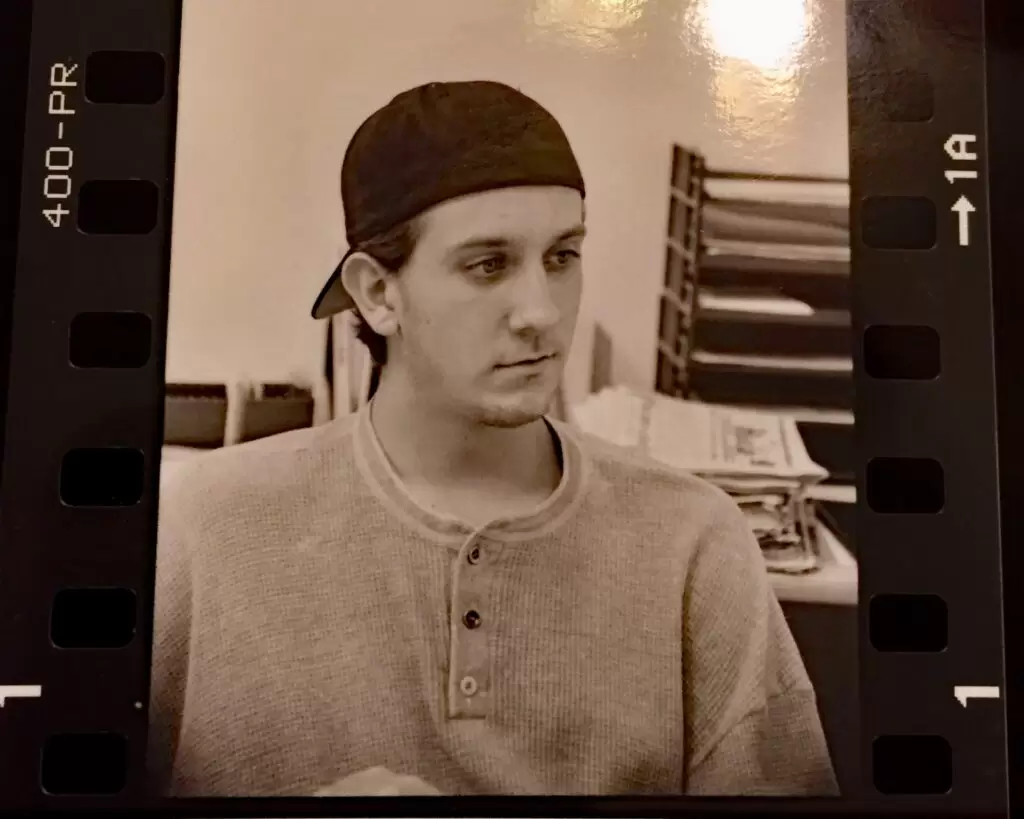
Nearly 25 years ago, when I was a reporter at the Las Cruces Sun-News, I received a tip about a $50,000 payment the local school board approved for the superintendent in secret. I dug. Soon I found the secrecy went much deeper than that.
My reporting helped expose several hundred thousand dollars in incentives the board had illegally given the superintendent behind closed doors. Board members had kept the public from knowing about the hefty payments at a time when school officials were saying they couldn’t afford new textbooks for students.
That revelation led to widespread outrage, and the greatest display of democracy in action I’ve ever seen.
The newspaper was flooded with letters to the editor.
Two citizens — one a Democrat and the other a Republican — partnered to start a petition drive to recall the two people who had been involved in the illegal activity and were still on the board.
The state attorney general found violations of the N.M. Open Meetings Act, which required that the school board approve the payments to the superintendent in public.
When the school board convened to apologize and correct the violations, 400 people showed up. Person after person stood before the board during public input and berated them as the meeting went late into the night.
Voters overwhelmingly recalled the two school board members.
To this day, the five school board members who participated in these acts are the only elected officials in the state’s history to be convicted of violating the Open Meetings Act.
This was my education in the critical role journalism plays in supporting democracy. It was an experience that filled me with hope that the arc of history might bend toward justice after all. I felt like I’d found my role in helping make that happen.
I entered journalism at the profession’s height. But in the time since those first years I spent at newspapers, I’ve watched local news collapse.
A lasting impact
I think back on my days at newspapers and my reporting about the school board with a longing for what the United States has lost.
The death of local journalism in communities across the country has directly contributed to our descent into authoritarianism. Now, by eliminating federal funding for public radio and television, Republicans in Congress and the White House mean to finalize the destruction of democracy.
As a reporter and editor at my college newspaper, The Round Up at New Mexico State University, I had free reign to experiment with how journalism facilitates community knowledge, conversation and connection.
I led a team that watchdogged the Board of Regents while they searched for a new president. We facilitated a wide-ranging discussion on our editorial pages about the issues of the day. Professors used some of our articles as teaching tools in their classes.
Then I moved to the Sun-News. My reporting on the school board had a lasting impact. Local governments in Las Cruces became more diligent about complying with state transparency laws.
I took a job at The Santa Fe New Mexican in 2003 and relocated. I began scrutinizing a water and sanitation district board that was also violating the Open Meetings Act. When I confronted the board president with evidence, he asked me if I was the guy who had reported on the Las Cruces school board.
The government agency he led also began complying with the transparency law, which is designed to ensure citizens have the ability to learn what their government is doing with their money.
Staff cuts
I returned to the Sun-News after my stint in Santa Fe and focused on a terrible series of deaths of children at the hands of their parents. Those articles helped the community and state implement changes, including creating a center for people in crisis and cracking down on parents who murder their kids. Activists printed my articles on signs and carried them during a rally for tougher penalties at the Roundhouse.
My reporting on the child abuse deaths was my last in-depth project as a newspaper reporter.
The Sun-News was owned by big corporations the entire time I worked there. It went through changes in ownership and eventually ended up in the hands of Gannett, the largest newspaper company in the nation.
Soon after the Sun-News published my child abuse series, corporate overlords started cutting staff. I had to take on extra daily reporting and no longer had the time to do the in-depth and investigative journalism our community needed.
So I left the newspaper. I started my own political blog in 2006 that grew into a news website. I have spent much of the last two decades creating and trying to maintain independent journalism projects.
I’ve done some journalism I’m really proud of in those years, but none has built the reach I found at newspapers. While my blog was widely read by insiders and the most politically active people in New Mexico, local newspapers were the trusted, go-to source for everyday folks.
‘Most of those journalists are gone’
The reasons newspapers fell apart are complex. Some of the blame lies with those of us who were working at them. We were too slow to adapt to new technology. Some reporters got too close to people in power and lost touch with the folks we were supposed to side with.
But the billionaires led the charge toward collapse. Over decades they snatched up local news organizations, cut them to the bone, and then sawed right through bone.
They profited by extracting our local wealth and destroying the institutions that checked their power. Today the Sun-News is a shell of what it once was. The Farmington Daily Times is dead.
There are villains in this tale, like Gannett CEO Mike Reed and his executive team. The worst, though, are the corporate shareholders who required profitable newspapers to continually cut so they could extract more and more from local communities.
The result is dire.
Strong local reporting is long dead in many communities across the United States. Muck Rack and Rebuild Local News have created the Local Journalist Index 2025, which for the first time documents the collapse.
In short, the number of journalists covering local communities has dropped by more than 75 percent since 2002.
“In 2000, many Americans lived in a community with journalists — people whose job it was to cover school board decisions, announce small business openings and closures, root out corruption at city hall, warn commuters about road work and trumpet the exploits of the high school teams,” the project’s website states. “Today, most of those journalists are gone.”
In real numbers, the United States used to have the equivalent of 40 full-time journalists per 100,000 residents. That number is now 8.2. It’s even worse in New Mexico, which ranked 38th among states with 7 full-time journalists per 100,000 residents.
‘Being covered poorly or not at all’
New Mexico is fortunate to have some fierce, locally owned newspapers. The Santa Fe New Mexican is one of the best in the nation. The Albuquerque Journal also remains in local hands.
As corporations like Gannett throw away news organizations they bled dry, one New Mexico company, El Rito Media, has snatched up papers in Carlsbad, Alamogordo and Ruidoso.
Another New Mexico company, Ctrl+P Publishing, has bought several small, local newspapers around the Albuquerque metro area as it seeks to preserve local news.
While that’s great, it hasn’t translated into enough reporters on the ground.
Things are so bad that across the United States there are more than 1,000 counties, like Harding County in rural New Mexico, that don’t have even one full-time local journalist. In fact, 15 of New Mexico’s 33 counties lack a full-time journalist.
“Most governments, most neighborhoods, and most residents are being covered poorly or not at all,” the report states.
Local journalism vs. social media
Good journalism tells people what’s happening in their communities, holds power accountable and empowers citizens to engage and influence what happens.
Local journalism also binds people together across dividing lines like race and political affiliation.
It tells folks how to get and give help during disasters. It connects people to local arts and community events that draw them to gather and share an experience. It builds energy for local sports teams and helps us participate as graduates and fans.
It helps us keep track of who’s dying. The loss of reported obituaries is one of the things I grieve most. When we lose reporting that closes the door on the life of someone in our community, we lose our collective memories and our sense of history. We lose our stories.
In spite of all our technology, nothing has emerged to replace local news organizations in these critical roles in our communities. While Facebook can be a good place to promote an event you’re holding, it’s a lousy place to find a comprehensive list of upcoming events with details.
I regularly see posts about people dying on social media that reach only the people in their immediate networks. The vast majority of these stories go untold to the wider community.
Instead of reported obituaries that treat human lives with care and respect, and in-depth journalism about how to address issues like homelessness, we get people making fun of unhoused folks they or others photograph on the street, or bodies under sheets they pass in their vehicles.
Even worse, social media is full of disinformation, some of it intentionally created by foreign governments to manipulate our behavior. With its algorithms and gimmicks designed to keep us outraged and scrolling, social media has divided and isolated us more than ever.
The glue that held communities together
Now Republicans are eliminating federal funding for local public radio and television. This will hit rural communities the hardest, but the cuts will reduce the number of journalists everywhere. It will further isolate and divide people.
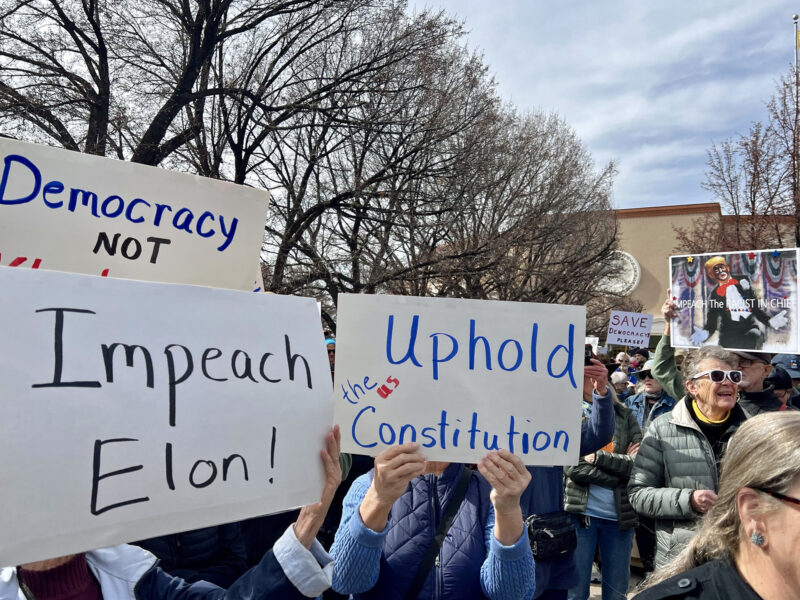
These authoritarians would have no chance of dismantling our democracy if folks still felt bonds to community more strongly than to partisan ideology, if they still felt informed and empowered to watchdog their government, if they still felt like their voices mattered. People would rise up together instead of letting the billionaires divide them.
Now the authoritarian takeover is on the verge of succeeding, and I weep. More than once this year, I have cried about the local journalism that isn’t being done to help preserve our democracy.
I spent much of my career trying to tackle this problem. My first project after I left newspapers, NMPolitics.net, was influential for many years but never gained the readership a newspaper once had. I also co-founded the nonprofit New Mexico In Depth, which is still going strong but also lacks the readership that is essential for preserving democracy.
I’ve worked on collaborations intended to leverage shared capacity. We’ve done some amazing journalism and won some awards.
But local news organizations are the glue that held communities in the United States together through much of the 20th Century. Topical news outlets will never have the same reach. I’ve been fretting about what the death of local newspapers would mean for democracy for years.
A vision
I don’t know how to fix this. I am glad others are working on finding solutions, like the New Mexico Local News Fund. I am grateful to have the health to again be working and contributing in my own, small way to local journalism through this website and newsletter.
I am furious at the billionaires. With the authoritarian takeover on the verge of succeeding, I grieve what they have stolen from us.
It’s happened gradually over more than two decades, so there are generations of people who don’t know what they’re missing. I want to share a vision of what Las Cruces, a city of a little more than 100,000 people, could do with 40 full-time journalists, the average before the collapse of local news.
There would be competition. Two local newspapers with reporters covering high school sports, writing about the nuances of our crime problem, and telling us about plays, museum openings and other events. Reporters would watchdog the City of Las Cruces, Doña Ana County, the Las Cruces Public Schools, NMSU, and smaller town governments like Mesilla and Anthony.
There would be photographers, videographers and podcasters at those newspapers. They would have copy editors and designers to make sure what was published online and in print was accurate, spelled correctly (which is a high bar today, sadly), and easy to navigate.
There would be more television and radio reporters than we have today.
The competition would push journalists to be more inquisitive, quick, accurate and complete in our reporting. We’d find unique stories and do a better job at telling them.
The public would know about issues that currently go without any coverage and fly under the radar. That would enable citizens to more easily and fully participate in their society.
We’d have more vibrant opinion pages in the newspapers to help citizens engage, too — full of quality editorials, guest columns and letters to the editor. Instead of the garbage discussions that happen on the Las Cruces Community Watch page on Facebook, folks would have trained, paid journalists facilitating real conversations.
When you spotted law enforcement out in force or heard a spray of gunshots, for example, instead of going to Facebook to ask what happened and be subjected to a bunch of snarky and stupid comments — and left with, at best, partial information — you’d be able to go to a news website and find accurate and more complete details.
We used to have that. I hope we can build something like it going forward. Such journalism is essential to creating more engaged, healthy communities.
And our communities are what sustain our democracy — or don’t.
Riveting article. Every word you wrote is true. The guardrails of this noble attempt at forming and sustaining a democratic and constitutional republic have been grievously weakened. There is no national television journalism, swallowed up by corporations intent on maximizing profit. Big wigs with the skin thickness of .05 microns threaten owners of news outlets until an agreeable pablum is all that drizzles out. And local news has been weakened and soon will be but a memory, at least to those old enough to have a basis of comparison. Many get their “news” from social media generated bots and fringe podcasters. I wish there were clear answers, but I doubt there are. Galatians had it right–“We reap what we sow,” and sown we have.
Thank you, Del. You were there for some of the stories I covered. I appreciate your support and your perspective.
What a wonderful asset you are. We are definitely going to have to find a new model to get back to real journalism. Clearly you have created the bases for some of these.
Gary! It’s great to hear from you. I miss the days we were both doing regular reporting around here… Thanks for your kind words.
I was NEVER at your level. I’m a big fan!
Aw, shucks. Thank you. 🙂
You might want add that El Rito Media bought the Rio Grande Sun before those other three. The Sun had been a really good local newspaper with a history of fighting for and maintaining public records access, taking on entrenched powerful political figures and regimes while covering local sports, hosting a lively editorial section and running free obits. The paper is a mere shell of its former self now. Your commentary is spot on. I followed a journalistic path similar to yours and acutely feel your pain. We have lost so much is so little time and yet so few seem to see the price our democracy is paying for it. Thanks and keep up the good work.
Thanks Karl!
Heath, I just read again your article on fall of local journalism. You take pride in uncovering the payment to the superindendent and mention that incident led to the only two people being convicted of violating the opwn meetnings law. Why don’t you name the part involved. Apparently the conviction served as a promotion to state senator and chair of the Senate Education Committee. Why not point that out? Fear of upsetting a liberal polititian? There are people that want balanced reporting (which you used to have with nmpolitics). But I guess you have to report what your supporters want to hear these days to grt the contributions.
Wow, Nelson, thanks for proving your own point about how partisan this society has become. To be clear, that situation was not a partisan one. And to correct what you said, two board members were recalled, not convicted. One was a Democrat and the other was a Republican. Five people were convicted (three had already left the board when charges were filed) — three Democrats and two Republicans.
Three newly elected board members helped expose what happened — two Democrats and one Republican. Two citizens led the petition drive to recall the board members — a Democrat and a Republican. And the attorney general who brought charges — the only AG to ever do that in this state’s history — is a Democrat.
While it is certainly true that current Sen. Bill Soules carries the distinction of being one of those five people who were convicted, so do four other people. I didn’t name any of them in this article, not because I’m afraid, or I have a liberal base to please, but because party affiliation wasn’t the point of this column.
When Soules decided to run for Senate years after being convicted, I, in my role as a journalist, asked him to address it. He chose to send me a guest column instead of a quote for an article, and I published his full statement: https://nmpolitics.net/index/2012/08/supporting-sunshine-laws/
I did what I could to let voters know about his past. They decided to elect him. His peers later made him chair of the Senate Education Committee. Their choice. I did my job, as a journalist, to inform.
Recently, my primary watchdog journalism related to transparency laws has been aimed at the Las Cruces City Council and the Doña Ana County Board of Commissioners. Examples:
https://haussamen.com/2025/12/08/project-jupiter-votes-broke-law-scorched-earth/
https://haussamen.com/2025/01/15/las-cruces-moves-forward-but-with-a-deficit-in-public-trust/
Both boards’ members are overwhelmingly Democrats.
Take a breath, man, and realize how many fingers you just pointed back at yourself when you pointed one at me.